


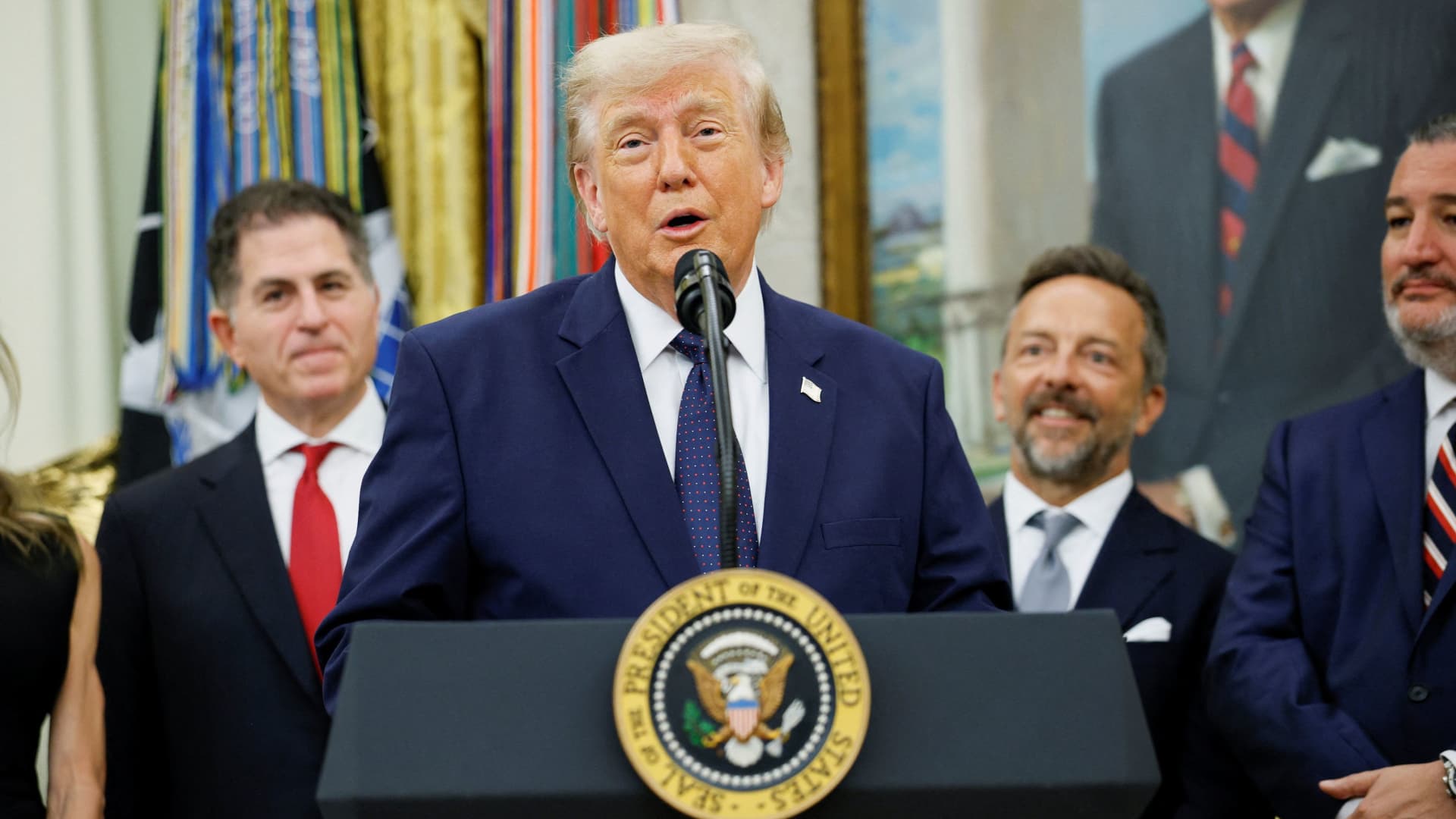
U.S. President Donald Trump speaks during an event to mark the launch of “Trump Accounts” in the Oval Office at the White House in Washington, D.C., U.S., July 6, 2026.
Evan Vucci | Reuters
Trump Accounts officially launched on July 4, introducing a new tax-deferred investing option for children. Unlike 529 college savings plans and other accounts designed for education or shorter-term expenses, these accounts are geared towards retirement and intended to help build long-term wealth.
“Trump Accounts level the playing field by allowing every parent to invest in their children’s future, not just wealthy families with trust funds,” a Treasury spokeswoman told CNBC in an email.
This guide breaks down the key features of Trump Accounts, including eligibility requirements, available free money and strategies families can use to maximize growth.
Some details are still forthcoming. Please check back for updates.
Read more about Trump Accounts
How to read this guide
Follow along from start to finish, or use the table of contents to jump to the section(s) you want to learn more about.
Trump Accounts, also known as 530A accounts, are a type of individual retirement account for children established under President Donald Trump’s “big beautiful bill.”
The accounts function like an IRA, with some exceptions. Trump Accounts can receive contributions from multiple sources, such as family or employers, and the funds grow tax-deferred.

Trump Accounts are available to all children under age 18, provided the child is a U.S. citizen and has a valid Social Security number. An authorized adult — including a parent, legal guardian, grandparent or sibling — can open an account on a qualifying child’s behalf.
A child welfare agency of a state, territorial, or tribal government that is the legal guardian can also open a Trump Account for an eligible child in foster care, according to the Treasury’s guidance.
Children born from 2025 through 2028 can receive a one-time $1,000 deposit from the U.S. Treasury Department as part of a pilot program designed to jump-start long-term savings.
That seed money gets automatically deposited once an account is opened and verified. Families can track account activity with the Trump Accounts app, which was designed in partnership with Robinhood.
The Trump Accounts app.
Courtesy: U.S. Treasury
Tech CEO Michael Dell and his wife, Susan, committed $6.25 billion to provide an additional $250 for children born between 2016 and 2024 who live in ZIP codes where the median income is $150,000 or less.
That money is aimed toward lower-income kids, but children older than 10 may benefit, too, if funds remain available after initial sign-ups, according to a fact sheet from the Dell Foundation.
Parents or guardians can open accounts by filling out IRS Form 4547 with their tax return or on TrumpAccounts.gov. The deadline to enroll is the year before the child turns 18.
Following a massive publicity push in the lead-up to the official launch, 6.5 million children have been signed up, according to a July 10 tally from the Treasury.
Initial activation emails will only come from no-reply@TrumpAccounts.Treasury.gov. Future communications will be through the Trump Accounts app, or from email addresses ending with @trumpaccount.com.
Always access your child’s Trump Account in the official app or by typing TrumpAccounts.gov directly into your browser, Treasury guidance says.
Parents, guardians, grandparents and others can collectively contribute up to $5,000 per child per year in after-tax dollars up until the year before the beneficiary turns 18. The annual contribution limit indexes for inflation after 2027.
Employers can also contribute up to $2,500 per worker per year, which is part of the $5,000 limit and won’t count as taxable income, according to the IRS. This figure also adjusts for inflation after 2027. A growing list of companies has already pledged to seed the accounts of employees’ children.
Additionally, qualifying charitable organizations and state and local governments may make contributions that do not count toward the $5,000 limit.
As of July 10, families have collectively contributed almost $125 million since the launch, according to a Treasury spokeswoman.
Contributions made to a Trump Account by parents, guardians, grandparents or others will not trigger a gift tax filing requirement, according to the IRS and Treasury Department. These contributions will count towards the annual exclusion for gifts, which is $19,000 per recipient for 2026.
Trump Account funds then grow tax-deferred until withdrawal. Because Trump Accounts may include a mix of pretax and after-tax contributions, distributions may still be partially taxable. The withdrawn earnings are taxed as ordinary income, the Treasury said.
Here’s a breakdown:
- Direct parent contributions — after-tax
- Pilot program $1,000 — pre-tax
- Employer contributions — pre-tax
- Other qualified contributions — pre-tax
- Future contribution growth — pre-tax
Generally, it’s not possible to withdraw Trump Account funds before age 18. But there are limited exceptions, including certain rollovers, distributions upon death and for excess contributions, according to the IRS.
Once the child reaches age 18, the standard rules for traditional IRAs apply. Withdrawals before age 59½ are generally subject to income taxes and a 10% penalty. There are certain penalty exceptions, such as for distributions for higher education expenses or to purchase a first home.
Families looking to build long-term savings for children could consider a range of options, including a 529 college savings plan, a custodial account for minors under the Uniform Gifts to Minors Act or Uniform Transfers to Minors Act, also known as UGMA and UTMA, or, if the child has earned income, a Roth individual retirement account.
When it comes to paying for college, experts often consider 529 plans the best way to save because of the tax advantages and higher contribution limits, but which investment vehicle makes the most sense depends on the family’s specific goals and time horizon.
“Trump Accounts and 529 plans are not competitors, but complements,” a Treasury spokeswoman told CNBC. “While 529s are targeted towards families with education expenses, Trump Accounts mark a historic leap in flexibility — allowing all Americans to save, invest, and build wealth for the long haul.”
— Kate Dore contributed to this report.