

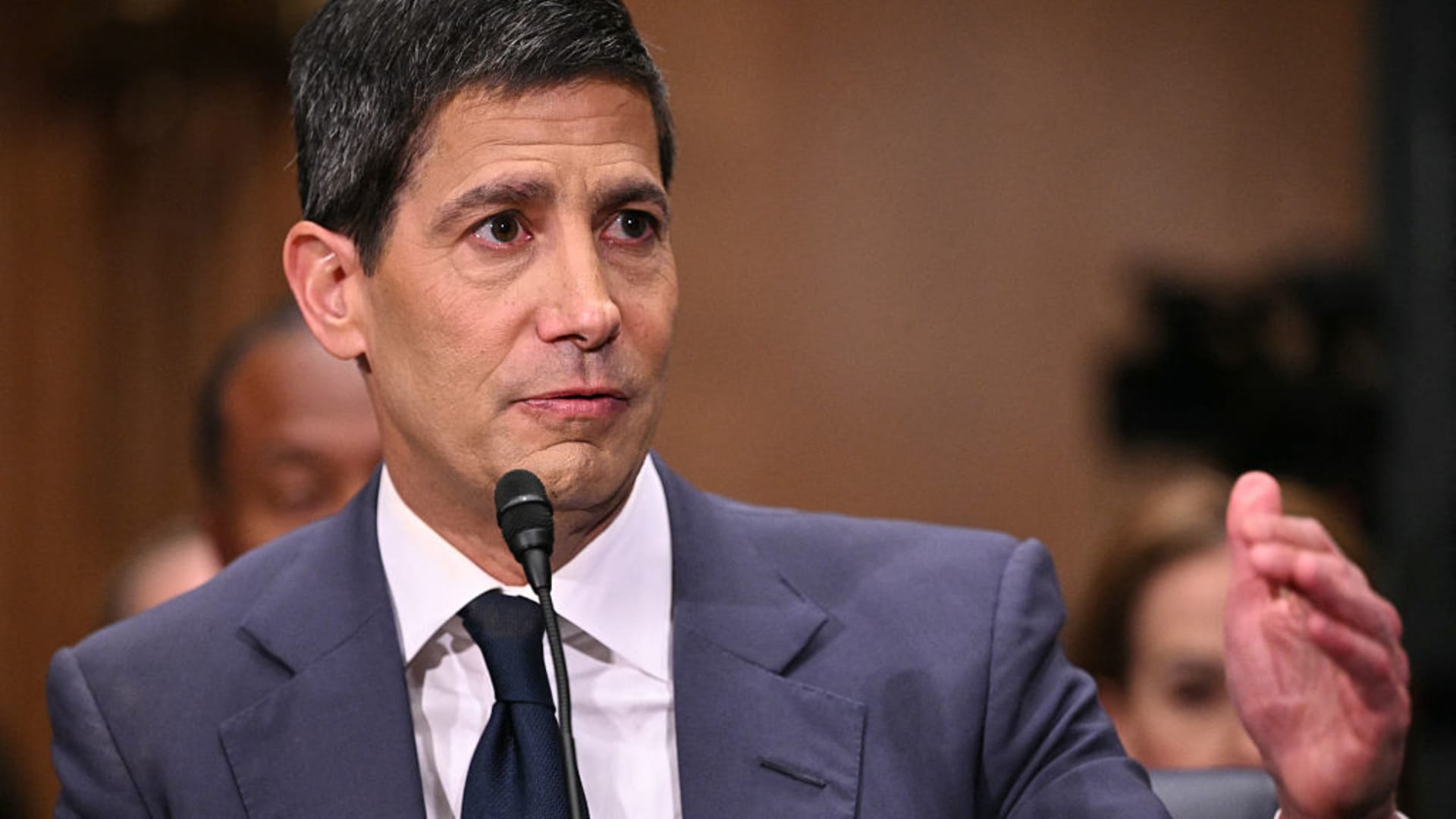

Efforts by Fed chair nominee Kevin Warsh to satisfy President Donald Trump‘s demands for lower interest rates look likely to be stymied by high oil prices and inflation, according to respondents to the latest CNBC Fed Survey.
Respondents on average are not fully pricing a single rate cut this year. Just 58% of the 26 respondents see any rate cut at all. The average funds rate is forecast to decline to 3.5%, or just 0.14 percentage point below the current rate, reflecting a combination of those who forecast one cut or more and those seeing the Fed on hold. For 2027, the average funds rate is forecast at 3.2%, reflecting a bit less than two rate cuts.
“Fed Chair Nominee Warsh will probably be hamstrung delivering Trump the rate cuts the president wants because oil prices and inflation will remain higher than hoped for a long time,” said Rob Morgan, senior vice president and market strategist, Mosaic.
High oil prices are seen pushing up inflation by 0.6 percentage point this year while pushing down growth by a half point. And 81% believe crude prices are likely to drive up core inflation as well, compounding the difficulty of cutting rates for the Fed. Core excludes food and energy prices because of their volatility.
The probability of recession remains elevated but little changed from the March survey at 33%.
“The war and its commodity and supply chain impact have left the Fed as just a spectator and I expect to hear from Powell’s presser a lot of ‘we’ll have to see,'” said Peter Boockvar, chief investment officer, One Point BFG Wealth Partners.
Forecasts for the consumer price index rose to 3.1%, up from 2.7% before the war. It’s seen falling back to 2.6% next year. By a 69% to 31% margin, most respondents see the Fed looking through the inflation increase and not hiking.
But Diane Swonk, chief economist at KPMG, thinks the Fed should formally change its policy stance.
“The Fed needs to signal optionality on its next move in rates — it could be up instead of down,” she said.
Growth forecasts have come down steadily since the Iran war began. Respondents see gross domestic product growth at 1.9%, down a half point from the January forecast before a modest bounce back in 2027 to 2.1%.
The unemployment rate is forecast to tick up modestly to 4.5% from the current level of 4.3% and remain there into 2027. Respondents estimate it takes only 62,000 jobs on average to maintain the current rate.
With rising inflation and the Fed on hold, the S&P 500 is forecast to be stagnant around the current level for the remainder of the year, before rising more strongly in 2027 to around 7,700.
“U.S. economic resilience, sticky inflation, and ongoing uncertainty argue against rate cuts, irrespective of who is chairing the” Federal Open Market Committee, said Douglas Gordon of Russell Investments.