

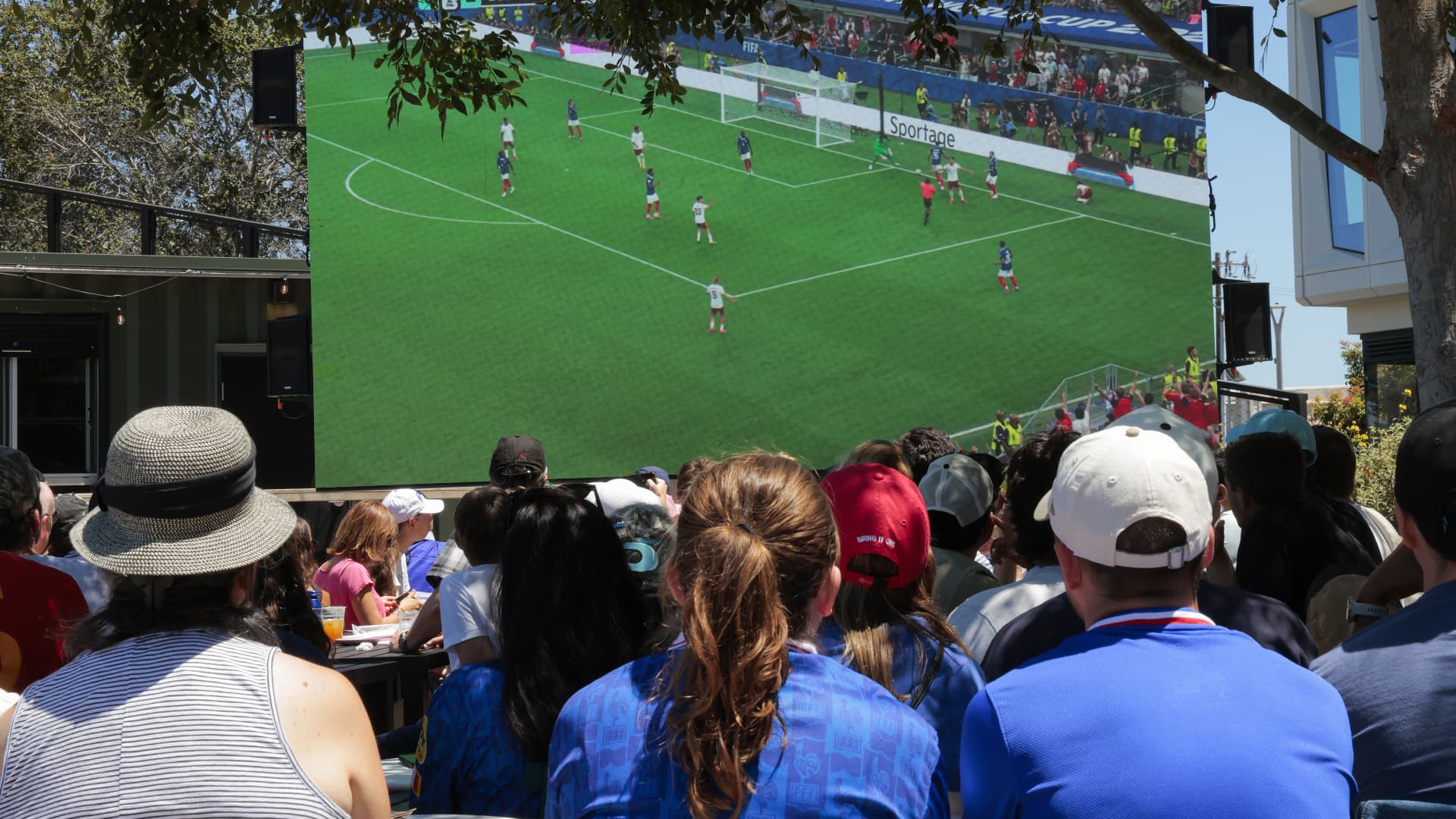
Soccer fans gather for a watch party during the World Cup semifinal match between Spain and France at China Basin Park in San Francisco, July 14, 2026.
Heather Diehl | Getty Images
While the FIFA World Cup provided a tourism boost to host cities, its positive impact was mitigated by economic weakness seen elsewhere, according to a Federal Reserve report released Wednesday.
The soccer tournament, which the U.S. co-hosted, has fetched median admissions prices topping $900, according to TicketData. Yet the latest edition of the Fed’s Beige Book, a recap of regional conditions published eight times a year, indicated that the event wasn’t necessarily catalyzing broader economic growth.
The Boston Fed reported that city hotel bookings related to the World Cup were initially softer than expected. But these hotels saw stay levels rise to meet forecasts after lowering prices for rooms.
Bars in the Massachusetts city reported higher beer sales connected to the tournament. Some Boston watering holes reportedly ran out of beer as Scottish fans descended on the 670,000-person city.
Fans react during a watch party for a FIFA World Cup 2026 round of 16 match between France and Paraguay at Lion Sports Bar in Philadelphia, July 4, 2026.
Joe Lamberti | Getty Images
The Boston Fed’s coverge region saw higher visitors from Canada than last summer. Still, it said those levels were still far lower than historical averages, a trend that’s specifically hit towns in coastal Maine and northern Vermont.
Some restaurants and bars in New York City said sales were “strong” as a result of match-viewing events, the New York Fed said. However, other eateries said they had fewer international visitors, with Canadian foot traffic specifically down.
The Canadian government has reported fewer citizens crossing the U.S. border following President Donald Trump‘s tariff policy rollout and sovereignty threats. It’s part of a bigger push among residents of the Great White North to spend money on services and products within their country.
New York City had hotels reporting higher occupancy and prices per room from the tournament, according to the New York Fed. But the bank reported some mid-tier attractions are seeing softness, while a department store said an increase in foot traffic from the tournament didn’t result in higher sales.
Folarin Balogun of the United States shoots during the FIFA World Cup 2026 round of 16 match between the USA and Belgium in Seattle, July 6, 2026.
Mb Media | Getty Images Sport | Getty Images
In cities hosting World Cup matches tracked by the San Francisco Fed, tourist volumes came in high. Yet in other markets, locals pulled back spending on restaurants, hotels and entertainment.
Overall, the San Francisco Fed said demand for consumer and business services “slowed somewhat on net.”
Across the board, the Fed said that growth in consumer spending was capped as rising oil prices led them to cut back elsewhere. Several regions observed consumers looking for cheaper alternatives to products or decreasing discretionary spending to save money, according to the report.