




People walking through the neon lit night streets of Sinchon in the heart of Seoul, South Korea’s vibrant capital city.
Fotovoyager | E+ | Getty Images
South Korea’s Kospi jumped over 12% Thursday, staging a sharp rebound from its worst session, and on course to clock its best day, data from LSEG showed.
Index heavyweights SK Hynix and Samsung Electronics surged more than 15% and 14%, respectively. The South Korean won strengthened 0.14% against the dollar and was last trading at 1,460.60.
The small-cap Kosdaq rose more than 11%.
The Kospi index had plunged 12% on Wednesday, its worst single-day decline.
“The sell-off was mainly driven by the upside risk around oil prices stemming from the evolving geopolitical developments,” said Raisah Rasid, global market strategist at J.P. Morgan Asset Management.
“As South Korea is a major crude oil importer, uncertainty around how far oil prices could rise may weigh on the current account balance and add to inflationary pressures.”
Demand-supply dynamics in the memory chips space is likely to remain tight through this year and possibly the next,” Rasid said, adding that the long-term structural drivers for Korean equities remain intact.
Similarly, Aberdeen Investments’ Kieron Poon, investment director of Asian equities, said that the sell‑off on Wednesday was also compounded by the Korean market catching up after a public holiday on Monday, so Tuesday’s drop reflected pent‑up risk-off sentiment and losses.
Other Asia-Pacific markets also jumped Thursday, rebounding after several days of steep losses as sentiment improved following overnight gains on Wall Street and easing concerns over surging oil prices.
Australia’s S&P/ASX 200 started the day 0.38% higher.
Japan’s Nikkei 225 rose 4%, after sliding 3% in the previous session.
Hong Kong Hang Seng index futures were at 25,534, higher than the last close of 25,249.48.
Taiwan’s benchmark index Taiex jumped more than 4%.
“Global markets are likely to remain volatile over the near term, and there is still scope for further downside if global risk aversion persists as the Iran war drags on,” Aberdeen’s Poon noted.
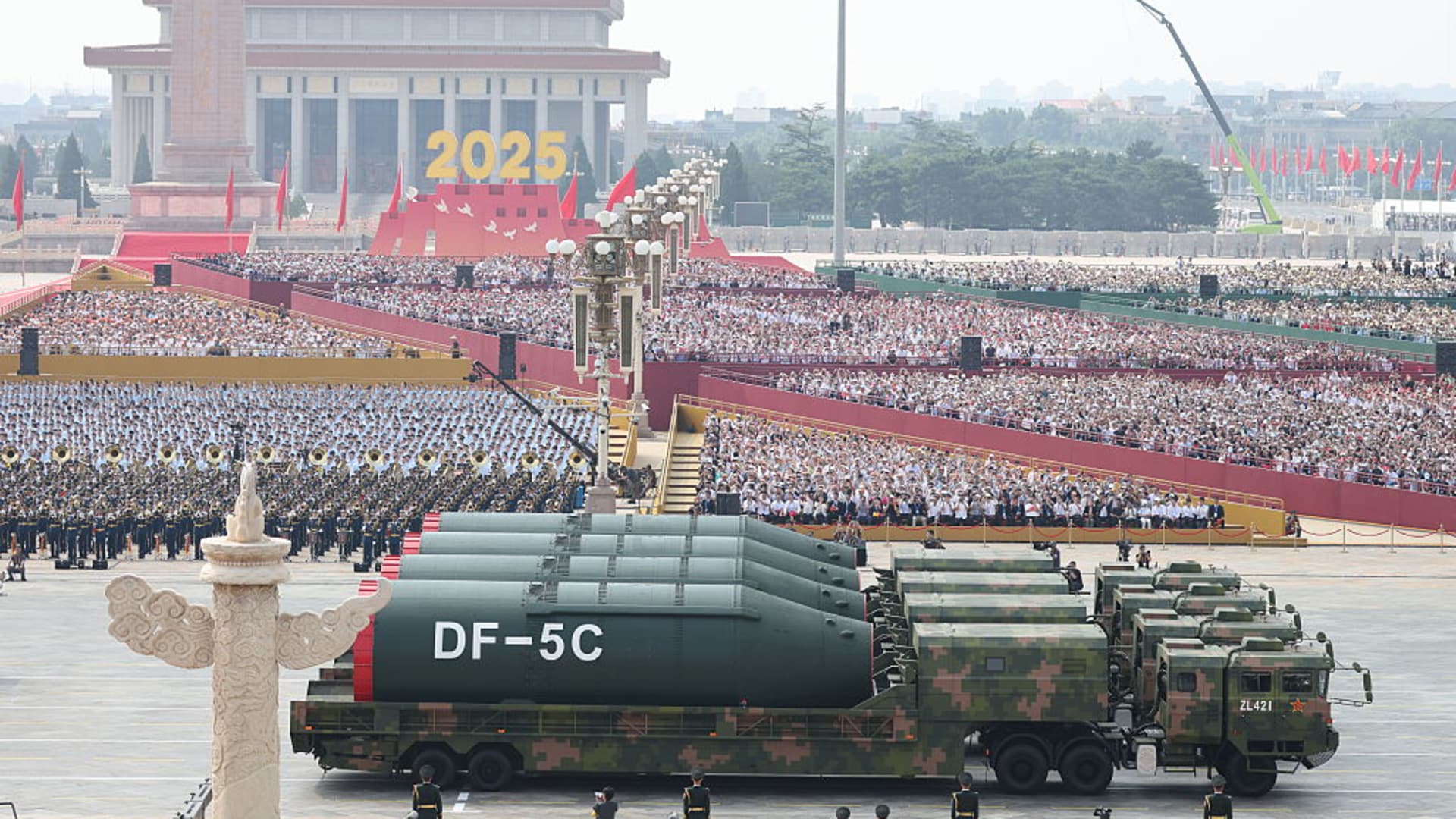
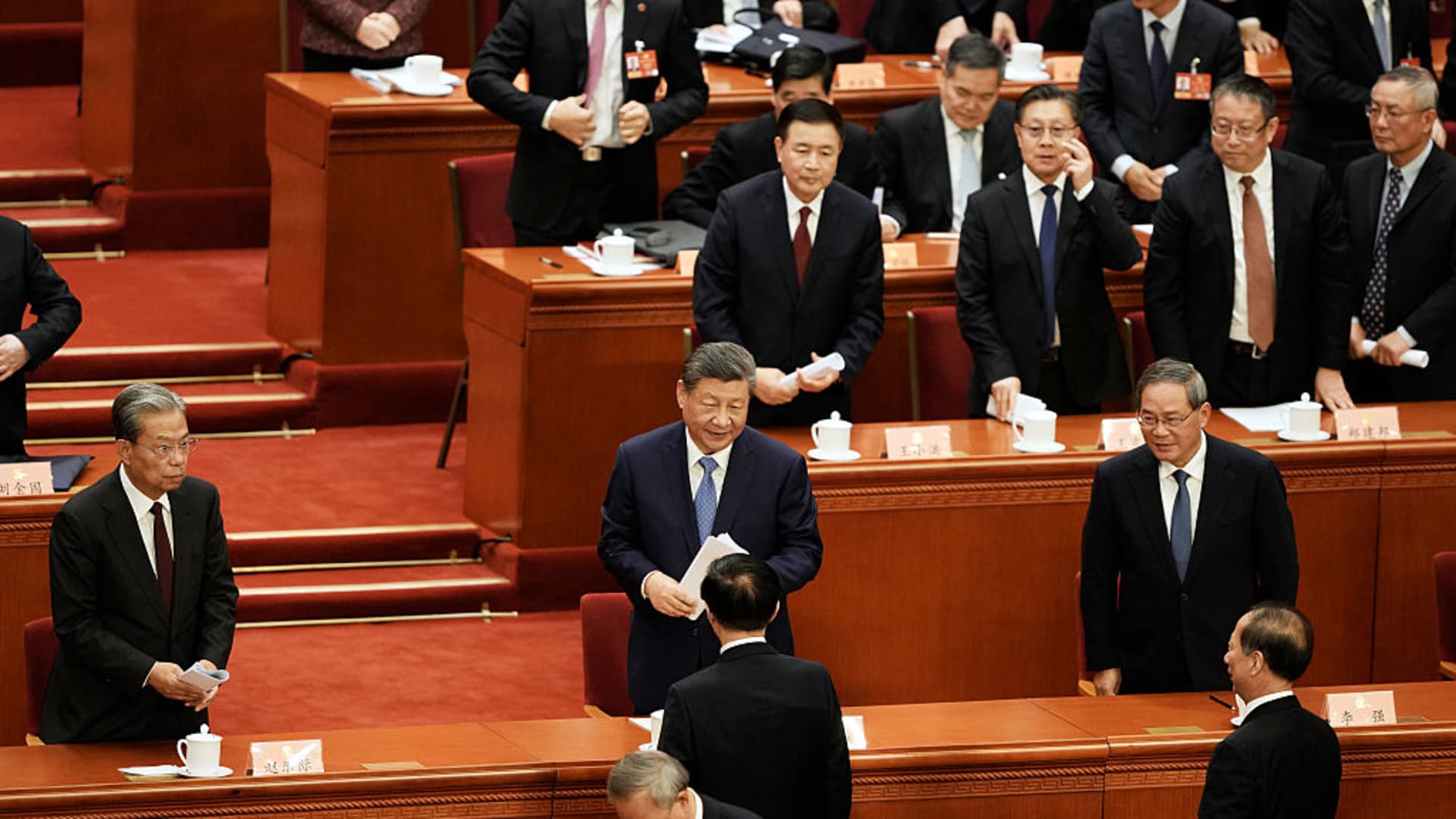
All eyes are also on China’s big policy meeting dubbed the “Two Sessions,” which kicked off on Wednesday.
China on Thursday set its GDP growth target for 2026 at 4.5% to 5%, the lowest target on record going back to early 1990s — according to a copy of the government work report seen by CNBC, as Beijing grapples with persistent deflationary pressures and trade tensions with the U.S.
That target marks a downgrade from the “around 5%” set in the past three years and the most modest goal so far for the world’s second largest economy, barring 2020 when Beijing did not set a growth target due to the pandemic.
Beijing also kept its budget deficit target unchanged from last year’s “around 4%” of GDP, as the National People’s Congress, the country’s top legislative body, holds its annual meeting this week.
Overnight in the U.S., stocks rose, building on the momentum seen late in the previous session, as the surge in oil prices pulled back following developments in the U.S.-Israeli war on Iran and fears about a U.S. economic growth scare faded.
The Dow Jones Industrial Average added 238.14 points, or 0.49%, to close at 48,739.41. The 30-stock index snapped a three-day run of losses. The S&P 500 gained 0.78% and ended at 6,869.50, while the Nasdaq Composite moved 1.29% higher and settled at 22,807.48.
Technology stocks supported the broader market, particularly those in the chips space. Micron Technology and Advanced Micro Devices each advanced more than 5%. Broadcom and Nvidia climbed more than 1% apiece.