


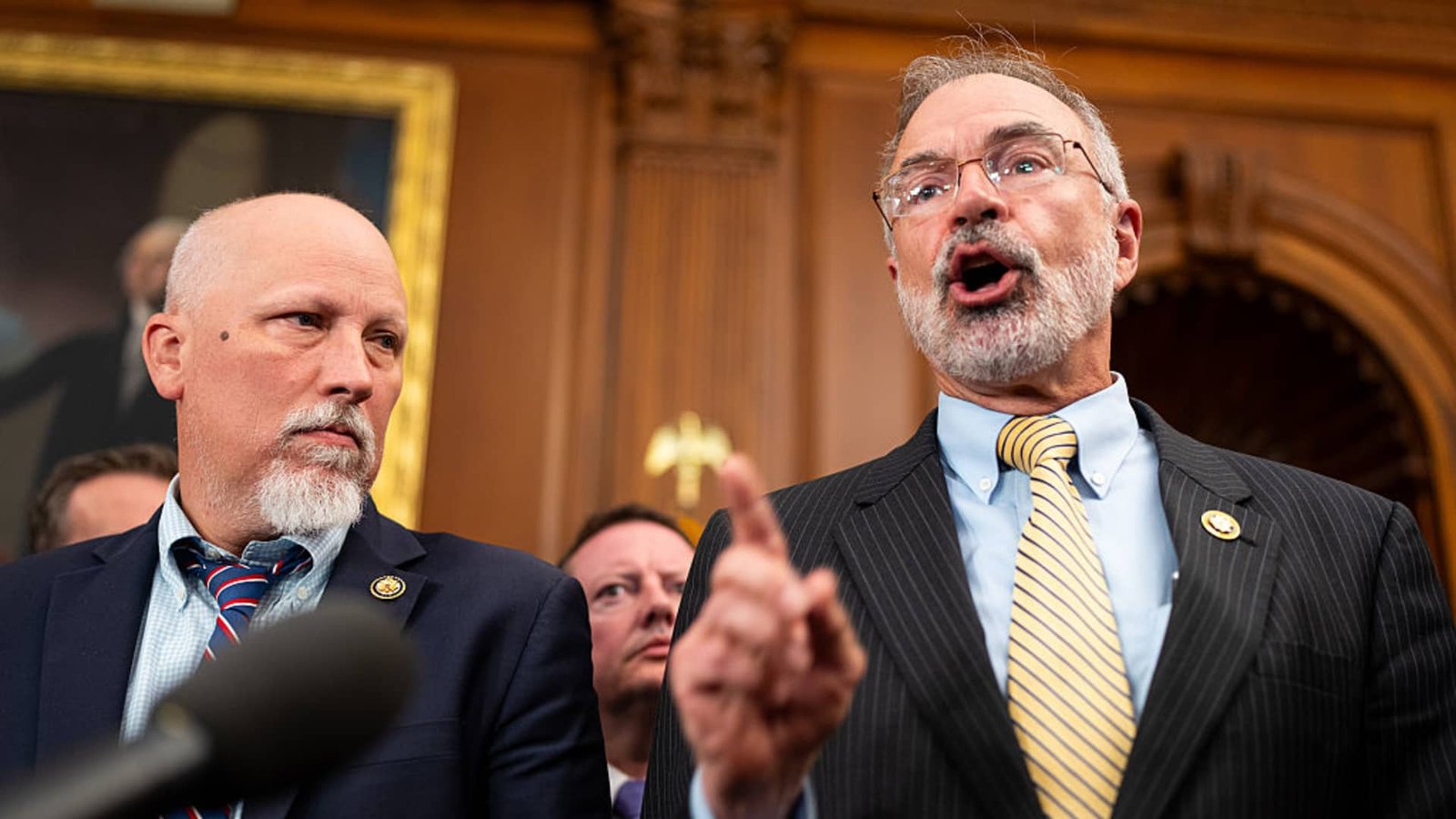
UNITED STATES – MAY 21: Rep. Chip Roy, R-Texas, left, and House Freedom Caucus chair Rep. Andy Harris, R-Md., along with members of the House Freedom Caucus speak to reporters about the One Big Beautiful Bill Act reconciliation package in the U.S. Capitol on Wednesday, May 21, 2025.
Bill Clark | Cq-roll Call, Inc. | Getty Images
The U.S. House on Tuesday voted, 370-48, in favor of a stopgap spending measure that expected to avert a government shutdown this fall ahead of the 2026 midterm election, though GOP hard-liners vowed to complicate things.
The legislation, which the Senate passed in August before breaking for its summer recess, would keep the government funded through Dec. 11. It now heads to President Donald Trump’s desk for his signature. Without passage, government funding is set to lapse at the end of the federal fiscal year, Sept. 30. That’s a prospect neither party was keen on as lawmakers hope to quickly return to their districts and continue campaigning ahead of the midterms.
House leadership brought the bill to the floor using a process known as “suspension of the rules,” which allows consensus measures to circumvent certain procedural hurdles but requires a two-thirds vote. That means Democratic votes were needed in the narrowly divided chamber. The package ultimately got broad, bipartisan support.
But prior to the vote members of the hard-right House Freedom Caucus raised a series of concerns with both the bill and the process. They threatened to hold up what House Speaker Mike Johnson, R-La., expected would be a quick vote to pass the measure, which extends current government funding levels.
Rep. Chip Roy, R-Texas, sent a letter on Monday to House Appropriations Committee Chair Tom Cole, R-Okla., and House Budget Committee Chair Jodey Arrington, R-Texas, outlining his concerns with the stopgap spending measure, among them its funding for Planned Parenthood and the absence of a ban on hemp products that contain THC, the psychoactive chemical in marijuana.
“I have serious concerns about simply extending the status quo. Members should be clear about what passage of this legislation would mean: Congress would once again affirmatively fund policies we have spent months fighting to change,” Roy wrote.
And Rep. Andy Harris, R-Md., who chairs the Freedom Caucus, told Punchbowl News he would vote to block the rest of the GOP’s agenda for the week over his objection to the spending measure.
But their opposition was not enough to complicate the vote. With Democratic support, Johnson was able to pass the funding measure even with some GOP defections.
And most lawmakers will be eager to get back to their districts this election season, as Republicans are striving to overcome President Donald Trump‘s low approval rating to hold on to narrow majorities in the House and Senate. Polling shows Democrats are largely expected to win control of the House, while the GOP is favored in the Senate.