


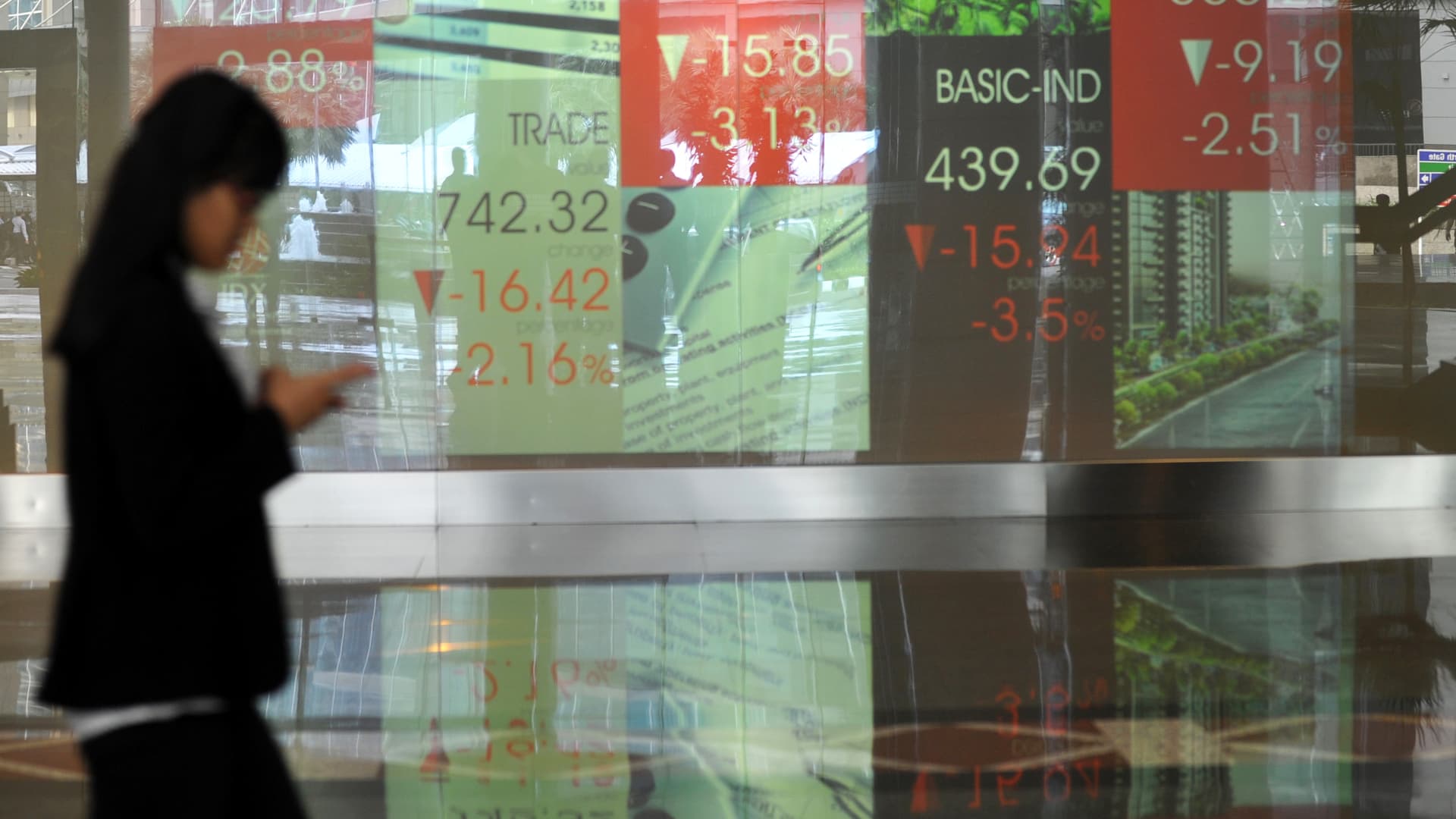
An Indonesian worker walking next to a screen featuring market trading information at the Indonesia Stock Exchange (IDX) in Jakarta.
Adek Berry | AFP | Getty Images
Attractive valuations, quick intervention by local financial regulators and a gradual return of foreign investors have helped Indonesian stocks reach bull-market status after hitting a five-year low in early June.
Indonesia’s Jakarta Stock Exchange Composite Index is down about 29% year-to-date, but has reached the bull-market threshold of a 10%-plus gain since that trough last month, according to LSEG data. S&P Global ratings reaffirming Indonesia’s BBB sovereign rating with a stable outlook a couple of weeks ago helped boost sentiment.
“S&P’s affirmation removed an important macro overhang,” said Mohit Mirpuri, senior partner at SGMC Capital. “Over the past month, we’ve seen the market transition from pricing in deterioration to pricing in stabilization.”
Indonesian shares have been on a roller coaster for much of 2026 after index provider MSCI called into question governance on many of the country’s stocks and said it would consider downgrading the market to frontier status from emerging. Many of the companies have low free floats and significant concentration of ownership, for instance.
MSCI ultimately decided to hold off downgrading Indonesia’s market status, which was “a big relief” to investors and helped halt panic selling, according to Gareth Leather, senior economist at Capital Economics. Investors started pulling profits out of expensive AI and tech stocks and looked for safer, bargain-priced markets to put their cash into, he said.
“After months of heavy selling, Indonesian equities simply became too cheap to ignore,” Liza Camelia, head of research at Kiwoom Sekuritas Indonesia, told CNBC.
Investors were also relieved that fiscal risks may be less severe than previously feared, after government revenue surprised on the upside, with tax collections recovering strongly during the first half, Camelia noted.
The Indonesian regulator’s measures to have a higher minimum free float and tighter ownership disclosure requirements also helped “to address the market’s thin liquidity and associated transparency and concentration issues that drove some investors out,” said Jeemin Bang, associate economist at Moody’s Analytics.