

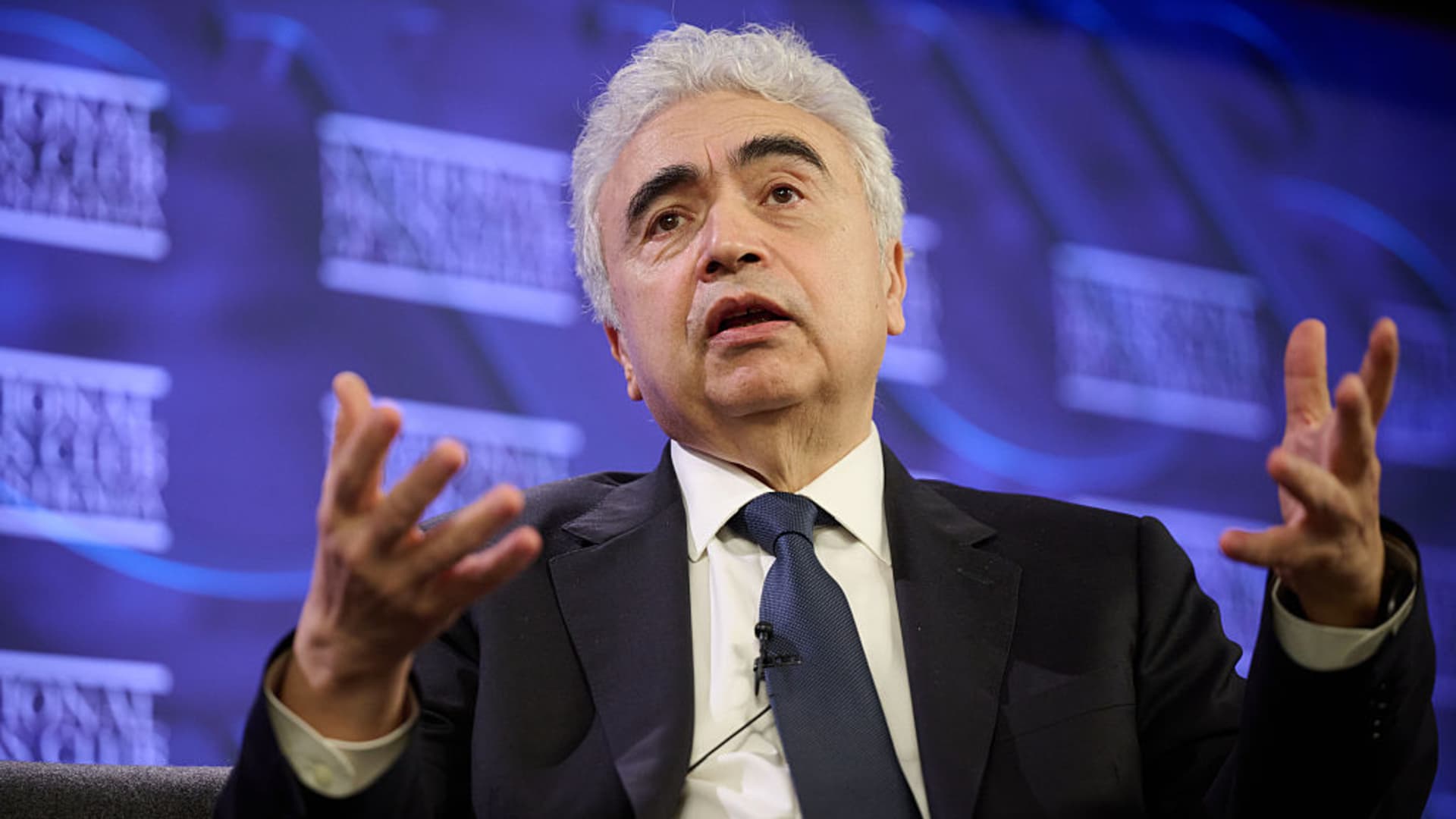
“We are facing the biggest energy security threat in history,” Fatih Birol, the head of the International Energy Agency (IEA), told CNBC Thursday.
“As of today, we’ve lost 13 million barrels per day of oil … and there are major disruptions in vital commodities,” he told Steve Sedgwick virtually at CNBC’s CONVERGE LIVE in Singapore.
Birol has previously warned that the Iran war and ongoing closure of the Strait of Hormuz would result in “the largest energy crisis we have ever faced.”
The vital maritime passage — through which an average 20 million barrels of oil and petroleum products were shipped every day before the war — is currently under a “double-blockade” with neither Iran nor the U.S. allowing vessels to enter or exit the strait.
Describing the strait as one of the world’s “most critical oil transit chokepoints,” the IEA has warned that the closure will impact global economic growth, spur inflation and could lead to energy rationing. The agency has warned of [108292351]an imminent jet fuel crunch in Europe, with some countries facing shortages within weeks.
The 32 member IEA has tried to mitigate the impact of the global energy supply disruption by agreeing in March to release 400 million barrels of oil from emergency stockpiles.
Birol said in early April that while the IEA would consider releasing a second tranche of reserves, such a move would represent a reprieve rather than a resolution to the crisis: “This is only helping to reduce the pain, it will not be a cure,” he told the “In Good Company” podcast hosted by Nicolai Tangen, CEO of Norges Bank Investment Management.
“The cure is opening up the Strait of Hormuz. We are gaining some time, but I don’t claim that this will be a solution, our stock release,” he added.
This is a breaking news story and will be updated shortly.