



Qualcomm is working on over 40 designs of new AI devices, CEO Cristiano Amon told CNBC, as the chip designer prepares for a wave of “agents” across consumer electronics.
In a wide-ranging interview on CNBC’s “The Tech Download” podcast, Amon laid out his views on the changing role of smartphones and apps, why smart glasses could be the next major consumer device, new types of electronics that will hit the market, and how chip architectures will need to change for even smaller gadgets.
Amon’s comments, which also alluded to new entrants in the consumer market, could have implications for the way major smartphone players like Apple and Samsung will need to compete as AI proliferates devices.
“I think there’s going to be a lot of experimentation with different form factors,” Amon said on “The Tech Download.”
“Right now, we have over 40 designs of those devices, and I’m telling you, the types of form factors are very, very broad.”
Amon said these wearable tech devices include jewelry, earbuds with cameras, pins, and watches.
“The principle is something that you wear, something [that] is with you all the time, something that can see the world around you, so you have context and have the ability for you to access an agent and talk to the agent,” Amon said.
AI agents
Agents are seen as the next step for digital assistants like Apple’s Siri or Google Gemini. The tech industry is betting these agents will be able to carry out longer and more complex tasks across various apps and services on devices, such as booking holidays.
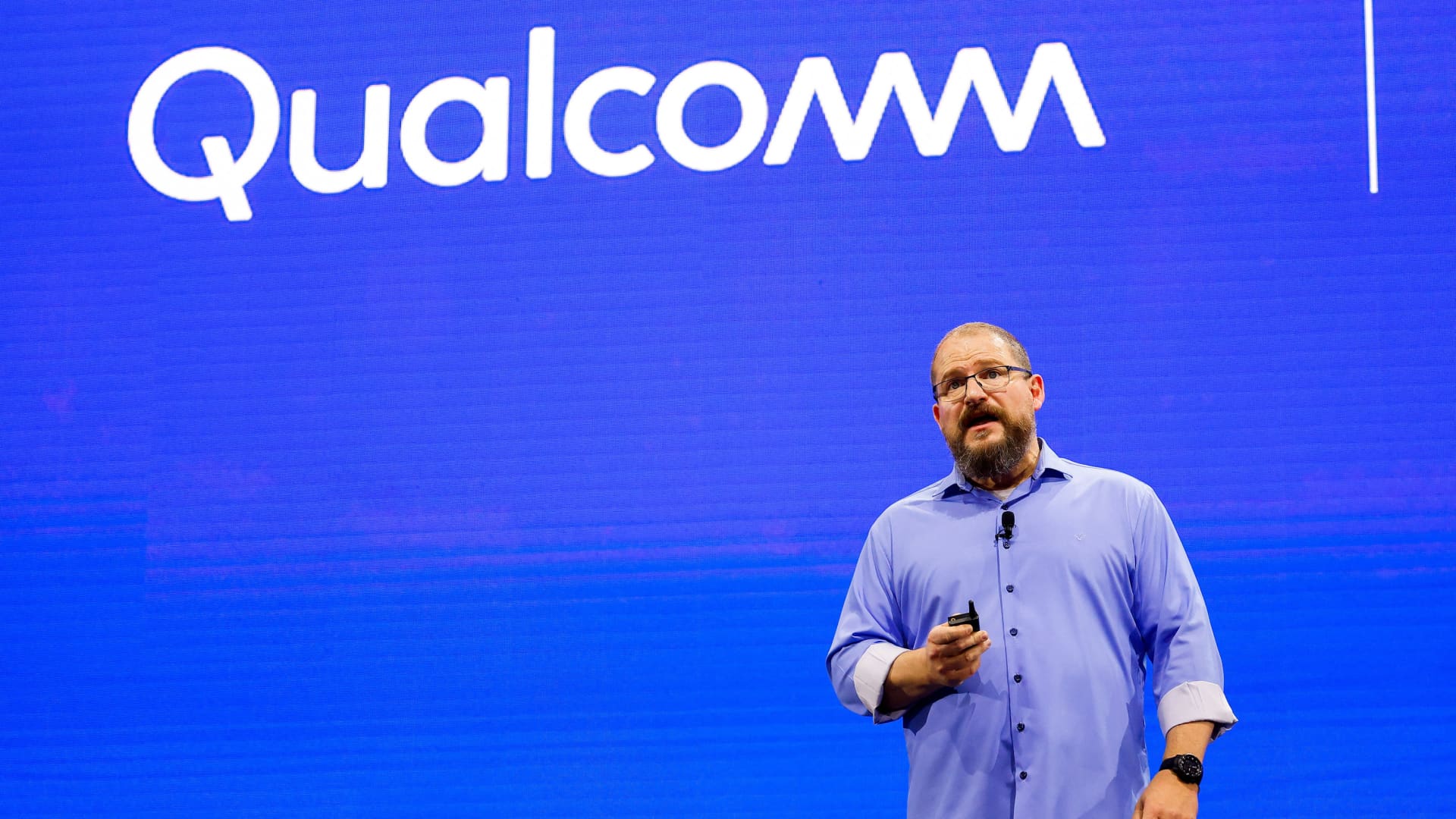
Qualcomm CEO Cristiano Amon delivers a keynote speech at Computex in Taipei, Taiwan, May 19, 2025.
Ann Wang | Reuters
Amon shared an example of an agent that instantly retrieves details of banking transactions, eliminating the need for a user to navigate through the app and manually locate the information. This could mean that the way we interact with apps in a future where agents are carrying out tasks could change.
Apps are “not dead,” Amon said, “but apps are going to change.”
“Those agents are going to be the new app,” he added.
Qualcomm bullish on smart glasses
The proliferation of agents and the changing nature of the way we use apps in the future could also change the relationship people have with their smartphones and create opportunities for new types of devices to become popular.
AI agents are set to replace smartphones as the center of digital life.
“The phone is around the agent. The new classes of devices … are going to be around the agent as well. And the agent will be the one that will understand human intentions and will do things for you, so there is a shift in what the center of gravity is,” Amon said, adding that phones won’t disappear altogether.
Meta’s Orion AR glasses are displayed during a viewing in Menlo Park, California, U.S., Sept. 26, 2024.
Manuel Orbegozo | Reuters
The Qualcomm CEO said he is bullish on smart glasses, a category of product that could rival smartphones in terms of scale. Smart glasses shipments are now in the “order of multiple tens of millions” per year, he told CNBC. In “a couple of years,” Amon said this could reach the “order of hundreds of millions of glasses and could become as big as smartphones.”
There were 1.26 billion smartphones shipped in 2025, according to Counterpoint research, around 3% higher than the year before.
Companies from Meta to Samsung are developing smart glasses with cameras in them.
AI companies getting into hardware
The shifts in devices could open the door for new types of companies to enter the consumer hardware market, Amon said.
Last year OpenAI bought io, the hardware startup founded by iconic Apple designer Jony Ive, as it looks to enter the consumer devices market.
“All the devices that we wear become endpoints for agents, and those AI companies understand they have to win those endpoints from agents,” Amon said, explaining why non-traditional hardware companies are getting into gadgets.

Another motivation behind new entrants into the hardware space is data. Amon said these devices will gather data on a scale that is “exponentially larger” than the data used to train AI models.
“So those companies want to have access to the data, because it’s important to train future models,” and to create “bespoke” AI experiences for users, Amon said.
With devices changing to potentially even smaller form factors, the chips that power them will need to change, as they will need to become more powerful and even more energy efficient.
“Our entire roadmap is in a process of upgrade right now. An entire roadmap, because I believe none of the devices we have today are prepared for the future,” Amon said.