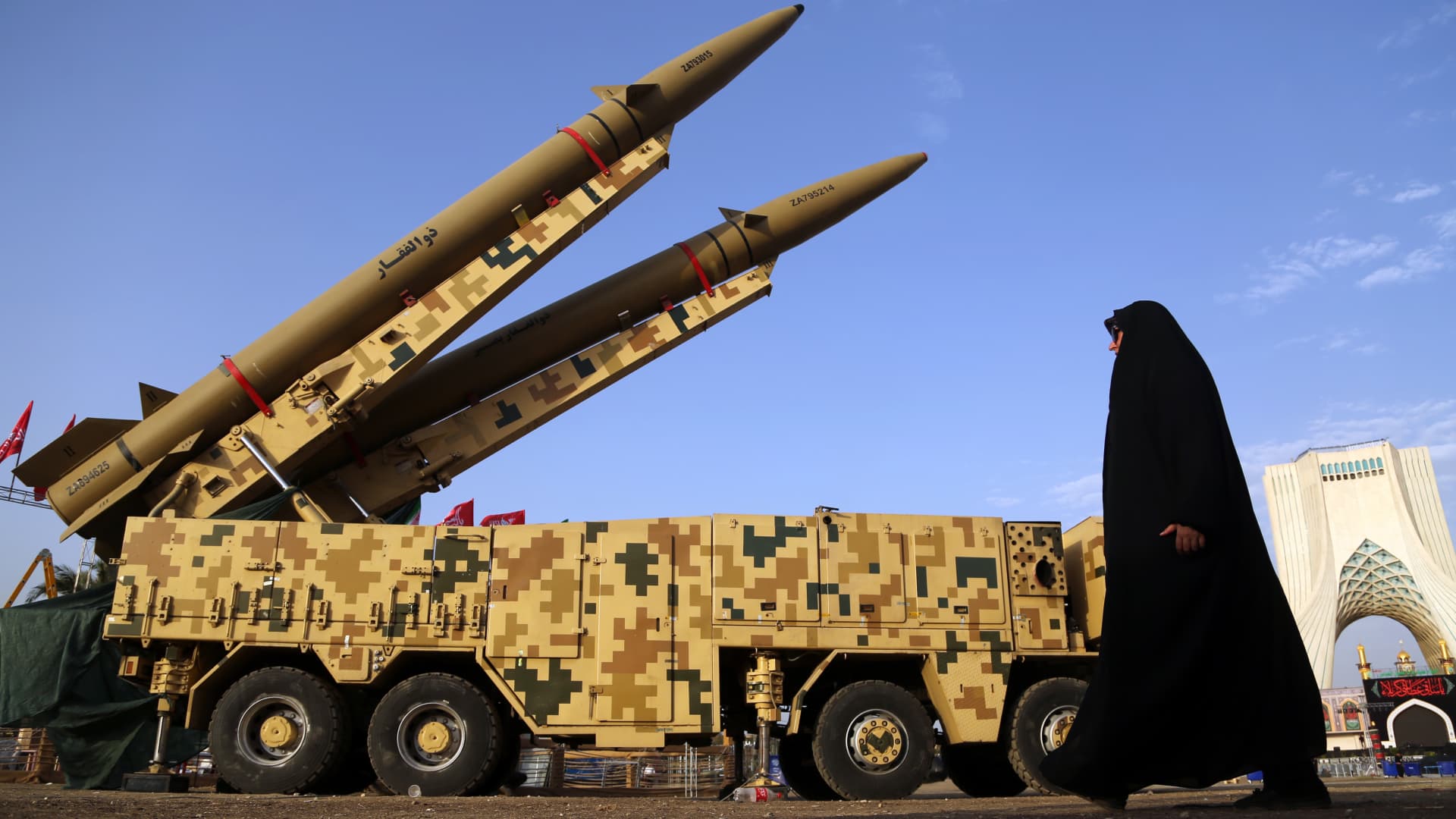




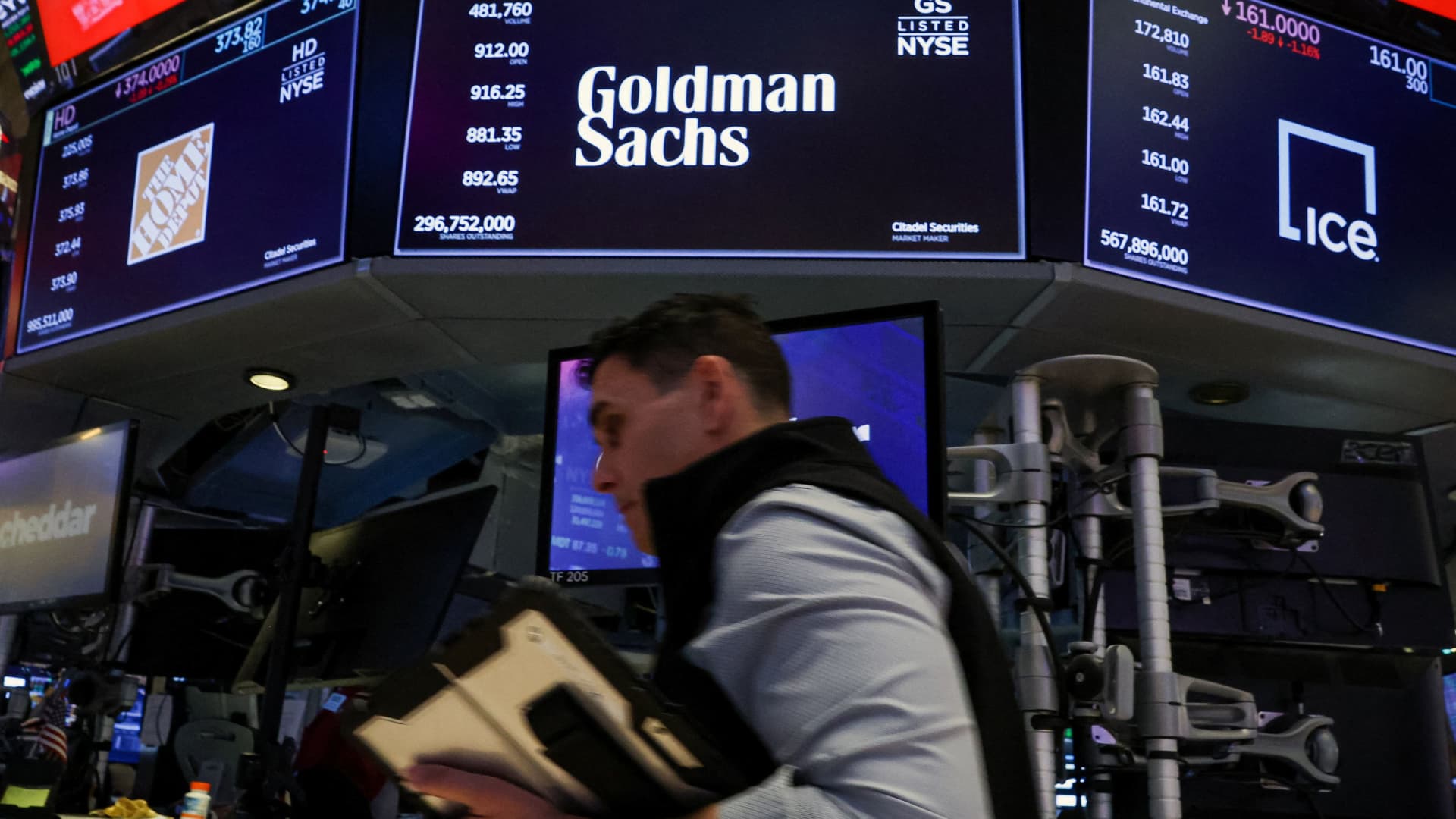
Time to buckle up. Earnings season is returning, and hopes of a durable resolution to the Iran war faced a setback over the weekend, injecting fresh uncertainty into the trading week ahead. Here’s a closer look at the three big things we are watching over the next five days. 1. Iran war: Peace talks between the U.S. and Iran this weekend in Pakistan were unsuccessful, as the American delegation led by Vice President JD Vance departed Islamabad without an agreement to codify a two-week ceasefire into something longer lasting. In a press conference, Vance said the key sticking point was Iran’s unwillingness to abandon its pursuit of nuclear weapons. In a Sunday morning post on social media, President Donald Trump said the U.S. Navy will “begin the process of BLOCKADING any and all Ships trying to enter, or leave, the Strait of Hormuz,” the vital transit route for roughly 20% of the world’s oil exports in normal times. Iran has curtailed traffic through the strait since the war broke out Feb. 28, leading to a spike in oil prices due to the supply disruptions . Even after the temporary ceasefire was reached last week, oil tankers were not quick to resume plying the waters. One reason why: Iran was reportedly unable to find all of the mines it laid in the strait. The U.S. started a mission to clear the mines on Saturday, according to the U.S. Central Command . For investors, the hope going into this weekend was that peace talks were constructive and led to progress toward reopening the Strait of Hormuz. Both of those boxes haven’t been cleanly checked, based on what we know Sunday morning. As we have throughout the war, we’ll look to the oil market this week as a barometer of how traders and investors view the likelihood of a firm resolution. 2. Earnings: Once the banks start reporting, earnings season is officially upon us (though we often wonder if it ever really ends). We have three Club names on the docket this week: Goldman Sachs before the bell on Monday, and Wells Fargo and Johnson & Johnson , our newest name, on Tuesday morning. For Goldman Sachs, there are two main focus areas, both of which relate to the Iran war fallout. The first: Has there been any change to the dealmaking environment? That includes both mergers and acquisitions and the pipeline for initial public offerings. On its January earnings call, Goldman CEO David Solomon said its investment banking backlog stood at the highest level in four years. The hope is that uncertainty around the war’s economic impact hasn’t dampened these animal spirits. Expect analysts to ask Solomon about activity levels, in particular, among the “sponsor” community — a term for the private-equity firms (and other deep-pocketed clients, like sovereign wealth funds) that frequently need investment banking services. The second focus area: How have its trading desks performed as war-fueled volatility spread across stock, bond, currency, and commodity markets? As much as shaky markets pose a risk to dealmaking appetite, traders feast on them. Another topic that figures to come up on Monday is the health of the private credit market, which has come under fire this year over concerns about AI disruption. Notably, Goldman’s flagship private-credit fund didn’t see the same level of redemption requests in the first quarter as some of its peers did. Wall Street expects Goldman to report earnings per share of $16.49 on revenues of $16.97 billion, according to LSEG on Friday. Wells Fargo will report against a markedly different backdrop than last earnings season. Back in January, the stock was hot coming into fourth-quarter earnings and trading near all-time highs. Not this time. In a note to clients Thursday, Piper Sandler analysts said Wells Fargo is the big bank that investors are “most downbeat” on. Among the concerns they’ve heard from investors is Wells Fargo’s “relatively large exposure” as a lender to nondepository financial institutions (NDFIs), such as mortgage companies, private asset managers, and insurers. This concern was amplified after a U.K.-based specialty lender collapsed last month. “We think clarity from [Wells Fargo] on potential loss exposure and a general revisit of its NDFI exposure could also be helpful to the shares,” analysts at UBS wrote to clients on April 7. Another potential tailwind will be the discussion of Wells Fargo’s net interest income (NII), which captures the difference between interest earned on loans and interest paid out to depositors. In January, the bank issued underwhelming full-year NII guidance of $50 billion. But when HSBC upgraded Wells Fargo to buy from hold on April 1 , analysts argued that the outlook could be conservative (perhaps to avoid needing to cut its guide like last year ). So, any indications of NII upside throughout the year will be greeted positively. We’re also hopeful that Wells Fargo’s fee-based businesses, especially its fledgling investment banking unit, continue to perform well. Anything CEO Charlie Scharf has to say on organic growth initiatives now that the bank has been operating without a Fed-imposed asset cap for 10 months will be notable, too. As of Friday, analysts polled by LSEG expect Wells Fargo to report revenue of $21.77 billion and EPS of $1.58. Our goal in taking a stake in J & J last week was to improve the quality of our pharmaceutical holdings, leaving Bristol Myers Squibb behind. While Bristol Myers’ stock has recovered nicely in recent months, J & J has greater upside potential thanks to a stronger portfolio — both drugs already on the market and experimental therapies in trials — and a well-planned divestiture of its medical technology business. For first-quarter numbers, the key drugs to watch are the multiple myeloma treatment Darzalex, which is its largest medicine by sales in 2025 at over $14 billion, and Tremfya, an injectable therapy for inflammatory conditions such as plaque psoriasis, psoriatic arthritis, and Crohn’s disease. With sales up 40.5% last year to $5.16 billion, Tremfya is helping J & J navigate the loss of patent protection for fellow immunology drug Stelara. Tremfya belongs to a class of drugs called IL-23 inhibitors, which grew popular as injectables. But an exciting part of the J & J story is that its oral IL-23 inhibitor was approved by the Food and Drug Administration last month to treat psoriasis. Branded as Icotyde, we expect management’s expectations for the pill to be a topic of conversation on the earnings call. Within its MedTech segment, we’ll watch the performance of its cardiovascular portfolio closely — it spent almost $30 billion in recent years buying Shockwave and Abiomed to bolster this business — and its ambitions in vision, particularly in surgical procedures to treat cataracts and other vision corrections. The Street expects J & J to deliver earnings per share of $2.66 on revenues of $23.63 billion, according to LSEG on Friday. 3. Inflation data: On the heels of Friday’s consumer inflation report, we’ll get its cousin this week: the producer price index (PPI). Due out Tuesday morning, the PPI is a measure of wholesale inflation, capturing what producers are paid for their output, such as steel, hay, and asphalt. For that reason, it’s seen as a leading indicator of consumer inflation because if businesses are paying more for their inputs, those costs will likely be passed on to consumers down the road. If a company chooses to take the margin hit instead, well, investors don’t love that either. While Friday’s consumer price index (CPI) wasn’t as bad as feared , the impact of the Iran war was still evident in higher energy prices. That also figures to show up prominently in Tuesday’s PPI, with diesel and gas fuels included in the index. Economists polled by FactSet expect a 1.2% month-over-month increase and a 4.6% annual advance. In February, those figures were up 0.7% and 3.4%, respectively. Excluding food and energy, core PPI in March is expected to rise 0.3% from the prior month, down from the 0.5% monthly advance in February. Week ahead Monday, April 13 Existing Home Sales at 10 a.m. ET Before the bell: Goldman Sachs (GS) , Fastenal (FAST) Tuesday, April 14 Producer Price Index at 8:30 a.m. ET Before the bell: Wells Fargo (WFC), Johnson & Johnson (JNJ), JPMorgan (JPM), BlackRock (BLK), Citigroup (C), CarMax (KMX) Wednesday, April 15 Import and Export Price Indexes at 8:30 a.m. ET Federal Reserve’s Beige Book at 2 p.m. ET Before the bell: ASML (ASML), Morgan Stanley (MS), Bank of America (BAC), M & T Bank (MTB), Progressive (PGR), PNC Financial (PNC) After the bell: JB Hunt (JBHT) Thursday, April 16 Initial Jobless Claims at 8:30 a.m. ET Philadelphia Fed Index at 8:30 a.m. ET Before the bell: PepsiCo (PEP), Charles Schwab (SCHW), Taiwan Semiconductor (TSM), Prologis (PLD), Abbott (ABT), Travelers (TRV), BNY Mellon (BK), Citizens Financial (CFG), Infosys (INFY) After the bell: Netflix (NFLX), Alcoa (AA) Friday, April 17 Industrial Production & Capacity Utilization at 9:15 a.m. ET Before the bell: Fifth Third Bancorp (FITB), Regions Financial (RF), Truist (TFC), Ericsson (ERIC), Ally Financial (ALLY), State Street (STT) (Jim Cramer’s Charitable Trust is long JNJ, WFC, and GS. See here for a full list of the stocks.) As a subscriber to the CNBC Investing Club with Jim Cramer, you will receive a trade alert before Jim makes a trade. Jim waits 45 minutes after sending a trade alert before buying or selling a stock in his charitable trust’s portfolio. If Jim has talked about a stock on CNBC TV, he waits 72 hours after issuing the trade alert before executing the trade. THE ABOVE INVESTING CLUB INFORMATION IS SUBJECT TO OUR TERMS AND CONDITIONS AND PRIVACY POLICY , TOGETHER WITH OUR DISCLAIMER . NO FIDUCIARY OBLIGATION OR DUTY EXISTS, OR IS CREATED, BY VIRTUE OF YOUR RECEIPT OF ANY INFORMATION PROVIDED IN CONNECTION WITH THE INVESTING CLUB. NO SPECIFIC OUTCOME OR PROFIT IS GUARANTEED.