

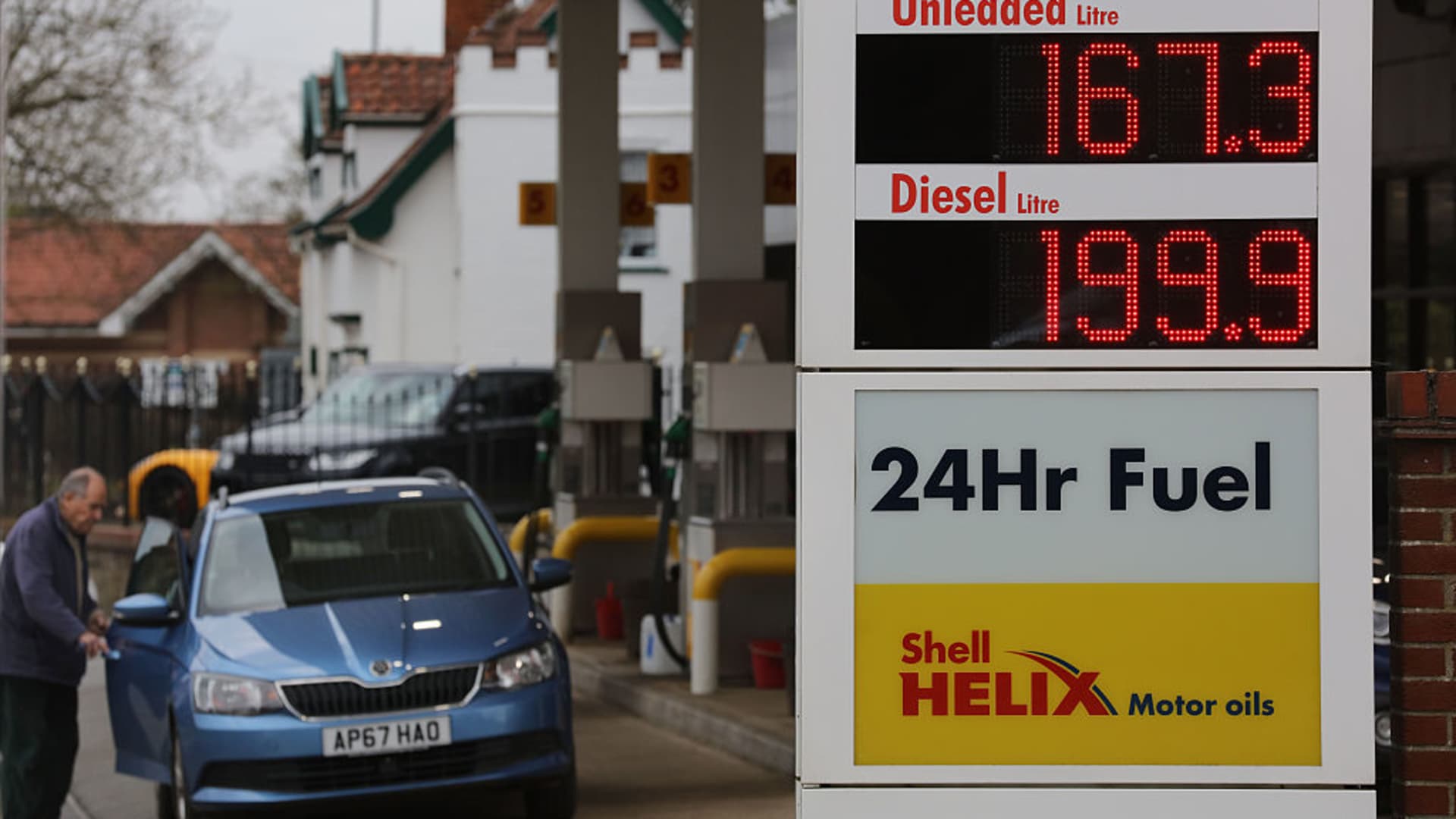
Prices for diesel almost reach £2.00 a litre on March 31, 2026 in Long Stratton, England.
Martin Pope | Getty Images News | Getty Images
U.K. inflation jumped to 3.3% in March as the Iran war sparked a sharp increase in fuel prices, preliminary data from the Office for National Statistics (ONS) showed Wednesday.
Economists polled by Reuters had expected the inflation rate to accelerate to 3.3%, up from 3% in the 12 months to February. The latest data is the first hard evidence of the Iran war’s impact on consumer prices in the U.K.
The rise in inflation was largely due to increased fuel prices, which saw their largest increase for over three years, Grant Fitzner, chief economist at the ONS, commented Wednesday.
“Airfares were another upward driver this month, alongside rising food prices,” he said in a post on X.
“The only significant offset came from clothing costs, where prices rose by less than this time last year. The monthly cost of both raw materials for businesses and goods leaving factories rose substantially, driven by higher crude oil and petrol prices,” Fitzner added.
A sharp rise in energy prices on the back of the Iran war has been blamed for renewed inflationary pressures and, while the conflict continues, economists expect to see costs accelerate further.
“With the repercussions of the Iran conflict reaching the U.K.’s shores, pump prices and heating oil prices are likely to see a big increase to end the quarter,” Sanjay Raja, chief U.K. economist at Deutsche Bank, said in emailed comments ahead of the data release.
As a net importer of energy, the U.K. is particularly vulnerable to global energy price shocks like the one caused by conflict in the Middle East.
Before the war began on Feb.28, the Bank of England was expected to cut interest rates as inflation was cooling to its 2% target.
Economists say the central bank could increase rates, although it’s seen as a close call as to whether policymakers will do so at the next meeting on April 30.
A majority of economists polled by Reuters in the last week expect the BOE to keep rates unchanged for the rest of the year, arguing policymakers will choose to “look through” the spike in inflation caused by external factors. BOE rate-setters will also be wary of encouraging “stagflation” — slow growth, high inflation and rising unemployment — if they raise rates.
All eyes are on developments in the Iran war, with U.S. President Donald Trump extending a fragile ceasefire with Iran on Tuesday. The prospect of further peace talks is uncertain, however, with a second round of discussions that was set to be held in Pakistan this week put on hold.
“The extended ceasefire won’t prevent a painful period of accelerating inflation with skyrocketing energy costs and food prices likely to lift the headline rate above 4% by the autumn, despite slower economic demand,” Suren Thiru, ICAEW’s chief economist, commented Wednesday.
“While these figures will make for uncomfortable reading among policymakers, the looming downward pressure on prices from a weakening economy should give rate-setters enough latitude to look through this period of intensifying inflation and keep rates on hold.”
Please check for further updates.