


A student studies in the Perry-Castaneda Library at the University of Texas at Austin, Feb. 22, 2024.
Brandon Bell | Getty Images
As back-to-school season gets underway, parents have many more ways they can spend funds in 529 college savings plans this year, due to President Donald Trump‘s “big beautiful bill.”
Yet a new survey shows only a fraction are utilizing these accounts.
About 69% of parents stash money for their children’s education-related expenses in traditional checking or savings accounts, according to a Vanguard survey of 1,005 parents with children ages 17 and under living at home.
Only 10% of parents leverage 529 savings plans for education expenses for their children, the survey found. Among millennial parents, 8% do, and Gen Z, 6%.
That’s a big miss, experts say — especially for big-ticket, long-term goals like paying for a child’s college tuition.

The national average rate on an interest-bearing checking account is only 0.07%, and 0.39% on a savings account, according to Federal Deposit Insurance Corp. data as of Monday. Meanwhile, top rates on a high-yield savings account can have rates over 4%, according to Bankrate.
That’s far less than the potential returns from a 529 plan. Monthly contributions of $250 with an average annual return of 7% could grow to more than $96,000 in 17 years, according to CNBC calculations. (These figures don’t account for inflation.)
“If you have the means, and you’ve done the emergency savings thing, you’ve put away money for retirement, looking at 529 accounts can be a huge benefit for parents — and the benefits for your children will pay off for decades,” said Kate Byrne, head of Vanguard Cash Plus Distribution.
Contributions to 529 plans generally are invested in mutual funds that contain a mix of stocks, bonds and cash-like investments. Often, that mix becomes more conservative as your child ages.
The funds grow tax-free, and withdrawals for qualified education expenses are tax-free. Plus, you may get a state tax deduction or credit for your contribution.
New tax law expands eligible expenses for 529 plans
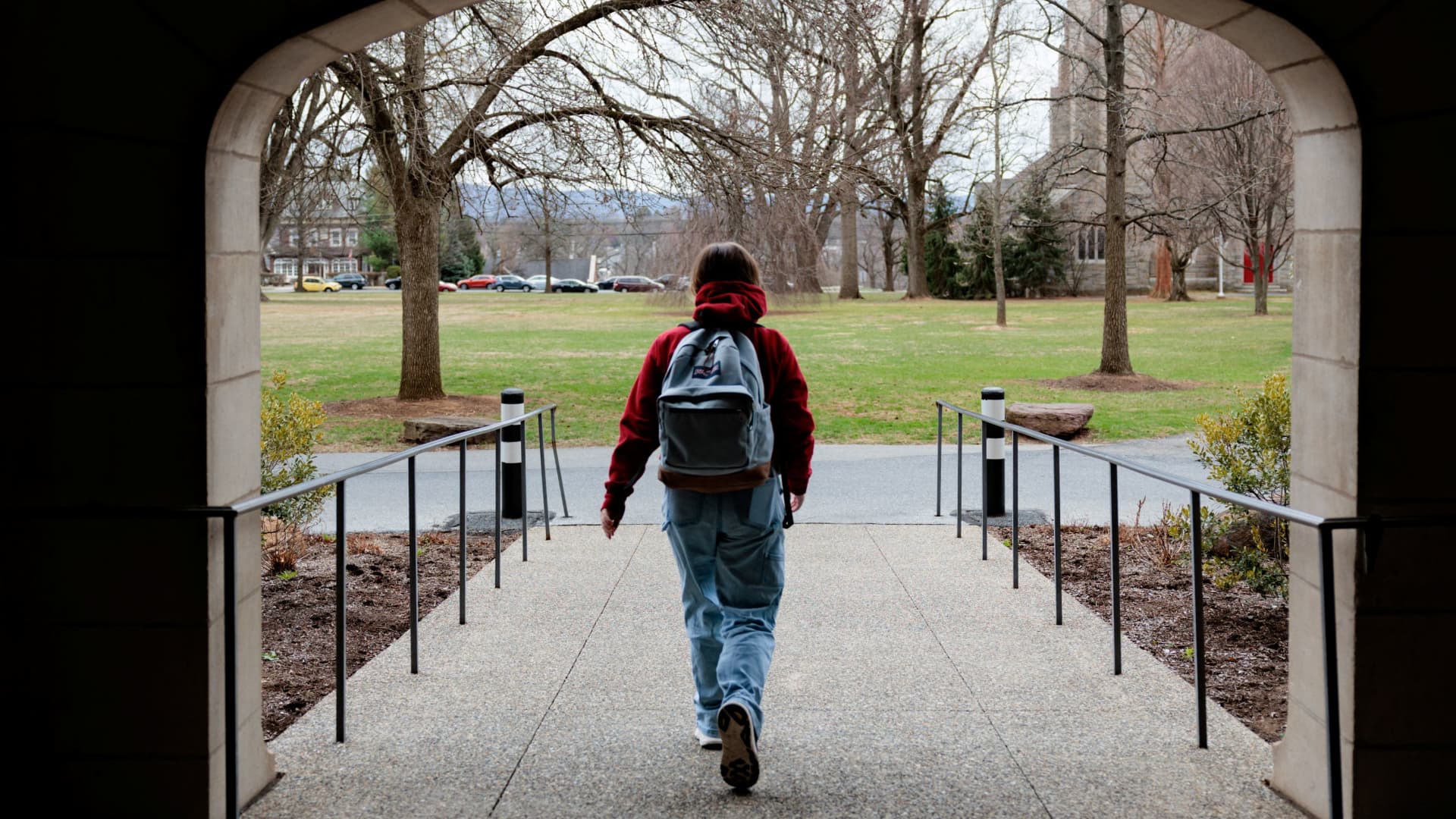
A person walks on campus at Muhlenberg College in Allentown, Pennsylvania, U.S. March 26, 2025.
Hannah Beier | Reuters
Under new provisions in the “One Big Beautiful Bill Act” that Trump signed into law in July, there are many more eligible expenses for using funds from 529 plans. The accounts are useful whether or not college is in your family’s plan, and you can use them on far more than tuition, room and board or textbooks.
Under the new law, withdrawals from 529 plans can now be used for:
- Qualifying credentialing and vocational programs, for trades such as welding, HVAC work, or cosmetology.
- Tuition, books, and fees related to professional licensing programs, including exam preparation and review materials, for fields like law, accounting or finance.
- Required continuing education courses to maintain licensing or certification, which might apply to real estate agents, nurses, teachers and financial advisors, among others.
Also, under the new tax law, expenses related to K-12 education have been expanded beyond tuition to include tutoring, standardized test prep (such as for ACT, SAT or AP exams) and educational therapy.
With tutoring, test prep and support for students with learning differences, they’ll be “better prepared for their post-secondary journey,” said Patricia Roberts, chief operating officer at Gift of College, a gifting platform for higher education and workplace benefits, in an email. They may even be in a better position to receive merit aid for college, she said.
Plus, “being able to use a 529 plan now to pay for (high school/college) dual enrollment courses can help a student get a head start on college coursework and begin their college journey with credits in hand — which may lower costs by shortening the time it takes to graduate,” Roberts said.
Trump accounts invest for newborns
Starting in July 2026, parents will have another option to save and invest for their children. The new tax law created a provision for so-called Trump accounts.
These are investment accounts that allow parents to contribute up to $5,000 a year, after-tax money, for a child under the age of 18. Employers could make contributions of up to $2,500 a year.
A pilot program will allow newborns, U.S. citizens born from 2025 through 2028, to receive an initial, one-time contribution of $1,000 from the federal government.
Retirement plan consultant Denise Appleby says electing to receive the $1,000 seed contribution is a no-brainer if you qualify. “Why would you say no to free money that’s starting to fund your child’s retirement account?” she asks.
Appleby says to consider a 529 plan before making a contribution to a Trump account.
With a Trump account, withdrawals aren’t allowed until the child turns 18. At that age, the money will be rolled into a traditional IRA, and funds withdrawn before age 59½ may typically be subject to a 10% penalty and taxed at the beneficiary’s income tax rate.
“In a 529 plan, money comes out tax-free if it’s used for qualified education expenses,’ she said. “Not only that, in a 529 plan, after you’re done with school and you have an excess amount, you can move up to $35,000 to a Roth IRA account,” where withdrawals are also tax-free.
SIGN UP: Money 101 is an eight-week learning course on financial freedom, delivered weekly to your inbox. Sign up here. It is also available in Spanish.