

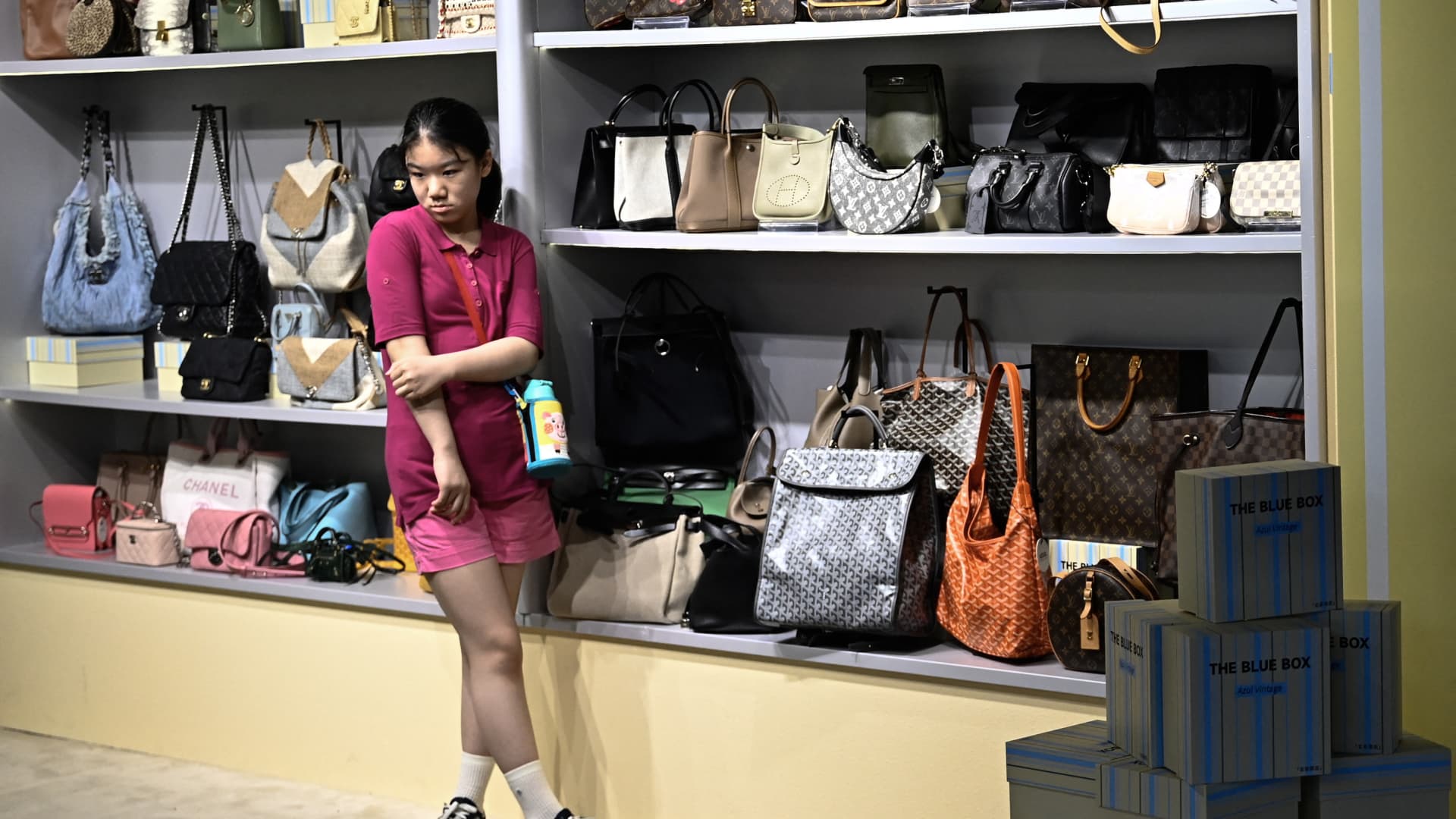
A store in a shopping mall in Beijing on Aug. 7, 2024.
Pedro Pardo | Afp | Getty Images
Fierce price wars in China are hitting industries from cars to food deliveries to solar panels, squeezing profits and worsening the country’s deflationary slide. Though consumers may be lured by ultra-cheap deals, the trade-offs for them are more complicated than they might seem.
Since the pandemic and amid the ongoing housing slump, Chinese consumers have grown more price-sensitive, focusing on value and cutting non-essential spending. To stay competitive, carmakers have rolled out steep discounts and slashed prices — helped by government subsidies — deepening a price war that’s raged on for years.
In the so-called instant commerce sector, Alibaba, JD.com and Meituan are racing to expand delivery networks and pledging billions in subsidies, enticing customers with deals like bubble tea for mere cents.
It’s not hard to see the appeal the trend holds for some consumers.
Li Kun, a resident in Beijing eyeing a model by Chinese electric vehicle maker XPeng, said he was immediately hooked after a salesperson called him about new subsidies.
“The harder the manufacturers compete, the better it is for the buyers,” Li said. “Compete however you want!”
But timing a purchase can feel like a gamble if prices drop afterward, said Yu Peng, a Beijing resident planning to upgrade his car. “As a consumer, all you can do is quietly accept it,” he said. Still, he shrugged it off with a Chinese saying: “Buy early, enjoy early.”
Hidden costs
The cutthroat competition comes with hidden costs.
Some buyers in China acknowledged that safety and quality can suffer when automakers cut corners to stay cheap, citing issues with recalls and assisted-driving features that received low scores. And Beijing is now concerned that price wars don’t just hurt companies and suppliers but also wages, tax revenues and the entire economy.
In recent weeks, China’s state media has stepped up criticism of the price wars. This month, Qiushi, a Chinese Communist Party publication, warned that the race to the bottom could force companies to slash essential production cost and compromise on quality, “causing ‘bad money to drive out good’ and ultimately harming consumer interests.” The commentary also slammed some local governments for offering unfair incentives.
On Wednesday, China’s Cabinet vowed to regulate what it called “irrational” competition through tighter checks on costs and prices, and by steering the contest from being about who’s cheaper to who has better tech and caliber.

For now, maintaining market share remains a priority for many carmakers, analysts say.
With the market saturated with many brands and similar models, carmakers that don’t want to lose market share are of the view that the only way to survive in the short term is lowering prices, said Felipe Munoz, an automotive analyst at Jato.
Jim Ma, sales manager at Chinese-Swedish carmaker Lynk & Co, said the company isn’t focused on short-term profits but on building loyalty over time. Its new plug-in hybrid features a mini fridge, rotating seats and an LED message strip. The competition has made buyers more price-sensitive, but many value safety, customer support or specific designs such as in-car entertainment for children, he added.
“Our pricing policy is meant to make customers like and choose our brand,” said Ma. “In the long run, when they need after-sales services or decide to replace or buy a new car, we hope they’ll still choose us.”
Ripple effect
The ripple effects of China’s pricing battles are being felt abroad too — in varied ways.
Some consumers outside China welcome the shake-up that forces automakers globally to offer better products.
Julia Poliscanova, senior director for vehicles at advocacy group Transport and Environment, said Chinese EVs helped fill the gap left by slow-moving European brands. While they aren’t as cheap in Europe as they are in China, their prices are often still slightly lower, or they offer better range or software at the same price, she said.

But politics are also at play as Europe negotiates tariffs and minimum pricing on EVs with China. A key question, she said, is how to encourage Chinese car and battery makers to localize their supply chains in Europe to build up domestic industries — just as Japanese and Korean brands did decades ago. Efforts are already underway at some Chinese companies, particularly for Europe’s small-car market.
While consumers in Europe generally care more about quality than a carmaker’s origin, they also worry about broader economic impacts, said Poliscanova.
“They just want to make sure that this does not result in, for example, their neighbor or someone in a nearby village losing their job,” she said.
Ford and Volvo Cars are among the automakers cutting jobs in Europe in recent months, driven in part by growing competition with Chinese rivals.