

Oil prices fell to their lowest level in three months on Tuesday, following Monday’s sharp sell-off, as investors continue to await further details on the U.S.-Iran agreement to bring the Middle East conflict to an end.
Brent crude futures, the international price benchmark, were 1.25% lower at $82.13 as of 4:00 a.m. ET.
U.S. West Texas Intermediate futures for July delivery fell below $80, sliding 1.41% to $79.67.
Oil futures had ticked slightly higher overnight before reversing course, having fallen to their lowest level since March 4 in the previous session.
The volatility reflects the lingering uncertainty over the full terms of the peace framework agreed between the U.S. and Iran.

Brent crude.
The push to resolve the war will dominate discussions at the G7 leaders in Évian-les-Bains, France, starting today, with further details of the memorandum of understanding expected to be released later this week.
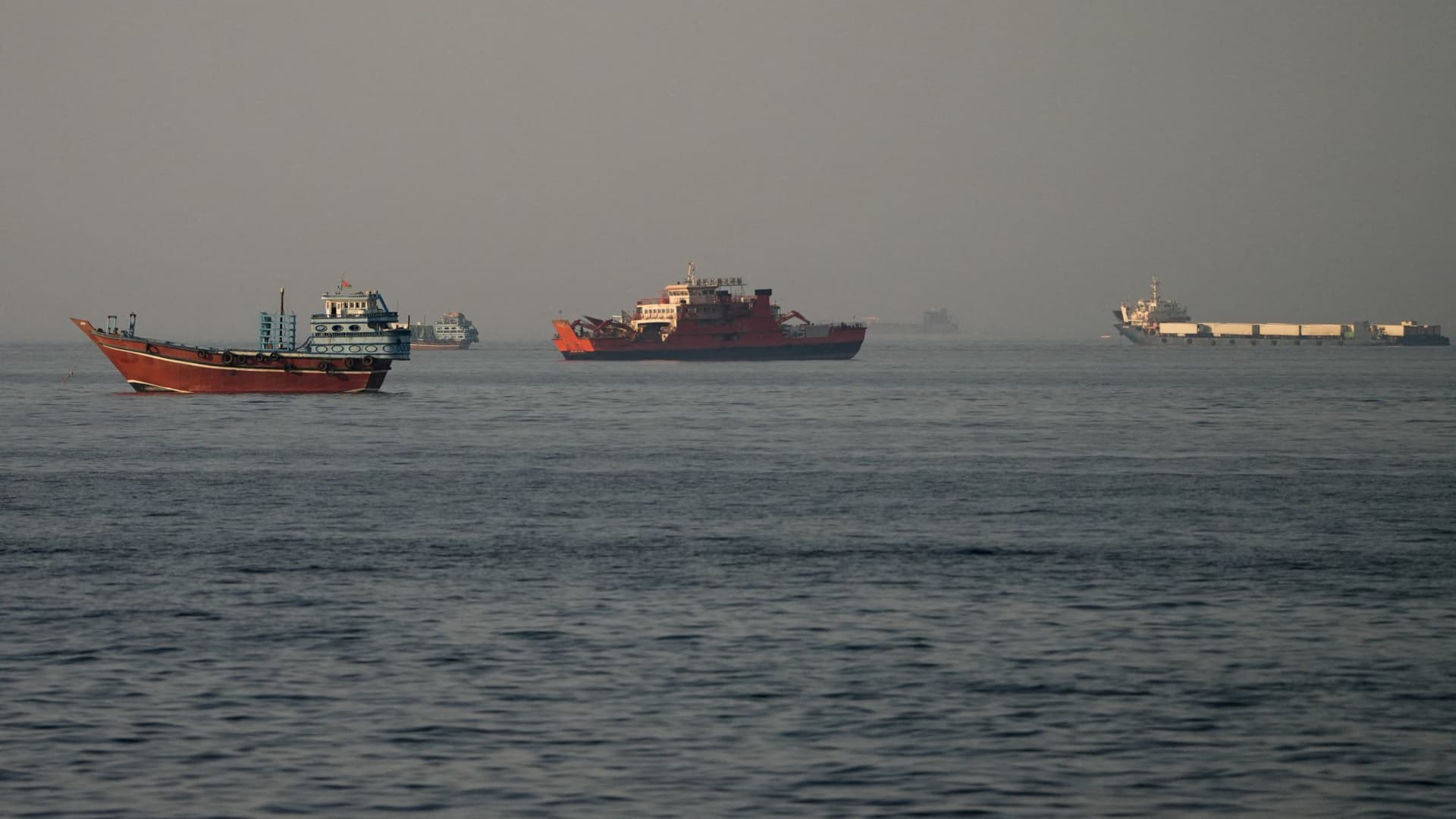
Tanker bosses remain cautious on Hormuz transit
Washington and Tehran had earlier reached a provisional agreement on Sunday, which would extend the U.S.-Iran ceasefire for 60 days and reopen the Strait of Hormuz to all shipping.
Arriving at the G7 meeting, President Donald Trump said the peace framework with Iran has been signed, adding that the Strait of Hormuz will “completely reopen” on Friday, free of Iranian tolls. Trump said a formal signing ceremony would take place on Friday in Geneva.
Hapag-Lloyd, the German global container shipping giant, welcomed the prospect of a peace agreement and an end to all military action in the region as “good news for us, for our crews, and for our customers.”
“We hope that our four remaining ships will be able to pass through the Strait of Hormuz this weekend,” Hapag-Lloyd said in a statement.
West Texas Intermediate.
However, the head of the world’s largest tanker operator has suggested a more complicated path to normalizing traffic through the Strait, which accounted for around 20% of the world’s oil supply prior to the outbreak of the war at the end of February.
Chief Executive of Mitsui OSK Lines Jotaro Tamura told the Financial Times on Tuesday that many operators could wait weeks until they allow their tankers to resume transit through the Strait.
“What will have to come in place is not just a simple agreement between the relevant countries, but it has to be material and translated into the real situations in the Strait of Hormuz, so that shipping lines can make themselves comfortable to go through,” Tamura said.