

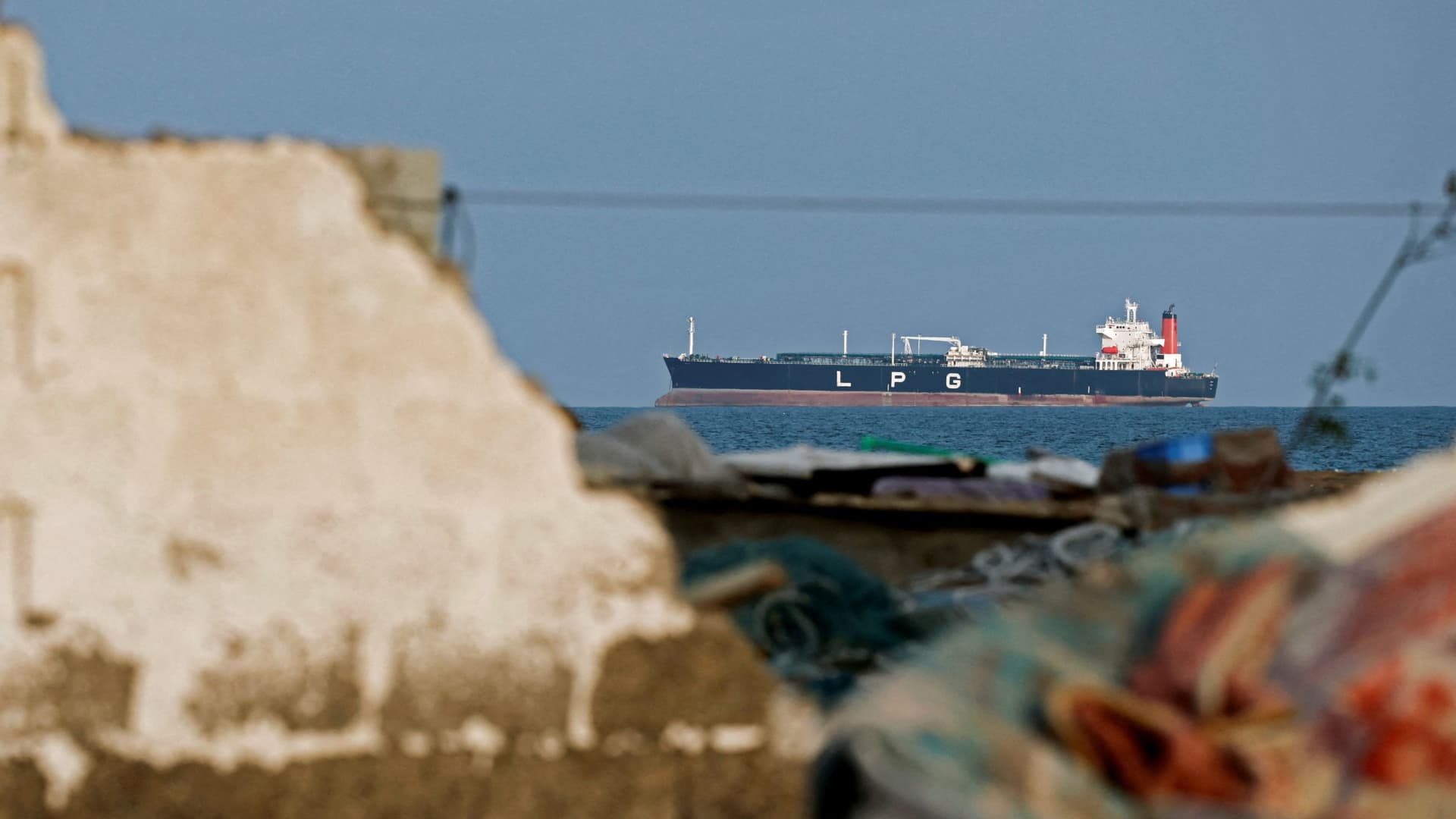
An LPG gas tanker at anchor as traffic is down in the Strait of Hormuz, amid the U.S.-Israeli conflict with Iran, in Shinas, Oman, March 11, 2026.
Benoit Tessier | Reuters
Hello, this is Leonie Kidd writing to you from London. Welcome to another edition of CNBC’s Daily Open.
I don’t know about you, but I have found that ultimatums rarely work. But President Donald Trump’s decision to issues Tehran with a deadline (which runs until 19:55 eastern time tonight) to reopen the Strait of Hormuz could mark a turning point in the conflict. Good or bad.
The markets don’t quite know what to make of it, with certain stocks markets selling off, while oil surged before turning negative.
What you need to know today
U.S. President Donald Trump on Saturday delivered a stark ultimatum to Iran, threatening to “obliterate” Iran’s power plants if Tehran does not fully reopen the Strait of Hormuz within 48 hours.
Iran responded by warning it would target U.S. infrastructure in the Gulf, including energy and desalination facilities, if Washington carried out its threat.
Iran’s speaker of the Parliament also warned that financial entities supporting the U.S. military budget were legitimate targets, and that buyers of U.S. Treasury bonds were purchasing “a strike on your HQ and assets.”
It makes for a confusing trading environment. Stocks in Japan and South Korea led declines in Asia, while futures in both Europe and the U.S. are quietly accelerating declines. Meanwhile, oil prices seesawed during the early part of Monday’s trading session.
Later today, British Prime Minister Keir Starmer will chair an emergency meeting with Chancellor of the Exchequer Rachel Reeves and Bank of England Governor Andrew Bailey to discuss the economic fallout of the war in Iran. This follows a call between Starmer and Trump where they discussed the importance of reopening the Strait of Hormuz.
In other news, an Air Canada plane has collided with an airport fire rescue truck upon landing at New York’s LaGuardia airport, with MSNow reporting that no details on passenger welfare have been released yet.
— Leonie Kidd
And finally…
From satellites to space data centers: Why low earth orbit is attracting billions in investment
A new layer of critical infrastructure is emerging above our heads.
Low Earth Orbit (LEO) — which NASA defines as the stretch of space at an altitude of 2,000 km or less — is rapidly evolving from a niche technical domain into one of the most strategically important environments of the 21st century.
It underpins global navigation, telecommunications, defense and worldwide connectivity and is seeing a flood of investment.
— Tessa McCann