


The AI boom may be having a side effect: a surge in Big Tech buying carbon credits to offset emissions generated by its energy-hungry buildout.
Amazon, Google, Meta, and Microsoft have ramped up purchases of permanent carbon credits since the launch of ChatGPT sparked the AI race in 2022, according to data compiled for CNBC by carbon credit management platform Ceezer.
The companies have all committed to reaching net-zero emissions, but the rapid development of energy and water-intensive AI has raised questions about whether that goal is achievable. The credits allow them to offset emissions by funding other projects that reduce emissions, such as technologies that remove carbon from the atmosphere.
Each carbon credit represents a metric ton of carbon dioxide reduced or removed from the atmosphere.
Amazon, Google’s parent company Alphabet, Microsoft, and Meta are eyeing a near-$700 billion combined bill to fuel their AI ambitions this year, which includes building massive data centers that also contribute to higher emissions.
They increased their purchases from 14,200 credits for permanent carbon removal in 2022 to 11.92 million in 2023, based on available market data from a carbon credit management platform, Ceezer, which also analyzed information from carbon market data insights providers Allied Offset and Cdr.fyi. They rose 104% year-on-year in 2024 to 24.4 million and 181% to 68.4 million in 2025, per Ceezer.
Ceezer’s data focuses on carbon removals considered permanent, while Microsoft’s purchases cover a range of time-limited carbon removals, defined as high, medium, and low durability, with the latter involving techniques that sequester carbon for less than 100 years, such as soil or forestry.
Amazon declined to comment on its carbon credit strategy, while Meta and Google did not respond to requests for comment.
A low starting point
Of the four Big Tech companies, only Microsoft has consistently reported annual purchases that stretch back before 2022. Credits are also bought in batches delivered over a multi-year period, which could skew the numbers.
In addition, there is no obligation to report them. Some purchases may not have been reported due to potential reputational risk — early carbon credits were controversial for not representing genuine emissions reductions, Ceezer CEO Magnus Drewelies told CNBC.
Due to a tight clean energy supply to support the AI buildout, achieving net zero is “impossible” for Big Tech without carbon removal, Drewelies said.
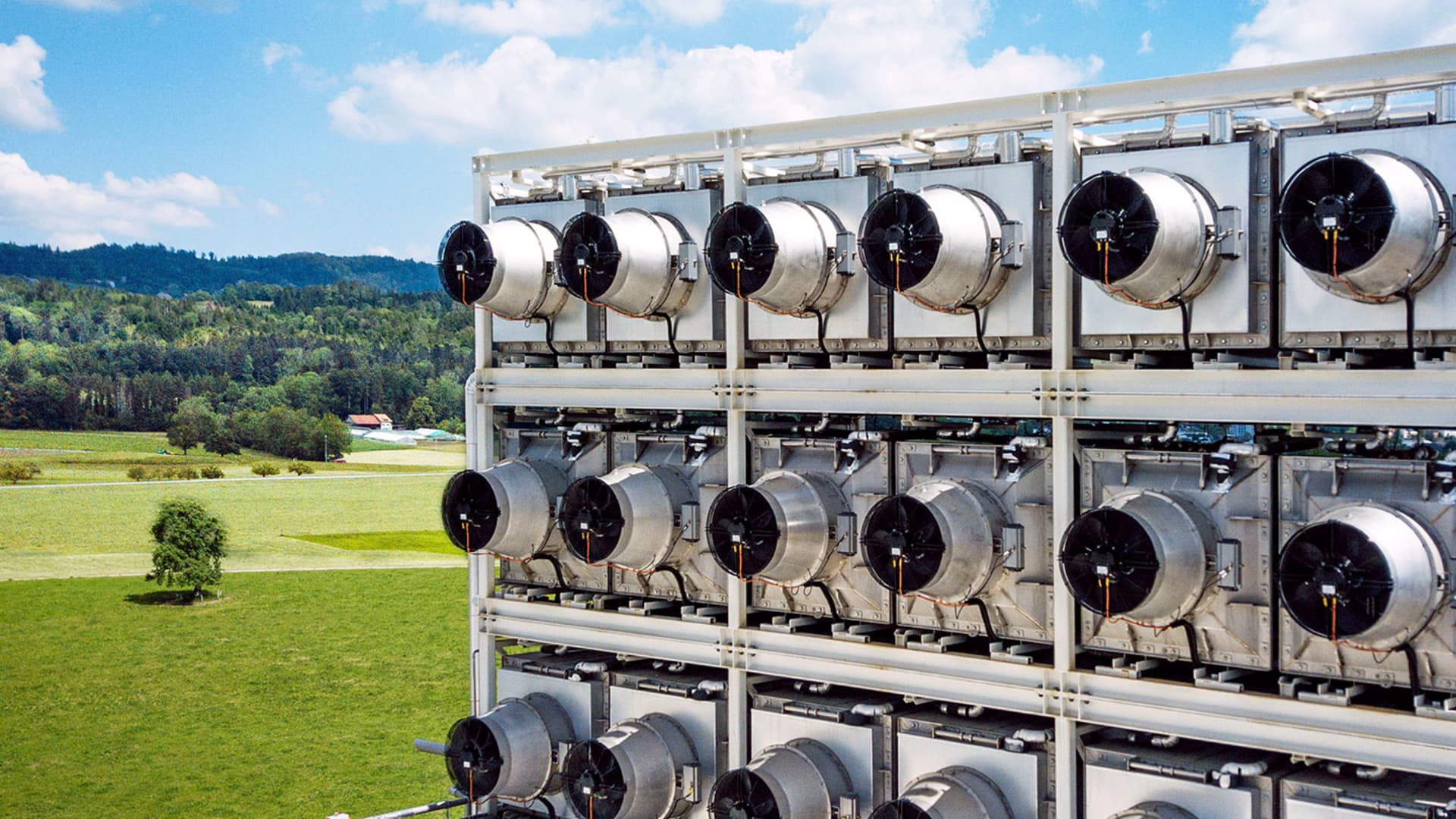
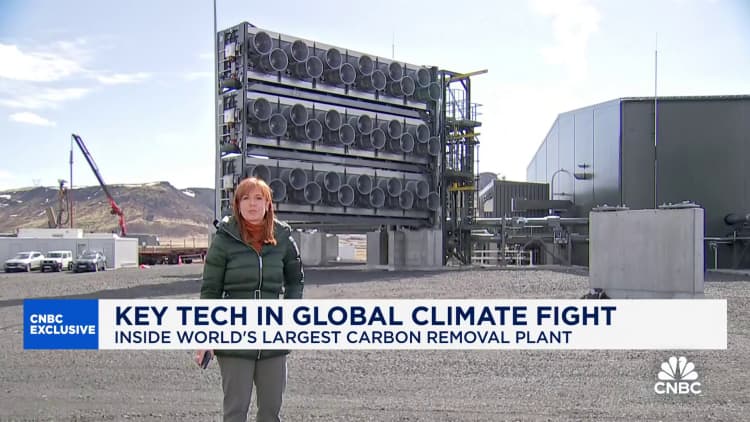
Technological carbon removal includes various techniques such as direct air capture, where machines are used to suck carbon dioxide from the air, and processes that speed up nature’s ability to capture and store carbon.
Ben Rubin, executive director of industry coalition Carbon Business Council, told CNBC the jump in purchases reflects the UN’s 2022 IPCC report, which said carbon removal would be needed for all pathways to limit global warming below 1.5 degrees.
“The demand surge for removal in 2023 was not a short-term reaction but the beginning of a structural shift, matched by increasing private sector action and public policy support,” he told CNBC, adding that purchases reflect a move from small demonstration purchases to multi-year offtake agreements.
“These buyers are looking to secure future supply, send demand signals to the market, and address residual emissions in their long-term climate strategies,” he said.
Building AI sustainably
Among Big Tech, Microsoft is considered a climate leader. Shilpika Gautam, CEO of climate finance platform Opna, told CNBC that the carbon removal market is “basically Microsoft.”
When asked about its carbon credit purchases, Microsoft provided different data to Ceezer. The company’s data reflects all types of carbon credits, not only permanent carbon removal.
Microsoft told CNBC it saw a 247% increase in credit purchasing from its fiscal year 2022 to 2023 to 5 million purchases, followed by a 337% jump from the fiscal year 2023 to 2024 to 21.9 million, and said there was a rise of around 100% in the following fiscal year, for which it did not provide a precise figure.
Melanie Nakagawa, chief sustainability officer at Microsoft, told CNBC that the company was focused on reducing emissions and removing what it can’t as it looks to be carbon negative by 2030.
“As a first mover in the carbon removal market, we are in a unique position to send demand signals that can lead to an increase in supply. A carbon removal market with more solutions and more buyers will get us all closer to meeting our collective targets, and drive positive planetary and economic impact,” she said in an emailed statement.
Microsoft did not specifically address whether its carbon credits purchases relate to its AI strategy.
Renewable energy will likely play an important role in meeting the rising demand for AI data centers.
“Over the time that AI rose, emissions did slightly go up when looking at the bigger companies, but not so noticeably. This implies that hyperscalers were able to react relatively quickly, including shifting to renewable energy,” Ceezer’s Drewelies said, drawing on data from his platform, indicating they are not solely relying on carbon credits.
Opna’s Gautaum said Microsoft’s carbon credits purchases can largely “can be attributed to their AI data centers build up.”
Gautaum added that Microsoft’s investment in companies developing low-carbon materials, such as Sublime Systems and Stegra, makes sense because, once scaled up, they enable the construction of sustainable infrastructure.
She said that Big Tech’s “buying spree” of carbon credits to offset emissions conflicts with “their conviction and their desire to build better.”
Last year, Amazon launched a platform where its partners can buy carbon credits. It is also investing in reducing the impact of the materials it uses, water and energy efficiency, and renewables.
She added it would be “great” if there were nobody left in the carbon removal business in 10 years, as it would mean “we’ve decided to build better.”
Drewelies noted that net-zero commitments predated the AI surge, adding carbon credit purchases would have “probably” increased without it.
“There is a fair chance that AI very practically underpinned the need for carbon dioxide removal as a quick and flexible instrument to deal with emission increases,” he added.