




-
Charlie Creme
Close
Charlie Creme
ESPN.com
- Charlie Creme projects the women’s NCAA tournament bracket for ESPN.com.
-
Michael Voepel
Close
Michael Voepel
ESPN Senior Writer
- Michael Voepel is a senior writer who covers the WNBA, women’s college basketball and other college sports. Voepel began covering women’s basketball in 1984, and has been with ESPN since 1996.
Multiple Authors
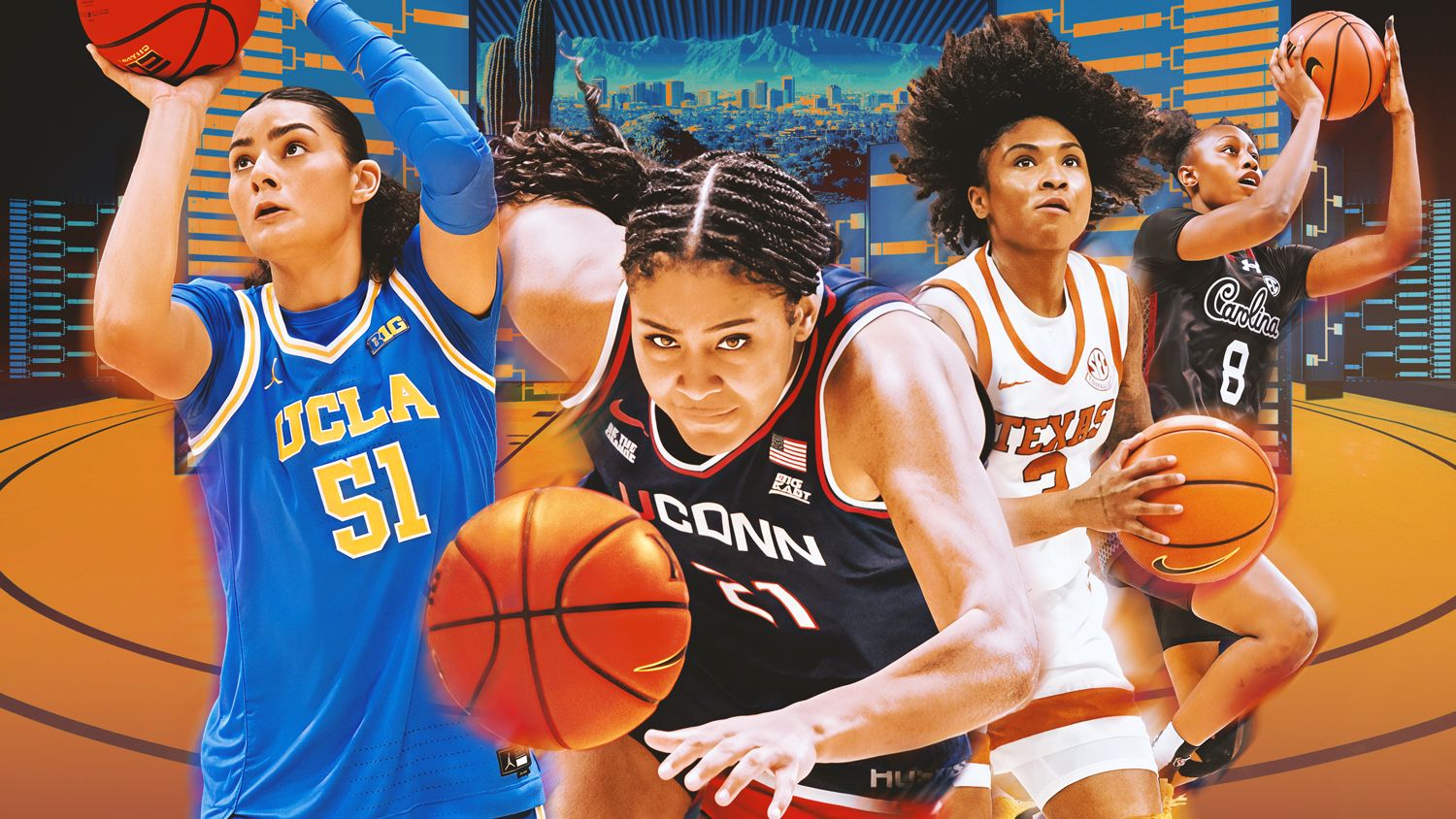
The bracket is here. Sixty-eight teams will compete in the 2026 women’s NCAA tournament.
From Charleston, which is dancing for the first time, to Tennessee, the only team to play in every women’s NCAA tournament since its inception in 1982, Sunday’s release of the bracket revealed which teams are in, which bubble teams got left out and which matchups might be waiting on the road to Phoenix, where the national champion will be crowned on April 5.
Undefeated UConn continues its title defense and heads into March Madness with a perfect 34-0 record and riding a 50-game winning streak. The Huskies are seeking the program’s seventh perfect season and 13th national championship.
But the Huskies have plenty of competition in a bracket full of star power. Consider this your go-to primer for the entire tournament field, with everything you need to know about each of the 68 teams competing in March Madness.
The First Four games tip off Wednesday and Thursday. The first round opens Friday morning on ESPN networks.
Jump to:
1-seeds | 2-seeds | 3-seeds | 4-seeds
5-seeds | 6-seeds | 7-seeds | 8-seeds
9-seeds | 10-seeds | 11-seeds | 12-seeds
13-seeds | 14-seeds | 15-seeds | 16-seeds

NO. 1 SEEDS

After winning in 2016, the Huskies went seven seasons without a national championship, which for them is a long time. That ended last season, as they won NCAA title No. 12 with dominant Final Four victories against UCLA and South Carolina. Despite losing 2025 WNBA No. 1 draft pick Paige Bueckers, UConn is 34-0 and favored to win it all again for the program’s seventh perfect season. The Huskies enter the NCAA tournament on a 50-game winning streak.
Sophomore forward Sarah Strong, the front-runner for national player of the year, has become one of the game’s top superstars. She leads UConn in points (18.5), rebounds (7.6), steals (3.4) and blocks (1.6). She is shooting 60.1% from the field, 42.7% from 3-point range and 87.3% from the foul line. Senior guard Azzi Fudd (17.7 PPG) has had a fully healthy season, starting every game, and is projected as the No. 1 pick in the 2026 WNBA draft. Fudd’s current 44.6% shooting from 3-point range would be a career best. They are the lone returning starters from last year’s title team.
Forward Blanca Quiñonez (9.9 PPG) was the Big East Freshman of the Year and Sixth Woman of the Year. Juniors KK Arnold and Ashlynn Shade have become full-time starters and spark plugs. Sophomore guard Allie Ziebell ranks second on the team in 3-pointers (57). Transfers also have made big contributions: Starting forward Serah Williams (Wisconsin) and reserve guard Kayleigh Heckel (USC) have combined to average about 14 points.
UConn ranks second in Division I in scoring average at 88.8 PPG and first in scoring defense, holding opponents to 50.4 PPG. The Huskies’ only close game this season was a 72-69 win over Michigan on Nov. 21. UConn beat its Big East foes by an average of 41.9 PPG, combining the regular season and league tournament. — Michael Voepel

The Bruins (31-1) have put together a historic campaign, sweeping the regular-season and conference tournament titles in the same season for the first time. They also went undefeated against all Big Ten opponents and won their second consecutive Big Ten tournament title. In beating a solid Iowa team 96-45 in the Big Ten final, UCLA’s 51-point win set the record for largest margin of victory in a championship game in conference history. Six Bruins scored in double figures and UCLA set single-game Big Ten tournament records for field goal percentage (63.5%) and assists (34). It was a culmination of the style of basketball UCLA has been playing the past several months, stringing together a program-record 25 consecutive wins. The Bruins have not lost since falling to Texas in late November.
UCLA has racked up victories over 12 ranked teams this season. Senior Lauren Betts, a 6-foot-7 center, is a force in the paint and was named the Big Ten Player of the Year and Defensive Player of the Year. Her production has dipped a bit from a season ago, though UCLA has more offense around her this year, with five players averaging at least 9.0 points per game. Betts, a projected WNBA draft lottery pick, is averaging 16.4 points (about four points fewer than last year) and 8.6 rebounds.
In the backcourt, Kiki Rice is scoring a career-high 15.3 points per game and averaging 4.5 assists. Guards Charlisse Leger-Walker, a former Washington State star who missed last season due to an injury, and Gianna Kneepkens, who played four seasons at Utah before transferring to UCLA before this season, have helped UCLA retool its depth. Coach Cori Close calls Leger-Walker, who leads the team with 5.6 APG, the team’s “connector.” Kneepkens (13.4 PPG) adds elite shooting and enters the NCAA tournament hitting 51.8% from the field, 44.2% from 3 and 95.2% from the free throw line.
Gabriela Jaquez (13.6 PPG, 5.4 RPG) and Angela Dugalić (9.0 PPG, 5.2 RPG) round out the balance, and all of them are capable of taking over a game. — Kendra Andrews

Texas has adjusted well since its move to the SEC from the Big 12 in 2024. The Longhorns tied South Carolina for the regular-season title last season and then reached the Final Four for the first time since 2003. This season, they tied Vanderbilt for second in the SEC and then upset the top-seeded Gamecocks for the league tournament championship. Now their goal is another Final Four.
Junior forward Madison Booker (18.9 PPG, 6.5 RPG) and senior guard Rori Harmon (8.4 PPG, 6.2 APG), both returning starters, have been the Longhorns’ backbone again this season and have had good support. Sophomore guard Jordan Lee (13.2 PPG) moved into a starting role for Texas this season as did transfer forward Breya Cunningham (8.1 PPG, 5.6 RPG), a junior who spent two years at Arizona. Senior center Kyla Oldacre has been the Longhorns’ top player off the bench, averaging career highs with 10.6 points and 6.2 rebounds. Sophomore forward Justice Carlton (8.7 PPG) has started 23 games and freshman guard Aaliyah Crump, after missing all of December and much of January due to injury, is making an impact in her first season, averaging 9.2 PPG in 19 games.
Texas made waves in November with wins on consecutive days over UCLA and South Carolina at the Players Era Championship. After starting 18-0, the Longhorns lost on the road to LSU and South Carolina in mid-January. Their only other loss was at Vanderbilt on Feb. 12, after which coach Vic Schaefer criticized his team as being “soft.” Now the Longhorns enter the NCAA tournament on an eight-game winning streak. — Voepel

The Gamecocks have become one of the powerhouses in all of college sports. They won their 10th SEC regular-season title this year, although they then lost to Texas in the league tournament title game. However, they are a No. 1 seed for the sixth year in a row and are seeking their sixth consecutive Final Four appearance. This despite losing four starters from last season. Three had completed their eligibility, and Chloe Kitts sat out this season because of a knee injury. South Carolina also lost top reserve MiLaysia Fulwiley, who transferred to LSU.
But the Gamecocks (31-3) have stayed the course behind sophomore forward Joyce Edwards (19.6 PPG, 6.3 RPG), the leadership of guards Raven Johnson (10.3 PPG, 5.4 APG) and Tessa Johnson (12.9 PPG) and the addition of two key transfers: guard Ta’Niya Latson (14.3 PPG) and center Madina Okot (13.4 PPG, 10.9 RPG).
South Carolina’s only losses were to Texas — in a non-SEC game in November at the Players Era Championship and in the SEC final — and in overtime at Oklahoma in January. The Gamecocks won 12 in a row after each of those first two defeats. We’ll see how the loss in the SEC tournament final motivates them. — Voepel
NO. 2 SEEDS

The stain of a 51-point loss to UCLA in the Big Ten tournament championship game should not be hard to remove given the otherwise successful season. The Hawkeyes were second in the conference in the regular season and the tournament after being picked to finish outside of the top five in the preseason. They did it with efficiency and sharing the ball. Iowa ranks sixth in the country in effective field goal percentage and second in assisted shot rate.
The addition of point guard Chazadi “Chit-Chat” Wright (12.3 PPG, 4.6 APG), a transfer from Georgia Tech, has been key. Her quickness helps create passing opportunities to post duo Ava Heiden (17.4 PPG, 7.3 RPG) and Hannah Stuelke (13.4 PPG, 8.5 RPG), who are the focus of the offense. Led by Wright (45.2% 3-point shooting) and Taylor Stremlow (40.4% 3-point shooting), the Hawkeyes can shoot it, too; they rank 14th nationally in 3-point percentage. — Charlie Creme

The Tigers returned guards Flau’jae Johnson, Mikaylah Williams and Jada Richard from last season’s Elite Eight team, and through the transfer portal added guard MiLaysia Fulwiley from rival South Carolina, center Kate Koval from Notre Dame and forward Amiya Joyner from East Carolina. Among the five-player freshman class, guards ZaKiyah Johnson and Grace Knox have made the most impact. The Tigers are averaging a Division I-leading 94.5 points, with eight players scoring between 14.6 and 8.5.
LSU overwhelmed most of its nonconference foes, scoring at least 100 points against the first eight. That streak ended with a 93-77 win at Duke on Dec. 4. In all, The Tigers have had 14 games scoring 100 points or more this season, most recently in a 112-78 win over Oklahoma in the SEC tournament quarterfinals. But they lost their 19th consecutive game to South Carolina in the semifinals. The Gamecocks are the only team coach Kim Mulkey has not beaten since taking over LSU in 2021.
Fulwiley, a junior guard, is LSU’s leader in scoring (14.6), assists (3.7), steals (3.0) and blocks (1.4). Guard play usually is especially important in the NCAA tournament, and that’s a strength for 27-5 LSU. — Voepel

Only one team this season played UConn and UCLA, the consensus two best teams, within single digits. That team is the Michigan Wolverines. They lost to UConn by three a week before Thanksgiving and to the Bruins by three in early February. In both games Michigan was the better team in the fourth quarter. Kim Barnes Arico’s core group of sophomores — Olivia Olson, Mila Holloway, Syla Swords and Te’Yala Delfosse — have proved in their nearly two seasons together that they can compete with the nation’s elite teams.
Olson plays bigger than her 6-foot-1 frame and is the Wolverines’ leading scorer (19.2 PPG) and rebounder (6.2 RPG). Swords (14.2 PPG) has equal star quality and Holloway (12.4 PPG, 4.7 APG) runs the team from the point guard spot. Michigan, the ninth-highest-scoring team in the country, lost only one game this season to a team outside of the top 10 (Washington on Jan. 1) and had a school-record 15 Big Ten wins. — Creme

The Commodores were picked to finish seventh in the SEC by the media and eighth by the league coaches, but they greatly exceeded that. Vanderbilt got off to a school-record 20-0 start before back-to-back losses to South Carolina and Ole Miss. Then the Commodores began February with victories over Kentucky, Oklahoma and Texas that elevated them to a projected No. 1 seed. A two-point loss at Georgia on Feb. 15 bumped them back down, but they still finished with 27 victories, a program record for the regular season. The Commodores’ 89-78 loss to Ole Miss in the SEC tournament quarterfinals was an unexpected anticlimactic finish to league play, but it didn’t erase what a great ride the Commodores have been on for most of 2025-26.
Sophomore guard Mikayla Blakes is driving the success. She was SEC Freshman of the Year in 2025 and the league’s player of the year in 2026. Blakes averaged 30.5 PPG in SEC regular-season games and for the season leads Division I at 27.0 PPG. Blakes’ rebounds (3.8), assists (4.4) and steals (2.9) per game also were up a bit from her first season.
Backcourt mate Aubrey Galvan was the SEC’s freshman of the year, averaging 13.1 PPG and 5.9 APG. Guard/forward Justine Pissott (11.4 PPG, 4.5 RPG) and forward Sacha Washington (10.6 PPG, 7.6 RPG) are also averaging double-figures scoring. Fellow senior guard Ndjakalenga Mwenentanda (7.0 PPG, 3.2 RPG) transferred in this season from Texas and has filled in well as Vandy’s fifth starter.
Shea Ralph was the SEC’s coach of the year. She took over the program in 2021-22 when it had missed the previous six NCAA tournaments. After rebuilding her first two seasons, Ralph now has led Vandy to the NCAA tournament three years in a row. The Commodores are seeking their first Sweet 16 appearance since 2009. — Voepel
NO. 3 SEEDS

The turnaround from a 3-6 start to winning both the ACC regular-season and tournament titles is one of the best college basketball stories of the season. The 19-game winning streak that followed not only changed Duke’s season but altered the complexion of the ACC. With important wins over Louisville and North Carolina in early- and mid-February, the Blue Devils took control of the race, going on to become the first team since Notre Dame in 2019 to sweep the regular-season and tournament titles.
Duke leads with its defense, allowed the fewest points per game in the ACC and is ranked third nationally in block shot rate. Toby Fournier‘s 2.3 blocks per game are the catalyst, but the 6-foot-3 sophomore is also the centerpiece of the offense, averaging 17.2 points on 53.2% shooting. The Blue Devils were able to beat Louisville in the ACC tournament title game with Fournier scoring just seven points because veterans Taina Mair and Delaney Thomas delivered with a combined 38 points. Those two and senior Ashlon Jackson (11.4 PPG) were keys to Duke’s resurgence and will be even more important in the NCAA tournament. — Creme

Not having a go-to scorer is a problem for some teams. Not Louisville. Coach Jeff Walz can play the hot hand, and the result was the program’s highest win total (27) in five years. Seven different Cardinals were high scorers in games, and their 34.2 points per game off the bench was second only to LSU in the country. Taj Roberts is the team’s leading scorer at 11.4 PPG, and the Cardinals still put up nearly 80 points per game. Imari Berry took her game to another level in the ACC tournament, averaging 17.0 points in three games. Laura Ziegler (11.1 PPG, 6.0 RPG, 3.0 APG) has also been a steadying presence inside after the graduation of Olivia Cochran, but Ziegler is also a solid perimeter shooter (36.6% 3-point shooting) and passer, so the Cardinals will often run their offense through her. — Creme

The Buckeyes’ nine Quad 1 wins are bested only by the four teams that occupy the No. 1 seeds. Ohio State played a top-10 schedule and delivered against it. Often having the best player on the court was the big reason why. By midseason, sophomore Jaloni Cambridge (22.8 PPG, 4.6 APG) had established herself as one of the top guards in the country. She drives the Buckeyes’ offense. Her sister, Kennedy Cambridge, drives the full-court, pressure defense. The redshirt junior guard’s 3.9 steals per game lead the Big Ten and help Ohio State force 21.4 turnovers per contest. Chance Gray‘s shooting (40.6% 3-point shooting) and ability to relieve Cambridge of some ballhandling duties will be another key to the Buckeyes getting back to the regionals for the first time since 2023. — Creme

Last season was historic for the program: For the first time, TCU won the Big 12 regular-season and tournament titles and advanced to the NCAA Elite Eight. The Frogs lost their top four scorers, led by guard Hailey Van Lith and center Sedona Prince. But they had three key transfers come in: guard Olivia Miles, forward Marta Suarez and center Clara Silva.
This season, TCU’s only nonconference loss was 71-69 to Ohio State at the Coretta Scott King Classic in January. The Frogs went 15-3 in Big 12 play to repeat their regular-season title, although they fell to West Virginia in the Big 12 tournament final. That 62-53 loss ended an eight-game winning streak but gave TCU some things to work on for the NCAA tournament.
TCU was the top defensive team in the Big 12 this season, holding foes to 56.3 PPG. The Frogs also had the most 3-pointers of any league team with 306 in 34 games. Miles, a projected lottery pick in April’s WNBA draft, leads TCU in scoring (19.6 PPG), assists (6.4 APG) and steals (1.8 SPG). She played in the NCAA tournament twice while at Notre Dame, losing in the Sweet 16 both times.
“Wins and losses come, and there’s lessons in both,” Miles said after TCU lost in the Big 12 final. “I’ll do my best to try to lead the young ones and [those] who haven’t been far in March.” — Voepel
NO. 4 SEEDS

Dawn Plitzuweit has done something that has become unusual in today’s environment: keep a team together. All five starters have been at Minnesota at least two years. Leading scorer and sophomore Tori McKinney (13.1 PPG) is the newbie. The other four are at least three-year Gophers. That veteran element has helped the coach break through to get Minnesota to the NCAA tournament for the first time in her three years and the first time for the program since 2018. Having back a healthy Mara Braun (11.5 PPG), who missed all but five games last season, also helped. Minnesota ranks fourth in the country in fewest turnovers and seventh in defensive rebound rate. The Gophers don’t give away possessions. — Creme

Last year the Tar Heels were ninth in the ACC in 3-point field goal percentage, and it cost them in two of their biggest games of the season. They went a combined 8-of-36 in their ACC tournament loss to NC State and Sweet 16 loss to Duke. The additions of freshman Nyla Brooks (8.6 PPG, 38.2% 3-point shooting) and UCLA transfer Elina Aarnisalo (10.2 PPG, 41.9% 3-point shooting), plus the improvement of Lanie Grant (10.6 PPG, 43.1% 3-point shooting) changed that. North Carolina was the best 3-point shooting team in the ACC this season. UNC remains one of the best defensive teams in the country (12th in adjusted defensive efficiency), and if that shooting carries over into the NCAA tournament, this could be the Tar Heels’ best chance of advancing beyond the Sweet 16 for the first time since 2008. — Creme

Last season was the Sooners’ first in the SEC after leaving the Big 12, and they finished tied for fourth. Then they advanced to the Sweet 16 for the first time since 2013 and lost to eventual champion UConn.
Oklahoma (24-7) returned three starters who all have had a big impact. Center Raegan Beers is averaging 15.7 PPG and a team-high 10.4 rebounds. Fellow senior Payton Verhulst, a guard, is averaging 11.9 PPG and junior forward Sahara Williams 12.5. The five-member freshman class is highlighted by guard Aaliyah Chavez, who leads Oklahoma in scoring (18.4 PPG) and assists (4.2 APG).
Sophomore guard Zya Vann (10.5 PPG) rounds out the double-figure scorers for the Sooners, whose 86.7 PPG average is third in Division I behind LSU and UConn.
The Sooners started the season 14-1, with their only nonconference loss to eventual Big Ten champion UCLA. After consecutive SEC losses to Ole Miss, Kentucky and LSU, the Sooners regrouped and handed South Carolina its only regular-season SEC loss, 94-82 in overtime on Jan. 22. Like last season, Oklahoma finished 11-5 in the SEC.
Oklahoma’s favorite pace is fast and faster, which is hard for many teams to keep up with. Beers has battled foul trouble at times, but when she’s getting the ball deep in the paint, she is hard to stop. — Voepel

The Mountaineers had one of the season’s oddest games in November, when ejections over an on-court scuffle just before halftime left them with only five players available for the second half. They still upset Duke 57-49. Their nonconference losses were to Ohio State and Villanova, and they started conference play 7-3. But since Feb. 1, West Virginia has lost just one game — 59-50 at TCU on Feb. 15 — and finished second in the Big 12 at 14-4. At the league tournament, West Virginia defeated Arizona State, Colorado and top-seeded TCU, avenging two regular-season losses to the Horned Frogs. The Mountaineers earned their second Big 12 tournament title; the first was in 2017.
That championship pushed the 27-6 Mountaineers into the top 16 seeds, so they will host NCAA tournament games for the first time since 1992. In the 34 years since, West Virginia has been in the top 16 seeds three other times, but circumstances kept them from hosting. In 2021, the entire NCAA tournament was played in the San Antonio area because of the COVID-19 pandemic. In 2010 and 2014, the tournament was still using predetermined sites for the early rounds, and the Mountaineers had to play at Texas and LSU.
West Virginia ranks 14th in Division I in defensive rating (80.2). While the Mountaineers are not known for their high-scoring offense, they are at 76.3 PPG, their highest scoring average since 82.4 in 1991-92. — Voepel
NO. 5 SEEDS

Last year as a No. 4 seed, the Wildcats were upset at home in the NCAA tournament’s second round by Kansas State in overtime. Still, it was a successful first season at Kentucky for coach Kenny Brooks. But he lost point guard Georgia Amoore — who had come with him from Virginia Tech and played her final season at Kentucky — to the WNBA draft. Amoore was crucial to everything the Wildcats did in 2024-25, but Brooks found another senior transfer guard to take over. Tonie Morgan, a Georgia Tech transfer, is averaging 13.8 points and 8.2 assists, which is second in Division I. Guard Asia Boone (10.2 PPG), from Liberty, is another important Wildcats transfer this season. Post players Clara Strack and Teonni Key, who both transferred to Kentucky last season, combined are averaging 28.3 points and 17.2 rebounds. And forward Amelia Hassett is also averaging double figures in scoring (10.6).
The Wildcats started this season 15-1 overall and 2-0 in the SEC but then hit a stretch from Jan. 8 to Feb. 9 where they lost six of nine. But they finished in a four-way tie for sixth in the league at 8-8 and won their second-round game in the SEC tournament over Georgia before falling to South Carolina in the quarterfinals. — Voepel

Brenda Frese once again leaned heavily on the transfer portal to reconstruct the roster, but injuries also forced a youth movement in College Park. Junior Oluchi Okananwa (18.0 PPG), who came over from Duke, and Indiana transfer Yarden Garzon (12.7 PPG) led the way. But season-ending injuries to Kaylene Smikle, the Terps’ top scorer in 2024-25, and Bri McDaniel opened the door for freshman point guard Addi Mack and Division I rookie and juco transfer Isimenme Ozzy-Momodu to play important minutes. Depth remains Maryland’s biggest issue, which makes the play of the versatile Saylor Poffenbarger (9.8 PPG, 7.0 RPG, 3.3 APG) a key. — Creme

Since the arrival of coach Robyn Fralick, Michigan State has been remarkably consistent, winning 22 games and reaching the NCAA tournament in all three seasons. Grace VanSlooten has been a big part of the past two, leading the Spartans in scoring in 2024-25 and this year (15.0 PPG). Sophomore Kennedy Blair is one of the most improved players in the Big Ten, going from 3.4 points per game to 14.4. She also leads Michigan State in rebounds (7.4) and assists (5.4). Fralick often puts the ball in Blair’s hands during crunch time. If the Spartans are to reach the regionals for the first time since 2009, they will have to reverse an end-of-the-season slide in which they lost four of their last six, including their opening Big Ten tournament game to Illinois. — Creme

This is the Rebels’ fifth consecutive season going to the NCAA tournament, a huge turnaround from the 14-year drought before that. This success has come under coach Yolett McPhee-McCuin, who took over the program in 2018. She has led Ole Miss to the Sweet 16 twice: last year and 2023.
Forward Cotie McMahon transferred in after three seasons at Ohio State and leads the Rebels’ offense at 19.9 PPG and 3.0 APG, both career highs. She has worked more on her guard skills this season as preparation for the WNBA.
Latasha Lattimore (10.9 PPG, 6.3 RPG) is another transfer this season who has helped Ole Miss. Fellow forward Christeen Iwuala, in her second year at Ole Miss after two seasons at UCLA, is averaging 12.7 points, 8.4 rebounds and shooting 60.6% from the field, all career bests.
Ole Miss (23-11) lost nonconference games to Kansas State and Michigan State. The Rebels went 8-8 in the SEC, with their best wins over Oklahoma and Vanderbilt. They hit a slump at the end of the regular season, losing their last four games with starting guard Sira Thienou (9.3 PPG, 5.6 RPG) out with a bone bruise.
She didn’t play in the SEC tournament, either, but Ole Miss defeated Vanderbilt again in the quarterfinals before falling to eventual champion Texas in the semifinals. Especially if Thienou can return, the Rebels could make another run to the Sweet 16. — Voepel
NO. 6 SEEDS

Despite a 7-9 record in SEC play, the Crimson Tide got an at-large bid based on a solid overall body of work. The strength of the league helped Alabama (23-10). After a 20-year drought, Alabama now has made the NCAA tournament five of the past six seasons. The Tide started the season 14-0, with their best nonconference victories over Minnesota and Clemson. Their top wins in league play were against Kentucky, Georgia and Ole Miss. The Tide won two games at the SEC tournament before falling in the quarterfinals to eventual champion Texas. Senior guards Jessica Timmons (16.4 PPG), Ta’Mia Scott (9.6 PPG) and Karly Weathers (9.1 PPG, 6.2 RPG, 3.5 APG) give Alabama a lot of perimeter talent. — Voepel

The Bears (24-8) started the season with a win over Duke in Paris. Their only nonconference losses were to Iowa and former Big 12 rival Texas. Baylor went unbeaten in January and looked like a contender for the Big 12 championship. Then the Bears lost to TCU twice, Texas Tech twice and West Virginia. Still, Baylor entered the league tournament as the No. 3 seed, but fell in the quarterfinals to No. 6 Colorado 62-53.
Offense has been the Bears’ biggest concern. They scored in the 50s in five of their eight losses and in the others scored 60 (twice) and 67. Sophomore guard Taliah Scott has carried much of the offensive load, averaging 20.0 points. Darianna Littlepage-Buggs (10.7 PPG) is the other Baylor player who averages in double figures scoring; the senior forward also led the Bears in rebounding (10.1 RPG).
Baylor has made the NCAA tournament in each of coach Nicki Collen’s five seasons. In that stretch, the Bears have lost three times in the second round and once in the Sweet 16. Their defense must be top-notch for them to make the regional semifinals again. — Voepel

With just five players returning from last season and eight departures, including three WNBA draft picks, it was going to take time for the Irish to find their chemistry. There were some early struggles, such as a 39-point loss to Michigan, losing in overtime to Georgia Tech and falling to UConn by 38. But in mid-February, things started to click. Notre Dame ran off seven straight wins before narrowly losing to Duke in the ACC tournament semifinals. Nearly everything the Irish do on both ends of the floor is driven by Hannah Hidalgo, the ACC player and defensive player of the year. She leads the nation in steals (5.4 SPG) and is third in scoring (25.2 PPG). Cassandre Prosper (13.8 PPG, 6.8 RPG), a 6-foot-3 senior, was Hidalgo’s running mate all season, but one of the new faces, Iyana Moore, was key, especially during that late-season push, scoring in double figures in 10 of her past 11 games. — Creme

The Huskies (21-10) are back in the NCAA tournament for the second year in a row. Before last season, they hadn’t been dancing since 2017. Washington beat USC in the second round of the Big Ten tournament before falling to UCLA in the semifinals. Sayvia Sellers finished seventh in conference scoring, averaging 18.5 points, and transfer guard Avery Howell (13.7 points) ranked sixth in the Big Ten in rebounds (8.3). As a group, Washington was a top-five rebounding team (39.0 per game) in the Big Ten and held conference opponents to the third-fewest points (62.2 per game). — Andrews
NO. 7 SEEDS

The Bulldogs are back in the NCAA tournament after missing the past two years. They started this season 14-0, then went 8-8 in SEC play. Their biggest victories were against Ole Miss, Kentucky and Vanderbilt. Georgia lost to Kentucky in the second round of the SEC tournament, but that game displayed one of the Bulldogs’ biggest strengths: sophomore guard Dani Carnegie. The Georgia Tech transfer was ACC Sixth Player of the Year and on the All-Freshman team with the Yellow Jackets last season. Now she is averaging 18.1 points, 5.3 rebounds and 3.2 assists for Georgia. Junior guard Rylie Theuerkauf (11.5 PPG) is another big addition via transfer (Wake Forest). Forward Mia Woolfolk (13.4 PPG) and guard Trinity Turner (11.1 PPG), both sophomores, are also scoring in double figures. — Voepel

Given the consistency of the Illini program over the past four years, it’s difficult to remember that Illinois had not been to the NCAA tournament for 19 years before the arrival of coach Shauna Green. After winning their first NCAA tournament game since 2000 last season, the Fighting Illini are back for the third time in four years. Beating Michigan State in the opening round of the Big Ten tournament was the final piece to a solid NCAA tournament résumé. Youth guides the way. Sophomore Berry Wallace (18.4 PPG) and freshman Cearah Parchment (13.4 PPG) are Illinois’ top two scorers. The addition of Maddie Webber, a Villanova transfer, has bolstered the perimeter game, but the Illini will be without third-leading scorer Gretchen Dolan, who suffered a season-ending injury in early February. — Creme

This was not the season the Wolfpack envisioned, but the bar has been set high in Raleigh when 20 overall wins and a fourth-place finish in the ACC is disappointing. NC State has reached the regionals or further in six of the past seven NCAA tournaments and was coming off last year’s regular-season title. NC State was a preseason co-favorite to win the conference again, but after losing close games in the middle of the league season to Louisville and North Carolina, the Wolfpack never fully recovered. A pair of double-digit losses to Notre Dame, including the ACC tournament quarterfinals, and one to Duke impacted the Wolfpack’s seed. They still have two of the top seven scorers in the league in Khamil Pierre (16.8 PPG) and Zoe Brooks (16.3 PPG). Pierre (12.0 RPG) is the ACC’s leading rebounder. — Creme

Texas Tech is in the NCAA tournament for the first time since 2013 and was the biggest surprise in the Big 12 this season. The Lady Raiders were picked 13th by the coaches and media in the preseason polls, but they tied for fourth with Oklahoma State at 12-6. Texas Tech started this season 19-0 and is now 25-7, the most victories the program has had since finishing 25-8 in 2004. Krista Gerlich earned Big 12 coach of the year honors, although Texas Tech didn’t stay long in the league tournament. The Lady Raiders were upset 58-51 by No. 12 seed Kansas State in the second round after a fourth-quarter collapse in which they were outscored 21-4. That was a sour note on which to end conference play, but the Lady Raiders have time to bounce back. They are an extra-experienced group with nine seniors, including top scorers Bailey Maupin (15.1 PPG) and fellow guard Snudda Collins (14.8). — Voepel
NO. 8 SEEDS

Shawn Poppie has injected life into a program that is making its first NCAA tournament appearance since 2019 and its second since 2002. In his second year as head coach, Poppie, who led Chattanooga to the NCAA tournament in 2023 and 2024, hit the transfer portal to jump-start the turnaround. Four of Clemson top five scorers — Rusne Augustinaite (10.9 PPG), Taylor Johnson-Matthews (9.3 PPG), Rachael Rose (8.6 PPG) and Demeara Hinds (8.1 PPG) — were all new acquisitions last offseason. They blended well with top player Mia Moore (13.5 PPG, 4.6 APG), who joined the program ahead of the 2024-25 season, and the Tigers won their most ACC games (11) since 1998-99. — Creme

The Cyclones moved to 14-0 with a win over Houston on New Year’s Eve. But 2026 brought bad fortune to Iowa State, which lost its first five games in January and dropped from the top 10 to out of the AP rankings. Junior forward Addy Brown, Iowa State’s leading rebounder (8.9), missed 11 games from Jan. 7 to Feb. 15. The Cyclones lost five of them.
Brown returned Feb. 18 in a win over Arizona State but Iowa State lost three of its last four entering the NCAA tournament. That included a rematch with the Sun Devils in the Big 12 tournament’s second round, which Arizona State won 77-68.
Junior center Audi Crooks has been a consistent force all season, averaging 25.5 PPG and shooting 64.7%, both second in Division I. Guard Jada Williams (15.3 PPG, 7.7 APG) and Brown (12.3 PPG, 5.2 APG) are the other top threats for Iowa State (22-9), which led the Big 12 in scoring (82.3 PPG). — Voepel

The Cowgirls had a better season than some might realize because they didn’t have one signature victory that stood out. Their 75-65 win over ranked Texas Tech on Feb. 14 was perhaps the best. They went 11-2 in nonconference play and then tied Texas Tech for fourth in the Big 12 at 12-6.
Oklahoma State lost 74-73 to Kansas State in the league tournament quarterfinals as a foul with 1.3 seconds left sent the Wildcats to the line for the winning free throw. The Cowgirls were unhappy about that ending, and it could fuel them in the NCAA tournament. They were 16-1 at Gallagher-Iba Arena, the second-best home record among Big 12 teams after TCU (18-0). However, the Cowgirls will be on the road in the NCAA tournament.
Oklahoma State’s 81.5 points scoring average ranked second in the Big 12, with six players averaging between 13.8 and 9.9 points. Senior guard Micah Gray leads the way with 13.8 points, while junior forward Achol Akot is the top rebounder (7.3 rebounds). Coach Jacie Hoyt is in her fourth season in Stillwater; the Cowgirls have lost in the NCAA tournament’s first round in two of her first three years. — Voepel

Last year, the Ducks returned to the NCAA tournament for the first time since 2022, but they got bounced in the second round. Now Oregon (22-12) is back and looking to reach the Sweet 16 for the first time since 2021. The Ducks, who lost to Michigan in the Big Ten tournament quarterfinals as an 11-seed, will look to sophomore guard Katie Fiso and sophomore forward Ehis Etute to lead them in the tournament, as they have all season long. Fiso is the team’s leading scorer, averaging 15.3 points per game, and Etute has been dominant in the paint, scoring 12.6 points to go with a team-high 8.9 rebounds. Senior forward Mia Jacobs (12.6 PPG, 5.3 RPG, 1.7 APG) will also take on a heavy load for the Ducks. — Andrews
NO. 9 SEEDS

Picked to finish 13th in the ACC, the Orange put together one of the most surprising seasons in the country. The jump from 12 to 23 wins and a fifth-place finish in the conference earned Felisha Legette-Jack ACC Coach of the Year. Uche Izoje, the ACC Freshman of the Year, was the biggest reason for the turnaround. The 6-foot-3 center from Nigeria wasn’t ranked in the SC Next top 100 recruits but made a big and immediate impact, averaging 15.5 points on 55.6% shooting and 9.4 rebounds per game. Izoje helped balance the veteran perimeter core of Laila Phelia (13.7 PPG), Dominique Darius (12.6 PPG) and Sophie Burrows (11.2 PPG). The status of Darius, who injured her hand in the ACC tournament and missed a quarterfinal loss to Louisville, will be important to watch. — Creme

A year ago, USC was a No. 1 seed with the soon-to-be named national player of the year in JuJu Watkins. Then the star guard suffered a torn ACL in the second round of the NCAA tournament. The Trojans rallied to reach the Elite Eight, where they came up short against UConn. Watkins announced in September she would sit out this season, and coach Lindsay Gottlieb built a roster around Jazzy Davidson, a 6-foot-1 guard who was the No. 1 recruit in the class of 2025, surrounding her with equal parts returning talent and high-level transfers. The Trojans picked up some quality wins, vs. then-No. 9 NC State in November and then-No. 8 Iowa in January. They also lost to then-No. 2 South Carolina and then-No. 24 Notre Dame in November. They struggle with consistency and limp into the NCAA tournament on a four-game losing streak. In their last game, the Trojans put together one of their worst offensive performances of the season, shooting 31% in a loss to Washington in the second round of the Big Ten tournament. Davidson, the Big Ten Freshman of the Year, shot 2-of-13 from the floor before briefly leaving the game in the first quarter with a right shoulder injury (she returned with her shoulder wrapped). The Trojans need a healthy Davidson (team-high 17.6 RPG and 5.7 RPG) if they want to make a run in the NCAA tournament. — Kendra Andrews

Beating a team three times in the same season might be difficult, but Princeton proved it’s possible in the championship game of Ivy Madness. The Tigers (26-3) had to withstand a big Harvard rally but beat the Crimson for the third time since Jan. 19 and have now won six of the eight editions of Ivy Madness. Fadima Tall led the way with 20 points. She is part of an exceptional junior class that has been a part of two regular-season and two tournament titles. Madison St. Rose is the lone senior who plays significant minutes and is Princeton’s leading scorer (16.0 PPG). The Tigers have yet to miss the NCAA tournament since Carla Berube became the coach in 2019, but they’re looking for their first win in March Madness since 2023. —Creme

A crucial sweep of a West Coast swing to Stanford and Cal in mid-February propelled the Hokies into the NCAA tournament. Virginia Tech relies heavily on juniors Carleigh Wenzel (15.3 PPG) and Carys Baker (14.1 PPG) but also got big contributions that weekend from Samyha Suffren and Kilah Freelon to get two wins. Only four teams in the ACC made fewer 3-pointers than the Hokies, who are in the bottom third of the country in free throw rate. They will win by limiting good shots and taking away the 3-pointer. Opponents shoot just 38.1% against Virginia Tech, and the Hokies rank eighth in the country in opponents’ 3-point rate. — Creme
NO. 10 SEEDS

Arizona State returns to the Big Dance for the first time since 2019. Under first-year coach Molly Miller, the Sun Devils achieved 24 victories, which is the second-best win improvement in the nation from a year ago, when they won 10 games. The Sun Devils’ résumé includes victories over Utah, Colorado and Iowa State, and they went 9-9 in conference play. Three players average double-digit scoring, with senior guard Gabby Elliott scoring 16.0 points per game, junior forward McKinna Brackens adding 14.6 and sophomore forward Heloisa Carrera 10.4. They are also the team’s three leading rebounders. — Andrews

Colorado is back in the NCAA tournament after failing to earn a bid a year ago. The Buffs reached the Big 12 semifinals before losing to eventual champion West Virginia, but their road to the tournament final — beating Kansas and then-No. 20 Baylor — helped punch their ticket to the Big Dance as an at-large. Senior forward Jade Masogayo packs the paint for the Buffs, grabbing 4.9 rebounds per game while also scoring 11.2 points on an efficient 48.3% field goal shooting. Junior guards Zyanna Walker (11.4 PPG) and Desiree Wooten (13.3 PPG) round out the top scorers, though Wooten has started just seven games and is a spark off the bench. — Andrews

No team needed a reset going into the NCAA tournament more than Tennessee, which is on a seven-game losing streak and has lost 10 of its past 12. The Lady Vols’ talent depth was hurt when starter Ruby Whitehorn was dismissed from the team for disciplinary reasons in November. And they have struggled with their chemistry and a playing style that hasn’t been as effective in coach Kim Caldwell’s second season with Tennessee as it was in her first.
Last season’s highlights included a regular-season win over UConn and a trip to the Sweet 16. This year, the UConn matchup was part of the derailing of Tennessee’s season. Things started going wrong with a 77-62 loss at home to Mississippi State on Jan. 29. Then came a 96-66 loss to UConn on Feb. 1. Tennessee got an overtime win against Georgia on Feb. 5 but next came the biggest loss in Tennessee history — by 43 points — at South Carolina on Feb. 8.
Caldwell said the Lady Vols “had a lot of quit in us” after that defeat. Tennessee blew out an injury-plagued Missouri squad on Feb. 12 but hasn’t won since. The Lady Vols now will try to salvage something in the NCAA tournament. — Voepel

UConn dominated the Big East, but the Wildcats (25-7) were the conference’s second-place team and have had a strong season, too. They went 16-4 in league play, with three of their losses to the Huskies, the most recent in the Big East tournament final on March 9. Their closest matchup with UConn was a 83-69 home loss on Feb. 18. UConn coach Geno Auriemma has said regardless of the score, the Wildcats have made his team work because of their constant movement on offense. That could be a problem for NCAA tournament foes unfamiliar with Villanova.
Sophomore guard Jasmine Bascoe is the Wildcats’ top offensive threat, averaging 18.8 points and 4.8 assists. She has been on the All-Big East first team both seasons at Villanova. Forward Brynn McCurry missed last season because of injury but is the Wildcats’ second-leading scorer (10.7 PPG) and top rebounder (5.2 RPG) this season. Guard Kennedy Henry (9.3 PPG, 4.4 RPG) was on the Big East’s all-freshman and all-defensive teams. This is Denise Dillon’s third NCAA tournament appearance in her six seasons as Villanova’s coach. — Voepel

Despite losing their opening game of the ACC tournament, the Cavaliers are headed to their first NCAA tournament since 2018. Virginia (19-11) went 11-7 in the ACC, stuck in a five-way tie for fifth place in the conference standings. Saddled with the No. 8 seed in the ACC tournament, they drew a difficult opponent in Clemson and lost their tourney opener. During the regular season, Virginia picked up an upset win over Louisville, helping its case for the at-large bid. Junior guard Kymora Johnson is Virginia’s engine, averaging 19 points per game as the Cavs’ only double-digit scorer. In a 88-53 win on Dec. 20, she set a career high with 41 points and hit a single-game program record 10 3-pointers. But when she struggles, Virginia usually does too. For the Cavaliers to make a push this March, they need Johnson to be at her best. — Andrews
NO. 11 SEEDS

Carly Thibault-DuDonis has been the head coach at Fairfield for four years. The Stags have reached the NCAA tournament in three of them. In those three seasons, Fairfield has lost only two games in the MAAC. The foundation of this run are juniors Meghan Andersen (16.0 PPG) and Kaety L’Amoreaux (17.6 PPG), this season’s MAAC player of the year. They’ve each been double-digit scorers all three years and were the Stags’ top two scorers this season. Led by another junior, Jillian Huerter, a 43.6% 3-point shooter, Fairfield is the 10th-most accurate 3-point shooting team in the country. — Creme

Despite losing seven of their last nine games, the Cornhuskers are in the NCAA tournament for the third straight year. Nebraska has a balanced scoring attack, led by Britt Prince (17.4 PPG), and was the sixth-best offense in the Big Ten. The struggles in February rest with a defense that allowed nearly 77 points per game during those final nine contests and ranked second to last in the Big Ten in opponents’ field goal percentage. Holding leads was also an issue. In their final two losses, the Huskers blew a nine-point fourth-quarter lead to Oregon and a 23-point third-quarter lead to Indiana. — Creme

In just seven years as the head coach at Rhode Island, Tammi Reiss is the program’s all-time wins leader. Now she has turned the best season in Rams’ history into the school’s first trip to the NCAA tournament. The team’s 28 wins are a program record and Rhode Island swept the Atlantic 10 regular-season and tournament titles. Brooklyn Gray turned out to be just the right addition to a veteran group of returners. The Saint Louis transfer is the Rams’ leading scorer and was part of the top defense in the A-10. — Creme

The Maggie Doogan era will go down as the best stretch in program history. But while this was the best individual season in the career of the two-time Atlantic 10 Player of the Year, Richmond’s team success fell short of the previous two seasons. In 2024 the Spiders won both the A-10 regular-season and tournament titles. Last year they were the regular-season champs. They didn’t win either this time around but did enough to get an at-large invitation. Despite a third-place finish and a A-10 semifinal loss to Davidson, Richmond won 26 games and reached the NCAA tournament for a third straight year. Point guard Ally Sweeney and A-10 first-team selection Rachel Ullstrom are also both back from last year’s team that beat Georgia Tech in the first round and was tied with UCLA at halftime of the second round of the NCAA tournament. — Creme

South Dakota State Jackrabbits
Since the Jackrabbits joined the Summit League in 2007-08, they have represented the conference 13 times in the NCAA tournament and have reached the postseason each year. Aaron Johnston took the school from Division II to Division I and instantly made it one of the best mid-major programs in the country. South Dakota State has won a game in the NCAA tournament in two of the past three years, beating USC in 2023 and Oklahoma State last year. This was the first time since 2020 that South Dakota State did not win the regular- season title. But led by senior Brooklyn Meyer, the Jackrabbits had a dominant run through the conference tournament. Meyer, a three-time first-team all-Summit League selection, averages 22.4 points on 64.6% shooting, good for fifth in the country. — Creme
NO. 12 SEEDS

Colorado State rides a nine-game winning streak into its first NCAA tournament since 2016. The Rams (27-7) had the top-ranked defense in the Mountain West, limiting opponents to 55.0 points per game and 35.5% shooting from the field. The question for Colorado State is how it will fare if star Lexus Bargesser, who was injured in the first half of a Mountain West semifinal game, is unavailable. Bargesser, the Mountain West Newcomer of the Year, leads the team in scoring with 15.2 points per game on 45.7% shooting from the field and 40.7% from 3. She is second on the team in rebounding with 5.8 per game. — Andrews

Gonzaga secured its 16th trip to the NCAA tournament and first since 2024 after winning its 11th WCC tournament in Las Vegas. It’s the Zags’ first conference title since 2022, and the last WCC title it will ever win, as the Zags prepare to join the renewed Pac-12 next season. When Gonzaga missed the Big Dance last year, it was the first tournament it had missed in four years. This year’s team has been led by WCC Women’s Basketball Player of the Year and Freshman of the Year Lauren Whittaker. Whittaker was the conference leader in scoring (19.4 PPG), rebounding (10.2 RPG) and field goal percentage (.553) during the regular season. She had a conference-best 17 double-doubles during the regular season. She became just the second freshman in WCC women’s basketball history to be voted the conference player of the year. — Andrews

Last year the Dukes won 27 regular-season games and the Sun Belt regular-season title by three games but tripped up in the conference tournament championship and ended up in the WBIT. This regular season was disappointing. Picked to win the Sun Belt again, James Madison finished tied for third. But behind Peyton McDaniel, one of the best players in JMU history, the Dukes won the tournament title and are back in the NCAA tournament for just the second time in 10 years. McDaniel had 28 points, 10 rebounds and four steals in the championship game. — Creme

The move to the Missouri Valley Conference from the Ohio Valley in 2022 has worked well for the Racers. Dating back to the start of the women’s NCAA tournament in 1982, Murray State had made the field only once while in the OVC: in 2008. Now, the Racers have gone to the NCAA tournament two years in a row in the MVC.
Last year, they tied for the regular-season MVC title and won the conference tournament final over Belmont. This year, they won the regular season outright at 19-1, with their only league loss at Northern Iowa on Jan. 23. The Racers have won 15 in a row since, including a 72-59 league tournament semifinal win over Northern Iowa.
In the MVC championship game, the Racers ended No. 10 seed Evansville’s improbable run. The Purple Aces had upset the Nos. 2, 3 and 7 seeds before falling to Murray State 91-70.
Junior guard Halli Poock, the MVC Player of the Year, had 33 points in the title game and leads the 31-3 Racers at 22.4 PPG. Murray State alum Rechelle Turner has coached the Racers to a 56-11 combined record the past two seasons. — Voepel
NO. 13 SEEDS

Green Bay’s Horizon League dominance is back. The Phoenix missed the NCAA tournament from 2019-23 but have returned for the third straight season. Former Green Bay player Kayla Karius, who was a member of the Phoenix’s 2011 Sweet 16 team, has returned as coach to lead her alma mater to 52 wins in the past two seasons. She has kept the same style that was so successful under Kevin Borseth. Green Bay plays with a deliberate pace and defends well, allowing 58.9 points per game. The catalyst for both is Jenna Guyer, the Horizon Player of the Year and a member of the conference’s all-defensive first team. She averages 15.1 points, 6.3 rebounds and 1.1 steals per game. — Creme

When the Vandals beat Montana State in overtime on Feb. 5, they took control of the Big Sky and kept control right through edging the Bobcats one more time in the conference tournament championship game to earn their first NCAA tournament berth since 2016. Balance — eight different players scored — was the key in the title game and has been an Idaho calling card all season. Hope Hassmann, a 5-foot-8 junior, is the team’s leading scorer with 14.2 points per game, but four Vandals average in double figures, including two of seven international players on the roster: Debora dos Santos (11.3 PPG) and Ana Pinheiro (10.6 PPG). Idaho’s roster includes players from Brazil, Estonia, Portugal, Serbia and Sweden, and coach Arthur Moreira is the first Brazilian-born coach in Division I history. — Creme

The RedHawks (28-6) captured the Mid-Atlantic Conference tournament title Saturday, earning their first trip to the NCAA tournament since 2008. They have put together their best regular season in program history, recording a record 28 wins. Featuring MAC Coach of the Year Glenn Box and All-MAC player Amber Tretter, the RedHawks displayed a well-balanced style of play on their way to winning their first MAC regular-season championship since 2003-04. Miami (Ohio) held opponents to a conference-low 58.5 points per game, while also scoring the third-highest mark in the conference (71.0). Tretter finished 11th in the conference in scoring (14.5 PPG), fifth in rebounding (8.2 RPG) and fourth in blocks (1.1 BPG). — Andrews

Just 10 games into the season, the Leathernecks lost Raegan McCowan, their leading scorer the past two seasons, to an elbow injury. Western Illinois then became senior Mia Nicastro‘s team, and she took the Leathernecks to heights it has been to only once before. Their 26 wins ties the 2016-17 team for the school’s most ever. That was also the last time Western Illinois went to the NCAA tournament. The 6-foot-2 Nicastro led all non-Power 4 conference players in scoring at 24.3 points per game, the highest scoring average in program history. — Creme
NO. 14 SEEDS

The last team to lock up an automatic bid to the NCAA tournament on Selection Sunday made program history. Charleston made the field for the first time, winning the Coastal Athletic Association tournament late Sunday afternoon 68-56 over Hofstra.
The No. 10 seed Pride had gone on an upset run, beating the No. 2, 3 and 7 seeds to make the final. And they pushed the Cougars, too, leading 33-30 at halftime. But No. 1 seed Charleston took control with a 21-7 edge in the third quarter.
Charleston elevated to NCAA Division I in the 1991-92 school year and has been in the CAA since 2013. The Cougars have won at least 22 games the past three seasons, winning the CAA regular-season title for the first time at 16-2 in league play this year. Now 27-5, the Cougars have set a school record for victories.
Junior guard Taryn Barbot, the CAA Player of the Year, leads Charleston at 19.6 PPG, and her twin, Taylor Barbot, is second at 11.4 PPG. Both were on the All-CAA first team. They combined for 39 points in the CAA final. — Voepel

The Bison (26-7) are back in the NCAA tournament for the first time since 2022 after securing the Mid-Eastern Atlantic Conference tournament title. They beat a familiar foe to get here: Howard and Norfolk State have faced off in the previous four conference tournament title games. In the past three years, the Spartans had come out on top. The Bison rewrote the ending Saturday and rode a 14-game winning streak into the Big Dance. Howard went 13-1 in the MEAC regular season behind the conference’s best offense and second-best defense. MEAC Player of the Year Zennia Thomas led the conference in scoring (15.2 PPG) and rebounding (8.0 per game). — Andrews

UC San Diego is headed to the NCAA tournament for the second time in as many seasons — the only two years the Tritons have been eligible for the Big Dance since the program moved to Division I in 2020. The Tritons secured their first Big West regular-season title, finishing the campaign as co-champions of the conference. They entered the conference tournament as the No. 2 seed, giving them a double bye all the way to the semifinals. The Tritons are led by junior forward Erin Condron, an All-Big West first-team selection who averages a team-high 15.7 points and 8.6 rebounds, and senior guard Makayla Rose, who averages 12.8 points on 42% shooting from the floor. — Andrews

For the second season in a row, the Catamounts won the America East tournament title. They will be making the program’s ninth NCAA tournament appearance and third in the past four years. America East Coach of the Year Alisa Kresge is in her eighth season with Vermont. This one came with some drama. The Catamounts won the regular-season title at 13-3 and got the league tournament’s No. 1 seed. They won their opening game 55-40 over UAlbany. But in the semifinals, they were pushed to the brink by No. 4 seed UMBC before prevailing 68-65 in double overtime. That set up a third meeting this season against Maine, the No. 2 seed. The teams split during the regular season, but Vermont won the championship game 61-43. Senior guard Keira Hanson had 23 points and senior center Nikola Priede, the tournament’s Most Outstanding Player for the second year in a row, had 14. Priede is also the league’s Defensive Player of the Year, and Vermont (27-7) is fourth in Division I in scoring defense, holding foes to 51.6 PPG. — Voepel
NO. 15 SEEDS

After their NCAA tournament breakthrough last season, there was no stopping the Knights in Northeast Conference play this season. They are on a 22-game winning streak, having won the league regular-season title at 18-0 and then the conference tournament championship.
Top-seeded FDU beat No. 3 seed Long Island in the NEC title game 79-57, with six Knights scoring in double figures. FDU has made 315 3-pointers this season; its 9.3 per-game average is ninth in Division I. Sophomore guard Ava Renninger leads the Knights in scoring (12.7 PPG) and assists (5.2 APG).
FDU made its first-ever NCAA tournament appearance last season after going 16-0 in league play and winning the NEC tournament. Longtime college coach Stephanie Gaitley — who previously led programs at Richmond, Saint Joseph’s, Long Island University, Monmouth and Fordham — took over at FDU in 2023 and has had great success after a 14-17 first season. Last year, the Knights finished 29-4; they enter the NCAA tournament this season at 30-4. FDU’s last loss was Dec. 29 vs. Binghamton. — Voepel

The Panthers bring an even better team into the NCAA tournament than they did last year when they lost to William & Mary in the First Four. The addition of Macy Spencer and the improved production from point guard Aaliyah Collins are the primary reasons. After a limited role at UNLV for two years, Spencer flourished this season at High Point, leading the Big South in scoring (18.4 PPG) and winning conference player of the year. Collins improved her scoring (10.3 PPG to 15.2 PPG) and assists (3.0 APG to 4.4 APG) and was the Big South’s co-defensive player of the year. — Creme

Holy Cross won the Patriot League championship and an automatic bid after No. 1 seed Navy was upset 81-76 by Lehigh in the tournament semifinals. Navy went 16-2 in the Patriot regular season, but the two losses were to the teams that ended up making the league final: No. 2 seed Holy Cross and No. 4 seed Lehigh.
The Crusaders won the championship game 77-70 after losing twice to Lehigh during the regular season: on Jan. 7 and on Feb. 7. Since that second loss to Lehigh, Holy Cross has won nine in a row and is 23-9. Senior guard Simone Foreman was one of three Crusaders to score 16 points in the championship game, and she also had 12 rebounds. Senior forward Meg Cahalan leads Holy Cross in scoring this season at 15.3 PPG.
This is the 15th NCAA tournament appearance for Holy Cross and third in the past four years. It’s the first for Candice Green, who is in her second season as Crusaders head coach. — Voepel

Despite falling short of the regular-season title, the Dolphins were the hottest team in the ASUN in the final month and have won 13 of their past 14 games heading into their second NCAA tournament in program history and first since 2016. The last of the wins was the hardest. Jacksonville survived blowing an 11-point fourth-quarter lead and ASUN player of the year Priscilla Williams fouling out late in the fourth quarter to beat Austin Peay for the conference tournament title. Williams, who has also played for Syracuse, South Florida and Oregon, scored 16 points in the game and is averaging 14.9 points and 8.3 rebounds on the season. — Creme
NO. 16 SEEDS

During nonconference play, the Lancers lost six consecutive games and were 6-7 on Dec. 21. But they’ve been much more consistent since the Western Athletic Conference schedule began and lost just three games in league play. Freshman guard Lauren Olsen leads California Baptist (23-10) with 15.1 points per game. Redshirt junior guard Filipa Barros, who averages a double-double (11.2 points, 10.0 rebounds), anchors the Lancers’ defense with senior forward Emma Johansson (10.5 points, 6.7 rebounds). California Baptist, back in the NCAA tournament for the first time since 2024, is making its second appearance after reclassifying in 2022-23 to Division I. — Andrews

In its first season in Conference USA, Missouri State upset the top three seeds to win the league tournament championship and an NCAA bid. Louisiana Tech dominated CUSA in the regular season at 17-1 and went into the league tournament final on a 19-game winning streak. But the No. 1 seed Lady Techsters had their worst offensive day of the season, falling 43-38 to No. 6 seed Missouri State. The Lady Bears knew they could compete with Louisiana Tech after close losses in the regular season: 60-51 in January and 68-67 in February. In the final, Missouri State held Louisiana Tech to 23% shooting overall and just 12 points in the second half. The Lady Bears previously spent 33 years in the Missouri Valley Conference, where they won 11 league tournament titles, most recently in 2019. They last went to the NCAA tournament in 2022 on an at-large bid. Junior guard Kaemyn Bekemeier, a first-team All-CUSA pick who had 16 points and nine rebounds in the final, leads Missouri State this season with 17.4 PPG and 8.2 RPG. — Voepel

One of the most improbable teams in the field, the Bulldogs — under first-year head coach Matt Wise — are in the NCAA tournament for the first time since 2012. They finished sixth in the Southern Conference and are 16-18 overall. Samford has not had a winning season since 2021 and has had just three in 14 years. But more success might be on the way as two freshmen lead the Bulldogs. Kaylee Yarbrough and Francie Morris combined to score 47 points in the SoCon championship game over Chattanooga. Yarborough’s 12.2 points per game leads the team. — Creme

The Jaguars are making their eighth NCAA tournament appearance and for the first time will play in the Big Dance in consecutive seasons. Last year, Southern won the Southwest Athletic Conference regular season and tournament titles, beat UC San Diego in the first four and then fell to UCLA in the first round.
This season, Alabama A&M was the SWAC regular-season champion but was upset 51-49 by Southern in the conference tournament semifinals on Jocelyn Tate‘s basket with 1.2 seconds left. That heartbreaker ended the Bulldogs’ 18-game winning streak. In the SWAC championship game, the No. 4 seed Jaguars got another upset, beating No. 3 seed Alabama State 73-56. During the regular season, Southern lost twice to Alabama A&M and Alabama State. But when it mattered most, the Jaguars beat them.
Southern (19-13) played a very tough nonconference schedule, falling to ranked teams such as Iowa, Iowa State, Ole Miss, UCLA, Washington and Baylor. But the Jaguars got wins over Big 12 teams Arizona and Houston. Sophomore forward DeMya Porter leads Southern at 9.7 PPG, with four players all averaging between 7.9 and 7.5 points. That balance makes the Jaguars challenging to guard. — Voepel

Ten days before the Southland Conference championship game, SFA lost to top seed McNeese by 27 points. Senior Harmanie Dominguez and sophomore Myka Perry were not going to let that happen again. They combined for 38 points, with Dominguez making 5-of-7 3-pointers, to lead the Ladyjacks to a 71-59 victory Thursday for their second consecutive Southland title. Dominguez (12.9 PPG) set the school record for 3-pointers in a season and ranks 11th in the country with 92 made. SFA is not deep and ranks last in the Southland in turnovers, but four starters score in double figures, led by Key Roseby‘s 13.2 points per game. The Ladyjacks are 26th in the country in assists. — Creme

Last season, UTSA went 17-1 in American Conference play but was upset in the league tournament quarterfinals by No. 9 seed Rice. This season, UTSA got revenge. Rice, 17-1 in league play, was the No. 1 seed in the league tournament but lost to No. 6 seed UTSA 54-40 in the American championship game. The Roadrunners made the NCAA field for the third time and first since back-to-back appearances in 2008 and 2009. UTSA gave a preview of the championship game upset when it ended Rice’s 22-game winning streak on March 7 with a 61-52 victory in the regular-season finale. A week later, the Roadrunners ended the Owls’ NCAA tournament hopes. UTSA was still under .500 with that first win over Rice, but four victories at the American tournament sent the Roadrunners into the NCAA tournament at 18-15. UTSA’s Karen Aston will take her third team to the NCAA tournament. She previously advanced as head coach at Texas (2014 to 2019) and Charlotte (2009). — Voepel