

Morning Report is The Hill’s a.m. newsletter. Subscribe here.
▪ Trump’s Fed pick making waves
▪ DC’s Bowser on Capitol Hill
▪ Kimmel’s show pulled after Kirk comments
▪ Georgia governor’s race getting crowded
President Trump’s newest pick for the Federal Reserve’s board of governors is already making his mark as the lone dissenter from the agency’s interest-rate decision Wednesday.
While the Fed voted to reduce interest rates by a quarter point, as expected, Stephen Miran was the only member of the 12-person panel to call for a half-point drop, which would have been a much more significant move for the Fed to take in one swoop.
One voting member on Wednesday also signaled a desire to push rates down aggressively through the end of the year. While the Fed’s projections are anonymous, observers instantly turned their attention to Miran, who has pushed for much lower rates.
It was a whirlwind 72 hours for Miran, Trump’s top economic adviser who stepped back as chair of the White House Council of Economic Advisers to fill the remaining four months of an open board seat at a key moment for the central bank. He was confirmed by the Senate Monday, sworn in Tuesday and voted Wednesday.
The latest decision was the first time the Fed has lowered rates in nine months, and it signaled two more rate cuts this year as the independent agency seeks to ease pressure on the weakening U.S. job market.
Trump has long pushed Fed Chair Jerome Powell to lower rates. And while Powell has continued to express concern about higher levels of inflation (consumer prices rose at an annual rate of 2.9 percent last month), he acknowledged growing signs of weakness in the labor market.
“Our policy had been really skewed toward inflation for a long time. Now we see that there’s downside risk, clearly, in the labor market, so we’re moving in the direction of more neutral policy,” Powell said at a press conference Wednesday.
Two other Trump appointees to the Fed board, governors Michelle Bowman and Christopher Waller, voted with the rest of the board for a quarter-point reduction Wednesday. The pair had dissented from the Fed’s previous decision in July to leave rates unchanged.
Miran joined the Fed this week as Trump’s standoff with the century-old independent agency reached new heights.
The president is battling to try to oust Fed board member Lisa Cook over allegations of mortgage fraud. A federal appeals court blocked Trump’s attempt to remove Cook ahead of the Fed’s Wednesday meeting. The administration is expected to appeal the ruling to the Supreme Court.
Trump’s moves are testing the independence of the century-old institution, which was set up to make major decisions separate from political pressures.
Powell dodged commenting directly Wednesday when a reporter asked how the Fed can maintain its independence if Miran is on a temporary leave of absence from his role in the Trump administration.
“We did welcome a new committee member today, as we always do, and the committee remains united in pursuing our dual mandate goals,” Powell responded. “We’re strongly committed to maintaining our independence and beyond that, I really don’t have anything to share.”
▪ Axios: What is the Fed’s “third mandate”?
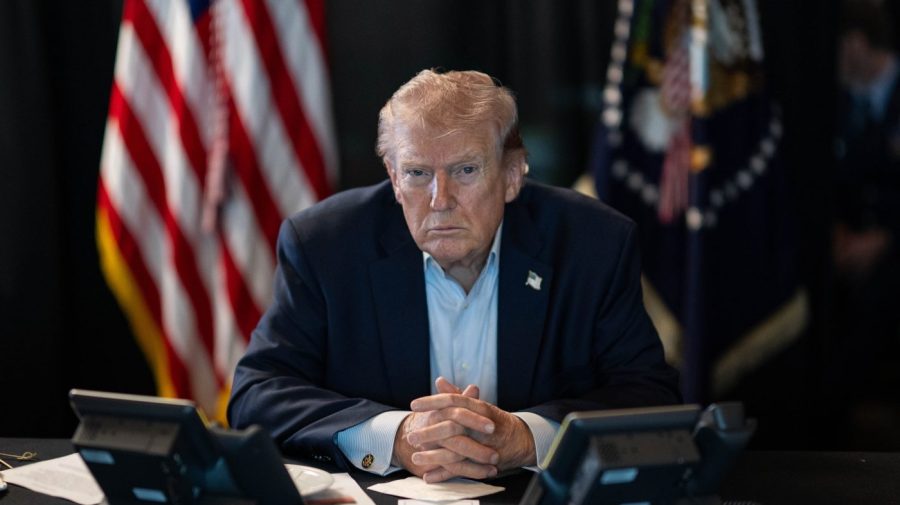
TRUMP, TRADE AND TECH: Trump will likely have an opportunity to react to the news of the interest rate drop during a joint press conference today with British Prime Minister Keir Starmer.
The two leaders engaged in a bilateral meeting earlier Thursday morning, during which trade and technology were expected to be key topics of discussion.
The BBC reported that a proposed deal to remove tariffs on U.K. steel was postponed indefinitely, dealing a blow to British hopes of added relief for another sector of their economy. That will leave in place the 25 percent tariffs on steel, still considerably lower than the 50 percent tariff in place for other countries.
Trump said ahead of his visit that U.K. officials were interested in continuing trade negotiations while he was there.
“They’d like to see if they can get a little bit better deal, so we’ll talk to them,” he said.
Wednesday’s events were big on pomp and circumstance as Trump met for the first time with King Charles III since the king’s coronation. Trump is the first U.S. president to make a second state visit to the U.K., having visited during his first term, when he met with then-Queen Elizabeth II.
Thursday’s talks are expected to focus on diplomacy and government business, including the war in Ukraine, tariffs and investment in the U.S. and UK. Several leaders of top U.S. businesses will be on hand for a reception today in the UK, including OpenAI CEO Sam Altman and Nvidia CEO Jensen Huang. Trump has emphasized his close ties to Big Tech leaders during his second term and hosted various technology heads for the first event at the newly renovated White House Rose Garden.
Follow today’s live blog here.
▪ CNBC: “The UK is about to embrace Trump. The truth is, it needs him right now.”
▪ Associated Press: Trump receives no warm welcome from protesters during visit.
Smart Take with Blake Burman
Powell has consistently said politics do not drive decisions at the Fed, but his comments yesterday touched upon one of the most divisive political issues: immigration. “If you’re looking at why employment is doing what it’s doing, that’s much more about the changing immigration. So, the supply of workers has obviously come way down,” Powell said at his press conference, in which he explained why the Fed enacted its first interest rate cut of 2025.
I asked Tricia McLaughlin, assistant secretary for public affairs at the Department of Homeland Security, about Powell’s perspective. “I think that we have the facts on our side, and I don’t know if Mr. Powell is read in on the facts when it comes to U.S. immigration policy,” McLaughlin said. (Watch the full show here.)
Powell painted a much bigger picture, though, on the state of the economy, saying tariffs are impacting businesses and not necessarily exporters, while consistently expressing concern about the state of the labor market. Still, the fact that he made several comments on immigration shows the broad impacts from White House policy the Fed is currently taking into consideration.
Burman hosts “The Hill” weeknights, 6p/5c on NewsNation.
3 Things to Know Today
1. Three police officers were killed after a shooter opened fire in York County, Pa. Two other officers were injured. The suspect was fatally shot by police, and officials said there’s no active threat.
2. An immigration judge ordered pro-Palestinian activist Mahmoud Khalil to be deported to either Algeria or Syria for not disclosing certain information on his green card application. It’s the latest development in his monthslong legal battle with the administration.
3. The House Judiciary Committee voted down motions on Wednesday from Democrats to subpoena records related to Jeffrey Epstein, including files related to the transfer of his associate Ghislaine Maxwell to a lower-security prison.
Leading the Day

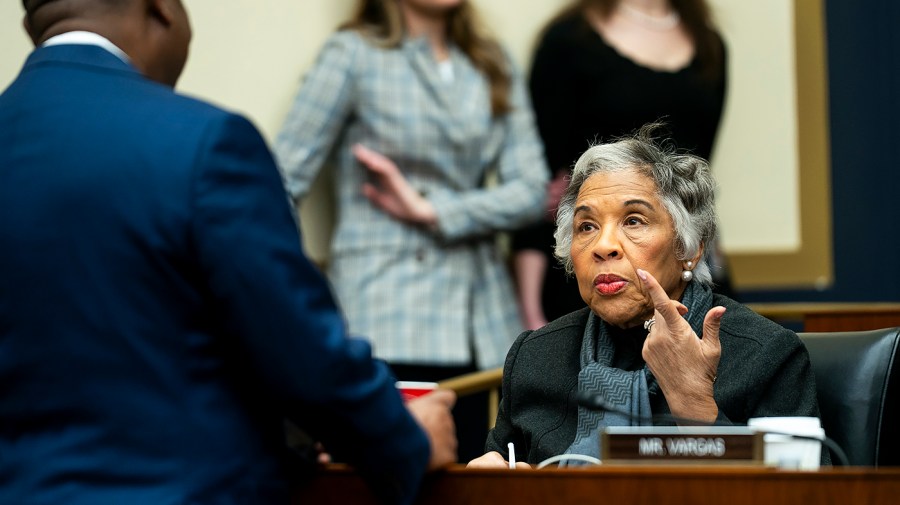
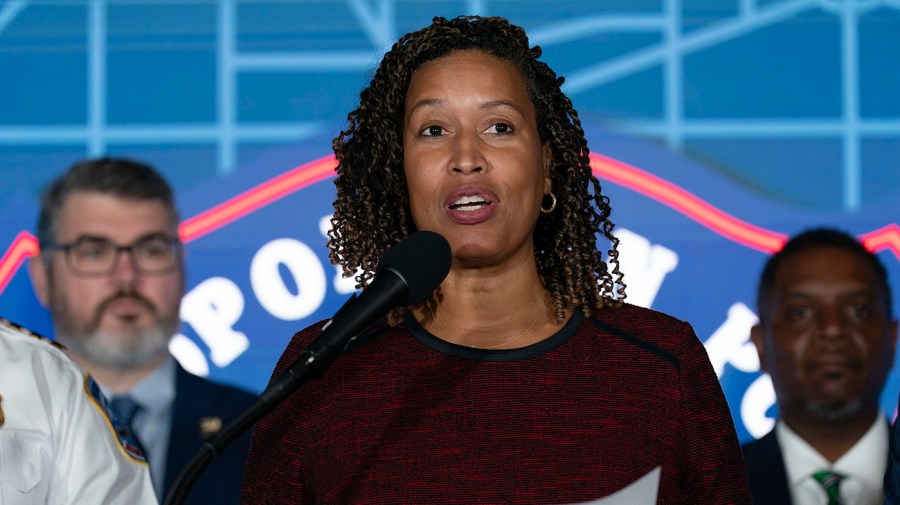
BOWSER HEADS TO HILL: Washington, D.C. Mayor Muriel Bowser (D) will appear before the House Oversight and Government Reform Committee on Thursday, as National Guard troops patrol the city she’s led for a decade.
Her testimony comes amid a federal crackdown in the District over the past month. Trump declared in August that the administration would take temporary control of the D.C. Metropolitan Police Department, and he would send the National Guard in to address what he argued was out-of-control crime in the city.
While the federal government’s control of the police ended after 30 days, National Guard members could remain for months. Many Democrats have slammed Trump’s actions as political theater and unnecessary as the District’s crime levels had been dropping before the deployment.
Among those critics is D.C. Attorney General Brian Schwalb (D), who will also be testifying on Thursday and sued the Trump administration to try to stop the National Guard’s deployment.
But Bowser has taken at times a more conciliatory approach, avoiding a direct confrontation with Trump and acknowledging that crime has dropped further since the Guard was first deployed. She also signed an executive order earlier this month authorizing coordination between the police and federal troops to the extent possible.
But Trump went after Bowser earlier this week after the mayor said she expects police to stop cooperating with Immigration and Customs Enforcement with the 30-day limit on police control reached, as outlined by the D.C. Home Rule Act.
Trump threatened to call a national emergency and federalize the city if necessary. That is what sets up Bowser’s testimony Thursday, when Republicans could press her on the state of the city.
The Hill’s Brett Samuels reported on the tightrope that Bowser is trying to walk, with her power more limited than other Democrats who lead states.
“What I care about is protecting this city, our home rule and preserving our autonomy at every step,” Bowser told The Washington Post in an interview last week.
KIMMEL PULLED: ABC is taking its late-night show “Jimmy Kimmel Live!” off the air “indefinitely” after comments that Jimmy Kimmel made about the late conservative activist Charlie Kirk, who was killed last week.
The suspension came after Nexstar Media Group, which owns a wide range of local television stations across the country, said its affiliate stations would preempt the show starting Wednesday evening.
During Kimmel’s show on Monday, he accused conservatives of trying to “score political points” from Kirk’s death and went after Trump, comparing his mourning for Kirk to “the way a 4-year-old mourns a goldfish.”
Nexstar, which also owns The Hill, said in a statement that it “strongly objects” to comments that Kimmel made and would replace his show with other programming on its ABC-affiliated networks.
Kimmel faced conservative backlash for his comments, and Federal Communications Commission Chair Brendan Carr called Kimmel’s remarks “some of the sickest conduct possible.”
Trump celebrated ABC’s decision to pull Kimmel’s show, calling it “Great News for America.”
KEY MEETING: Public health experts are bracing for potentially drastic changes to the childhood vaccine schedule following a two-day meeting from the Centers for Disease Control and Prevention’s (CDC) vaccine panel, reports The Hill’s Joseph Choi.
The agenda for the Advisory Committee on Immunization Practices (ACIP) is unclear, but some have speculated the panel could back an overhaul of the childhood vaccine schedule, including guidance on immunizing newborns against hepatitis B.
The meeting starting Thursday comes after Health and Human Services Secretary Robert F. Kennedy Jr. removed all 17 members of the ACIP earlier this year and replaced them with his own picks, including several who are known to be vaccine critics.
Former CDC Director Susan Monarez, who was ousted after just a month in the role, testified on Wednesday that the ACIP meeting was key to her sudden firing, as she claimed Kennedy asked her to pre-approve the committee’s recommendations and she refused.
“We got into an exchange where I had suggested that I would be open to changing childhood vaccine schedules if the evidence or science were supportive, and he responded that there was no science or evidence associated with a childhood vaccine schedule,” she said.
DEMOCRATS STRATEGIZE: Senate Democratic leadership is taking a different approach to the pending government shutdown from the last time that government funding needed to be extended in March.
Despite some members of his caucus wanting Democrats to put up more of a fight, Senate Minority Leader Chuck Schumer (N.Y.) and nine other Democrats voted in favor of a House-approved funding bill despite their concerns. Now, as The Hill’s Alex Bolton reports, Schumer plans to stand by his caucus, significantly increasing the chances of a shutdown happening when government funding runs out on Sept. 30.
Sen. John Fetterman (Pa.), one of the upper chamber’s more moderate Democrats, indicated he would vote in favor of the “clean” continuing resolution (CR) that Republicans have unveiled, which would keep government funding at current levels through Nov. 21.
But Democratic leaders quickly rejected the proposal as it was crafted largely without their input and doesn’t extend health care subsidies through ObamaCare.
So far, neither Schumer nor Senate Majority Leader John Thune (R-S.D.) appears likely to back down with two weeks left before a shutdown.
Passing the CR will be easier in the House, which advanced the stopgap on Wednesdsay evening, teeing up a final vote later this week. But 60 votes are needed to overcome a filibuster in the Senate, meaning Democratic votes will be needed.
Senate Democrats proposed their own version of the stopgap, which would extend ObamaCare subsidies, restore Medicaid funding that the One Big, Beautiful Bill Act cut and prevent the Trump administration from clawing back previously appropriated funds.
Republicans view the proposal as unacceptable. Meanwhile, GOP senators don’t seem too bothered by the idea of Schumer publicly discussing the possibility of a shutdown, reports The Hill’s Al Weaver.
Senate Republican sources told Weaver that Schumer mentioning a shutdown could mean the GOP comes out as the political winner.
“People don’t want dysfunction. They don’t want a government shutdown. They don’t want people taking a stand on stuff that doesn’t impact them or they don’t understand,” Sen. Shelley Moore Capito (R-W.Va.) said.
“Let Schumer be Schumer,” a Senate GOP aide said.
▪ Fox News: ‘Senate Republicans brand looming crisis a ‘Schumer Shutdown’ as Democrats dig in.’
When & Where
The president will participate in a joint press conference with Starmer at 9:20 a.m. EDT. He will depart the U.K. a few hours later and return to the White House this evening.
The House and Senate will meet at 10 a.m.
Zoom In

SANDERS DECLARATION: Sen. Bernie Sanders (I-Vt.) said he believes Israel is committing genocide in Gaza, becoming one of the highest-profile U.S. lawmakers to make such a declaration.
The progressive Jewish Democrat has been a sharp critic of Israeli Prime Minister Benjamin Netanyahu’s government and its conduct of the war against Hamas in the Gaza Strip, but had previously stopped short of calling it a genocide, sometimes to the chagrin of his fellow progressives.
The change will likely not have much effect on Sanders’s position on the conflict. He already regularly introduces resolutions for the U.S. to suspend sending additional weapons to Israel, which have failed but increasingly gained more Democratic support.
But the op-ed Sanders released making the declaration centers on an issue that has been a point of contention among some on the left.
“I recognize that many people may disagree with this conclusion. The truth is, whether you call it genocide or ethnic cleansing or mass atrocities or war crimes, the path forward is clear,” Sanders said. “We, as Americans, must end our complicity in the slaughter of the Palestinian people.”
Sanders’s statement comes after a panel of experts commissioned by the United Nations’ Human Rights Council concluded Israel is committing genocide in Gaza. Israel has rejected the panel’s findings as “distorted and false.”
▪ NPR: “The stakes of calling Israel’s actions in Gaza a genocide.”
NEW DESIGNATION: Trump announced late on Wednesday that he’s designating the anti-fascist group Antifa as a terrorist organization, calling the group a “sick, dangerous, radical left disaster.”
He also said he would “strongly” recommend that those who provide funding to the group be investigated.
Trump has regularly slammed Antifa for years, and his decision came after he signaled openness for declaring it a terrorist group earlier this week. Administration officials have indicated in recent days that it could target left-leaning groups following Kirk’s assassination.
But as Antifa doesn’t have a defined leadership structure, how the designation would be implemented is unclear.
CENSURE TABLED: The House voted to table the resolution from Rep. Nancy Mace (R-S.C.) to remove Rep. Ilhan Omar (D-Minn.) from her committee assignments over Mace’s allegations that Omar “smeared” Kirk following the conservative activist’s assassination last week.
Mace, who is running for governor of South Carolina, had pointed to comments Omar gave in an interview that Mace argued implied Kirk “was to blame for his own murder.” In the interview with Mehdi Hasan, Omar called Kirk’s killing “mortifying.”
Omar noted that Mace’s resolution didn’t quote any of the Minnesota Democrat’s own words. But a video she re-posted on social media accused Kirk of demonizing certain “out-groups.”
Four Republicans voted with all Democrats to table the resolution, blocking it in a 214-213 vote.
Elsewhere

RACE HEATING UP: The Georgia governor’s race is quickly getting crowded with yet another big name entering what will be a hotly contested election next year.
Georgia Secretary of State Brad Raffensperger (R) first received national attention for rejecting Trump’s efforts to overturn the results of the 2020 election in his state, but now he’s trying to appeal to many voters who likely backed Trump as he launches his gubernatorial run.
Raffensperger emphasized his conservativism and willingness to fight Democrats like former President Biden in his launch video, also leaning into key conservative issues like parents’ choice in education and transgender women competing in women’s sports.
He’ll need to find ways to break through with two other major candidates in the mix: Trump-backed Lt. Gov. Burt Jones and state Attorney General Chris Carr. Republicans have held the governor’s mansion in the state for two decades, but the nominee could be critical to determining if Democrats have a chance of flipping it.
With popular Gov. Brian Kemp (R) term-limited, the Democratic field has also gotten busy. Former Lt. Gov. Geoff Duncan, who served as a Republican but has become a Trump critic and is now a Democrat, joined the race on Tuesday. Other candidates include former Atlanta Mayor Keisha Lance Bottoms, state Rep. Derrick Jackson and former state Sen. Jason Esteves.
The Georgia governor’s race will likely be one of Democrats’ best chances of flipping a governor’s mansion in next year’s midterms given the recent wins the party has made in the state, with the exception of 2024. Sen. Jon Ossoff (D) will simultaneously be running in a highly competitive Senate race.
Opinion
‘Department of War’: The branding our soldiers deserve, writes The Hill opinion contributor Michael Keane
The CDC and COVID vaccine deserve scrutiny, not elimination, writes The Hill opinion contributor Marc Siegel
The Closer

And finally … It’s Thursday, which means it’s time for this week’s Morning Report Quiz! Wednesday was Constitution Day, the anniversary of the date that delegates of the Constitutional Convention signed the country’s governing document.
Be sure to email your responses to jgans@thehill.com — please add “Quiz” to your subject line. Winners who submit correct answers will receive deserved newsletter fame on Friday.
Which of these Founding Fathers did not sign the Constitution?
1. Benjamin Franklin
2. George Washington
3. Thomas Jefferson
4. James Madison
What was the name of the governing document in place before the Constitution?
1. The Treaty of Alliance
2. The Articles of Confederation
3. No previous name
4. The Directory
How many amendments to the Constitution have there been in history?
1. 24
2. 26
3. 27
4. 29
In what city was the Constitution signed?
1. Philadelphia
2. New York City
3. Boston
4. Washington, D.C.