




-

Todd Zola
Multiple Authors
Location, location, location!
This isn’t just a real estate axiom used to express the significance of where a property is situated. It also applies to fantasy baseball, as in the location of the various ballparks and the location of the fences and other factors within the venue.
One of the charms of baseball is that ballparks are all different. Sure, there is uniformity within the foul lines, especially in the infield, but each plays differently based on a variety of factors. While this has been a relatively quiet offseason with respect to teams playing in new or renovated home parks, one major change is in Kauffman Stadium, where the Kansas City Royals announced that the outfield fences will be moved in and lowered.
The other big news is that the Tampa Bay Rays will return to Tropicana Field. However, while there will be improvements to the amenities and fan experience, the playing surface will be the same as before, so the park should play similarly. Meanwhile, the Athletics will remain in Sacramento, but we now have a year’s worth of data to refine how Sutter Health Park plays.
What follows is our annual review of the general influences of park factors, a overview of different types of venues, and a breakdown of Kauffman Stadium, Tropicana Field and Sutter Health Park.
What impacts park factors?
Outfield fences
This is the first change questioned when a team moves or has a park renovated. While the impact of a change in any fence’s distance from home plate is expected, the height of the fence is an underappreciated component. In 2018, the yellow line denoting a home run on the right field wall in Angels Stadium was lowered by ten inches. Even though the wall itself did not move, the venue has since flipped from being one that used to suppress left-handed power to one that greatly assists it.
Foul territory
A lot of foul territory benefits pitchers. Sometimes, it’s not the acreage that matters, but the placement. For example, Citizens Bank Park doesn’t have an inordinate amount of foul territory, but its location consistently generates a high number of foul outs every season.
The batter’s eye and lighting
The batter’s eye is the area directly behind the pitcher which is in the line of sight of hitters. These areas are not uniform between parks. Some teams make it easier (or harder) for the batter to pick up the ball and recognize spin as it leaves the pitcher’s hand. Lighting can be a factor as well. One example is Fenway Park, where there is a tarpaulin placed over a section of bleacher seats in straight-away center field for day games only.
Temperature and humidity
Baseballs tend to travel more in less dense air due to reduced resistance. The higher the temperature, the less dense the air. It may seem counterintuitive since humidity involves water and humid air often “feels heavy” especially at elevated temperatures, but water vapor is actually less dense than the molecules it displaces. Additionally, warmer air can hold more water vapor.
Wind
Clearly, wind has been an ingredient since the first pitch ever was thrown. However, it’s only recently that Statcast has begun to quantify the effect. It goes beyond the focus of this discussion, but for those interested in a deeper dive, check out this article by MLB.com’s Mike Petriello.
Altitude
Air thins (and becomes less dense) the higher it is above sea level. Keep in mind that thinner air doesn’t just affect batted balls. A fastball reaches the plate a little faster in less dense air. High-spin offerings are also not as effective since there is less air cushion inducing movement.
Breaking down MLB’s stadiums
The primary park factors are runs, hits and home runs. There are many secondary indices, such as strikeouts, walks, foul outs, doubles and triples, but they contribute to the chief factors. On a granular basis, strikeouts and walks can also be relevant, especially for pitchers.
Out of all of the impact areas outlined above, the batter’s eye and foul territory have the most influence on strikeouts and walks. How the park plays in general may also affect strikeouts and walks. Pitchers may not be hesitant to challenge batters in yards that suppress homers, which could lower walks. Pitchers may opt to induce more grounders in venues generous to the long ball, which often generates weaker contact but lowers strikeouts.
A common misperception is that “home run parks” boost offensive numbers. There are instances where this is true, but there are also examples of venues that favor homers but suppress scoring, and vice versa. Hits correlate much better with runs, and there are many parks where the hit and home run factors are opposite.
Parks that increase homers but decrease runs
Pitching parks that are favorable for homers are usually smaller venues, allowing the outfielders to play shallower than in big parks. This helps them catch bloops, popups and fly balls that are hit out of the infielder’s reach and would fall safely if they were playing deeper. However, they can still go back and run down balls hit over their head and onto the warning track. Defenders usually must sacrifice one or the other in large outfields.
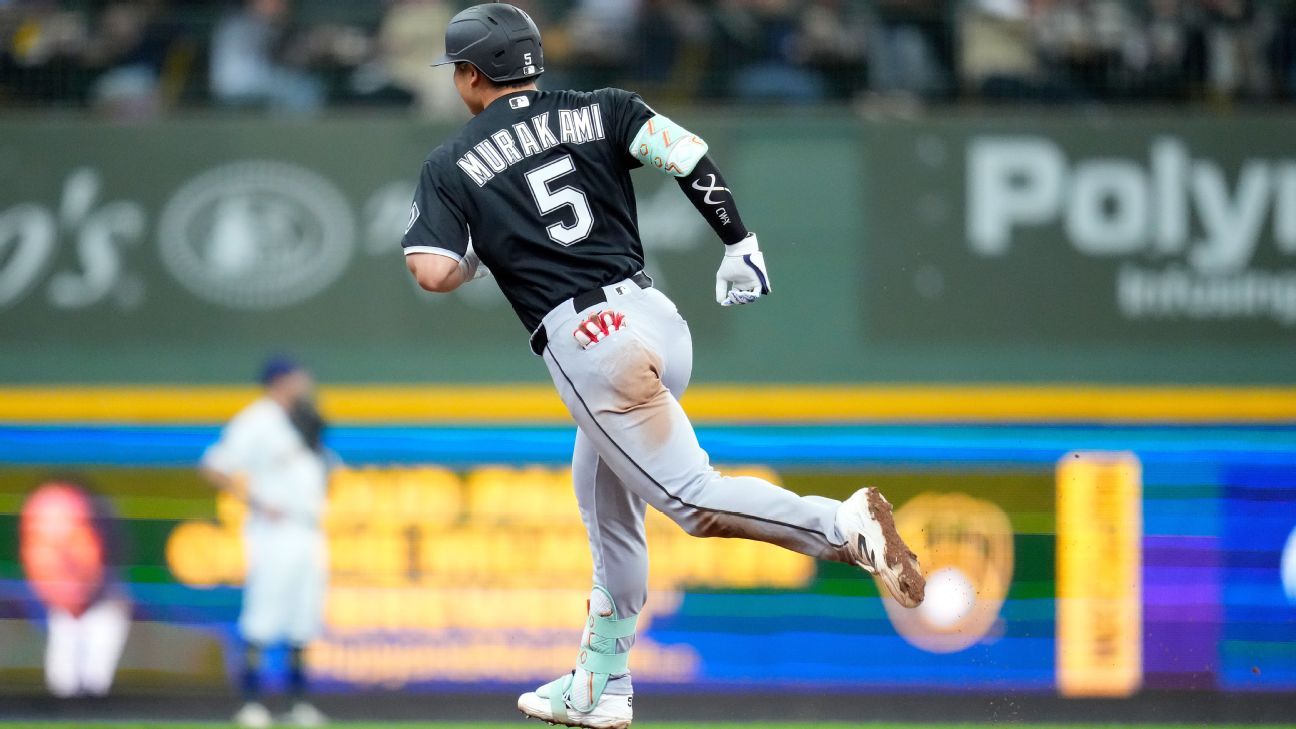
Sometimes, more strikeouts and/or fewer walks help suppress runs. Here, the batter’s eye and foul territory are driving forces. Four venues that are often considered hitter’s parks but fall into this category are Yankee Stadium (New York Yankees), American Family Field (Milwaukee Brewers), Rate Field (Chicago White Sox) and Daikin Park (Houston Astros). Petco Park (San Diego Padres) is correctly known as a pitcher’s park, but it also favors homers, which may be a surprise.
Parks that decrease homers but increase runs
Venues in this category are all favorable for hits, often of the extra-base variety. What is interesting about this group is that there are several reasons for the added hits.
Fenway Park (Boston Red Sox) is unique, with the 37-foot-tall Green Monster seemingly being just past arm’s length of right-handed batters. The wall takes away more homers than it gives, but it also turns many routine outs into doubles. Right field is quirky, with the shortest foul pole in the league, but then the wall juts quickly into the deepest right field in baseball. While the venue helps fly balls hit down the line, it squashes power to straightaway right field and right-center. The triangle in center field helps generate triples, as do the odd bounces off the unusually placed walls.
Target Field (Minnesota Twins) is both big and situated in a cold-weather city, decreasing homers while embellishing hits, especially in the spring and fall. It also features what many hitters consider to be the best batting eye in the game, lowering strikeouts while increasing walks.
PNC Park (Pittsburgh Pirates), Chase Field (Arizona Diamondbacks) and Oracle Park (San Francisco Giants) are all homer-suppressing parks that play neutral for runs. Unsurprisingly, they all benefit doubles and triples. Before the fences were moved in, Kauffman Stadium (Royals) was a fitting example of a park mislabeled as favorable for pitching due to the extent it quenched power. How the renovations may affect play will be reviewed in a bit.
Parks that increase both homers and runs
Coors Field (Colorado Rockies), Rogers Centre (Toronto Blue Jays), Citizens Bank Park (Philadelphia Phillies), Camden Yards (Baltimore Orioles) and The Great American Ballpark (Cincinnati Reds) all pump up both homers and runs. Coors Field helps runs much more than homers, as it sports the highest run index while landing above average (but not extreme) for home runs. The other three are small venues, but outfielders don’t enjoy the same benefits of playing shallower than other smaller yards.
Dodger Stadium is the surprise of this group, as it’s considered a pitcher’s park and indeed suppressed runs for many years. However, it has played hitter-friendly for a few years. The park factor formula is designed to flesh out team bias, but a team can be constructed to take advantage of its home venue, which often skews the factors. It’s not certain that this is the case, but it’s worth noting.
Parks that decrease both homers and runs
Globe Life Field (Texas Rangers), Busch Stadium (St. Louis Cardinals), Tropicana Field (Rays), and loanDepot Park (Miami Marlins) are true pitching venues. They’re all bigger than average, but not to the point where outfielders must commit to playing shallow to cut off the bloopers or deeper to prevent extra base hits.
Note: Any parks not discussed here check in as fairly neutral for both homers and runs.
What we need to know for 2026
Kauffman Stadium
Kauffman Stadium is undergoing a major renovation, with the outfield walls coming in around 8-10 feet, though center field remains unchanged. The fences will be lowered to 8.5 feet, down from as much as 18.5 feet. The new dimensions will no doubt yield more home runs, especially to the pull side, since center field remains deep.
Many are assuming runs will piggyback, but that could be premature. Prior to the change, the venue played as a hitter’s park. The outfield exhibited the most acreage in MLB, even more than Coors Field. The hot and humid weather in the Midwest during the summer helps fly balls carry, but not as much as the thin air of Denver. The vast expanse of both venues boosted fly ball hits, especially doubles and triples. With less real estate to cover in Kauffman Stadium, outfield hits may drop, especially those for extra bases.
The net effect on scoring isn’t certain, though many are reporting that runs will increase. They may, but as stated, the park previously boosted scoring, which wasn’t universally understood. The assumption being incorporated into the ESPN projections is that homers should increase by 5-10% per batter, but runs will jump by only 1-2%.
Even though runs are expected to increase less than homers, the new dimensions could significantly affect a few of the Royals’ starters, especially Seth Lugo. The right-hander surrendered an inordinate number of fly balls last season while also walking significantly more hitters. As suggested, fly balls aren’t necessarily an issue, as they can be more readily handled in a smaller outfield, but with a HR/9 of 1.67 last season, Lugo can’t afford to add even more long balls. Chances are, he is due for regression, lowering homers allowed, but that could be mitigated with the new dimensions — and he doesn’t miss enough bats to feel comfortable predicting a rebound season, especially as a home streamer, where he had been so effective.
Michael Wacha and Noah Cameron are similar in that they rely more on command and control than dominance, so it’s uncertain how they’ll be affected by allowing more homers. It’s always risky when streaming low-strikeout pitchers, but prior to this season, it was viable in Kauffman Stadium. Now, unless it’s Cole Ragans, be wary of using Royals arms.
Tropicana Field
Before the unfortunate damage to Tropicana Field, it was one of the top pitching venues in baseball, and it should return to that status this season. The dimensions will remain the same. What isn’t clear is if constructing a new roof will help the occasional fly ball from being lost or even hitting a catwalk.
Perhaps the lighting will be improved, aiding fielders — especially the home team, since they will be more accustomed to the new venue. However, that should help Rays’ pitchers even more. Tampa Bay hurlers should be among the most trusted in the game for home starts.
The story isn’t as straightforward for batters, especially lefties like Jonathan Aranda, since he’ll no longer benefit from the short porch in right field. Last season, Junior Caminero swatted 45 homers, though his Statcast xHR was 39.5, so fewer homers are likely this season. The park will likely influence his total, but Caminero’s pure power is near elite, so don’t worry too much. After accounting for regression and the park factor, he’s projected for 37 homers.
Sutter Health Park
Prior to last season, I indicated that Sutter Health Park would increase runs and homers relative to the Coliseum, but I admittedly significantly undershot the effect. That said, while one season isn’t enough to be declarative, I still adjusted the indices for this season.
In 2025, runs were boosted 10% over league average, with homers up 5% relative to the other 29 parks. The main factor overlooked was that while the dimensions of minor-league parks often match those of MLB venues, they have only one level of seats. MLB venues have multiple decks, which can shield fly balls from the wind until they elevate high enough to be influenced. In addition, on average, the Delta breeze should blow out to right center. While all of this was factored into last season’s park analysis, I did not adequately account for the more open structure, as a lesser wind will have a greater impact in a minor-league venue.
Typically, three years of data comprise a park factor, but since we have only last season’s stats at our disposal, that is what is being used for 2026 projections. This is excellent news for lefty Nick Kurtz, even though a disproportionate number of his 47 homers went to the opposite field, so they weren’t helped much by the Delta breeze to right center. However, lefties Tyler Soderstrom and Lawrence Butler should continue to be productive.