


The war in Iran has caused oil prices to spike, prompting concerns about a resurgence of inflation. That has led Federal Reserve officials to raise the possibility that they may pause the Fed’s recent efforts to lower interest rates, or potentially even raise rates.
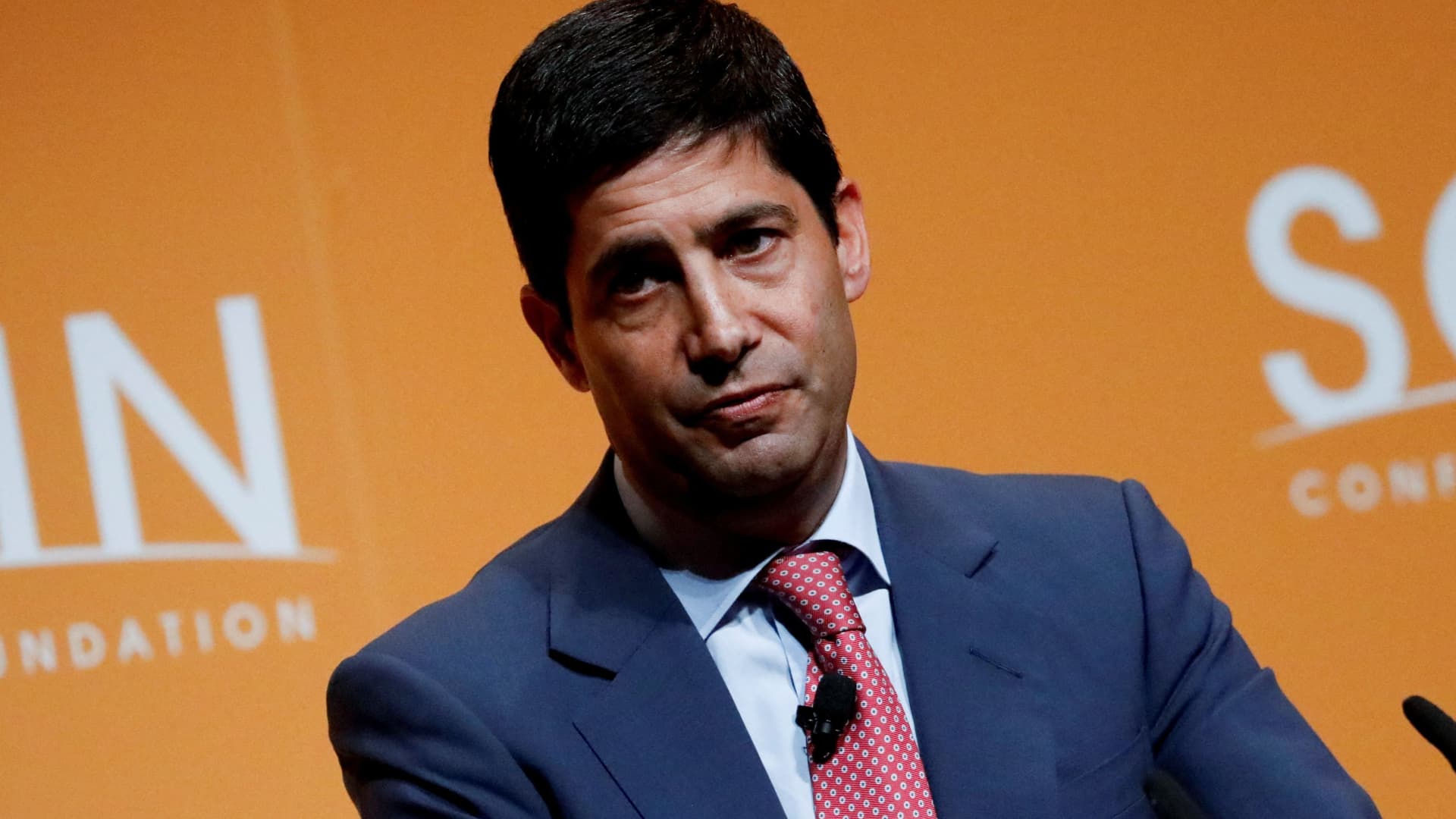
But that is the Fed as it’s now known. The central bank is likely to soon have a new leader who sees inflation very differently. Kevin Warsh, if confirmed by the Senate, would almost certainly be comfortable lowering rates despite a spike in oil prices.
Warsh is President Donald Trump‘s nominee for the next chair of the Federal Reserve. He would replace Jerome Powell, whose term expires May 15. Trump officially sent Warsh’s nomination to the Senate on Wednesday.
Warsh said in the run-up to his selection that he believed interest rates should be lower than the current federal funds rate of 3.5% to 3.75%, and Trump has made clear he chose Warsh because they share a desire for lower rates.
A surge in inflation could be a difficult challenge for a nominee who needs to thread the needle of Senate confirmation while retaining the president’s support.
A barrel of Brent crude sold for about $72.50 on Friday, before the U.S.-Israeli military campaign unfolded. By Wednesday evening, it was trading for more than $82. Gas prices have risen, raising the specter of higher prices across the economy as Republicans look to hammer an affordability message in the midterm elections.
A lasting $10-a-barrel increase in the price of oil could add as much as a tenth of a percentage point to the so-called core inflation measure that the Fed focuses on, Daleep Singh, chief global economist for asset manager PGIM Fixed Income, wrote in a note to clients late Tuesday.
In that scenario, “the most likely response from the Powell Fed would be to validate an extended pause,” wrote Singh, who advised then-President Joe Biden on national security.
These issues may turn out to be academic. The Trump administration says it has plans to help reverse the rise in oil prices, and the war may be over by the time Warsh takes office in May or June.
Fed members differ from Warsh
Some of the Fed’s voting members have said they are worried about how Iran will negatively affect the economic outlook, showing more concern than Warsh likely would as chair.
“I had a lot of confidence up until a couple of days ago,” Minneapolis Fed President Neel Kashkari said at a Bloomberg event in New York on Tuesday. Now, he said, he needs to see more data to make a judgment about what should happen to interest rates.
New York Fed President John Williams said at an event in Washington on Tuesday that he wanted to see “how persistent this is.”
This is business as usual for the Powell Fed. It has paid close attention to how conflicts affect oil prices and inflation more broadly. Powell warned in 2022 after Russian President Vladimir Putin launched an invasion of Ukraine that the “surge of prices in crude oil” was “creating additional upward pressure on inflation.”
Warsh sees it differently. “The Fed leadership blamed inflation on Putin,” Warsh told Fox Business’ Larry Kudlow in July.
The Fed’s “core theory of inflation” is “mistaken,” Warsh told Barron’s in the fall. The institution tries to constantly fine-tune its assessments of how supply and demand are affecting prices. But the post-Covid inflation surge is clear evidence, in Warsh’s view, that the Fed has been looking at the wrong factors.
“At the core, I think inflation comes about when the government spends too much and prints too much,” Warsh said then.
Modest fluctuations in oil prices don’t count for much in that worldview. He believes he can reduce the long-term interest rates that matter most to consumers by ridding the Fed of some of the $6.5 trillion in financial assets it has acquired in recent years and by generally restoring faith in the Fed’s credibility.
Warsh also expects advances in artificial intelligence to make the economy more productive and believes rate hikes would put those gains at risk.
The Fed declined to comment. Warsh hasn’t spoken publicly since Trump announced him as his pick on Jan. 30. Warsh declined to comment for this story.
The chair of the Fed has just one vote among a dozen on its rate-setting committee, but dissents against the chair are rare.
The Fed was designed by Congress to be free of political influence, but the president has leverage in deciding who to nominate. Trump has insisted that rates should be 1% or lower.
Warsh’s theory of inflation is designed to make an essentially bulletproof case for cuts in this economy, unless something changes drastically. Even an all-out air war with a major global oil producer likely won’t change that.