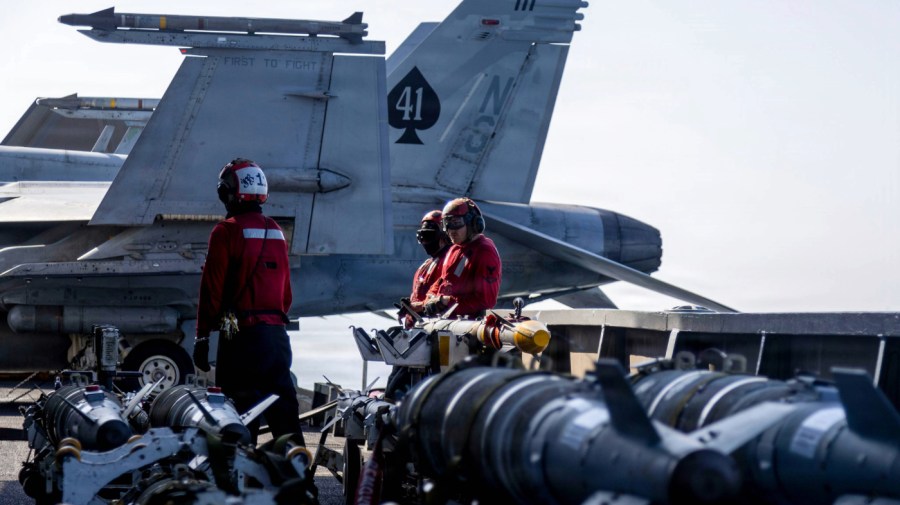





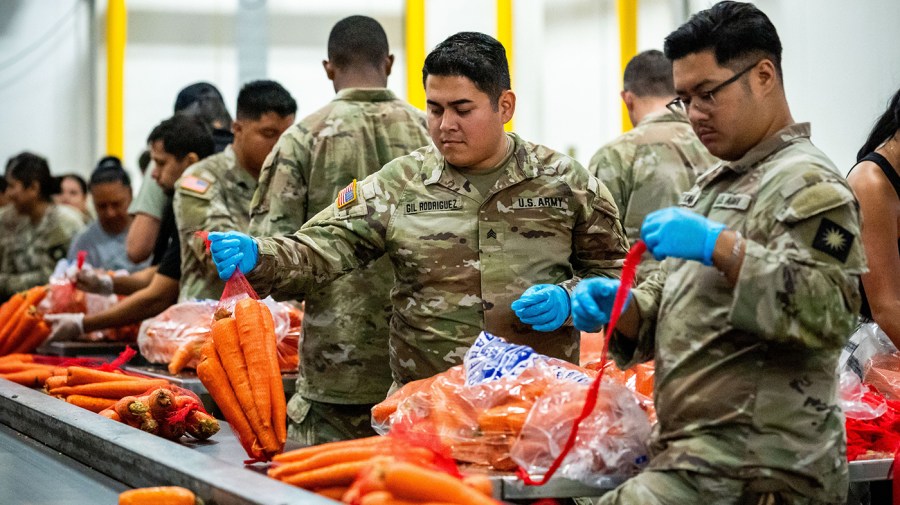

Thousands of military families receiving government benefits are facing food insecurity along with uncertainty over funding for the Supplemental Nutrition Assistance Program (SNAP).
Two federal judges on Friday ordered the Trump administration to use billions of dollars in emergency funds to at least partially cover food stamp benefits for more than 42 million Americans in November, but it won’t cover all of the month’s essential payments.
Trump indicated late Friday that he would provide the money from the emergency fund, but asked for guidance from the courts on how to do so legally.
The uncertainty could imperil thousands of service members – especially young soldiers, who may sometimes struggle to cover the cost of living with their low pay.
“We are hearing stories from families in real time that are incredibly distressing,” said Cara Pappas, chief advancement officer for the nonprofit Military Family Advisory Network (MFAN).
Pappas, herself a military wife, said her organization is being contacted by families who are already living paycheck to paycheck, particularly junior enlisted families, or those in the Guard or Reserves “who often don’t have the same access to basic resources and are the first to miss pay during these disruptions.”
Although the Trump administration has managed to raise the funds needed to ensure that active-duty and mobilized National Guard and Reserve troops receive pay on Fridays at the end of the month, it may not cover all household costs for many families due to a number of factors.
A major issue is that many military spouses, an estimated 27 percent, are also employed by the federal government and may face furloughs, meaning families who may have been used to having two incomes are down to only one.
Other families with connections to the Guard or Reserve have reported discrepancies in pay during last mid-month pay period, according to Eileen Hauck, deputy director of government relations for the National Military Family Association, a nonprofit organization.
“These are people who are mobilized away from their civilian jobs, potentially not getting paid in their reserve jobs, and they have families at home that they’re worried about, whether they’re going to be able to put food on the table,” Haq told The Hill. “It has definitely been a very stressful time.”
Due to complex issues, military families remain dependent on support and services provided by federal civilian employees who may be furloughed. In case of soldiers’ pay discrepancies, Haq said she would typically advise people to call their installation finance office, “but if those guys are discharged, the families don’t have anyone to investigate why there might be an issue with their pay.”
It’s unclear how many service members are enrolled in SNAP — which provides food benefits to low-income families to supplement their grocery budgets — but according to data from the U.S. Department of Agriculture (USDA) as well as MFAN, 1 in 4 military families is food insecure during normal government operations.
A 2020 Pentagon report found that 880 to 4,620 military members received SNAP benefits, But a similar report In the data released five years ago, this figure was up to 22,000.
Drought food aid will also have a huge impact on veterans, with more than 1 million people found to be food insecure, but only two-thirds of that population signed up for benefits like SNAP, according to a 2023 study from the Rand Corp.
Additionally, many soldiers and military families who are not enrolled in any food assistance programs often use the military and local food banks to meet their needs. As the shutdown drags on, such resources are becoming increasingly scarce.
Armed Services YMCA Nonprofit told ABC News Last week, its demand was seeing an increase of 30 percent or more.
Service members may be getting some relief after federal judges in Massachusetts and Rhode Island rejected the USDA’s claim that the $5.3 billion emergency fund could not help cover SNAP benefits but only hurricanes or other uncontrollable disasters, as the government shutdown approaches a month.
But although the USDA was ordered to distribute the emergency funds “on time or as quickly as possible” and provide an update to the court by Monday, the money does not cover the entire $9 billion needed for SNAP payments in November.
“It’s all like making an impossible choice. Do I pay off the car, or do I put food on the table?” Pappas said.
He detailed to The Hill firsthand accounts of service members struggling with the effects of the shutdown, including one family sitting on $29,000 in credit card debt after the station’s permanent change from California to North Carolina just before the shutdown. Family members had to fund their own move but have not yet been reimbursed and are unsure if or when that will come, Pappas said, noting that about half of all military families in those circumstances experience food insecurity.
MFAN, which already runs a pantry restock program for any military family relocating to bases – providing $150 worth of food and items under normal circumstances – relaunched the initiative to offer emergency grocery assistance sent directly to military families upon shutdown.
Pappas said the organization launched an application process in mid-October and within 72 hours, 50,000 military families had applied for assistance.
“It far exceeded our expectations about the need and was really worrying and heartbreaking at the same time,” he said.
MFAN had to pause accepting new applications into the program after the first 72 hours, Pappas said, “but we are hearing daily from families who want to get on the waiting list.”
She said the nonprofit has deployed more than 5,000 emergency grocery assistance boxes to families and is working through the line, but the organization is falling short of funds to provide each family on the waiting list.