






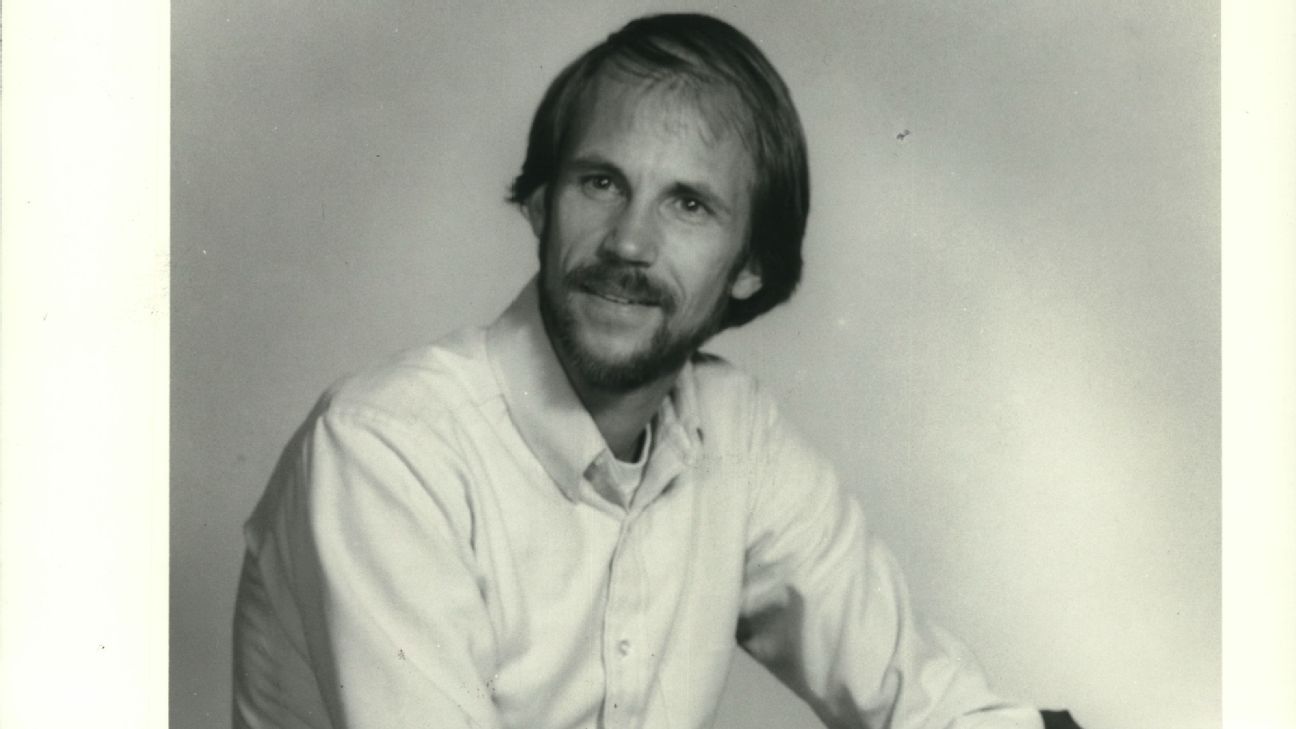
Jeff Galloway, a member of the 1972 U.S. Olympic team who inspired elite athletes and countless everyday runners by promoting the run-walk-run strategy for decades, whether it’s a marathon or a neighborhood run, died Wednesday at the age of 80.
Daughter-in-law Carissa Galloway said Galloway suffered a hemorrhagic stroke and died at a hospital in Pensacola, Florida.
His influence was evident in the last days of his life: large numbers of people posted videos online hoping for Galloway’s recovery from emergency neurosurgery and thanking him for the advice that boosted his confidence and carried him to the start of the race.
Galloway’s family announced the surgery on February 20 and invited the public to express support.
Jim Vance, an elite endurance sports consultant in San Diego, said that Galloway was a “pioneer” in motivating people to run.
“He removed the barrier to entry, which was mostly mental,” Vance told The Associated Press. “Running isn’t supposed to be a sad-fest. It should be something peaceful, something enjoyable, so people can enjoy running and not be afraid of it.”
Galloway survived heart failure in 2021 and was still hoping to complete another marathon after logging more than 230 in his lifetime.
“My mission now, at over 80, is to show that people can do things that aren’t normally done, and do them safely,” he told The New York Times in December.
Galloway’s run-walk-run method began in 1974 when he agreed to teach a running class through Florida State University, two years after competing in the 10,000 meters at the Olympics. He thought it might attract customers to Phidipides, his new store for runners.
“No one had run for at least five years. So we started with some one-minute jogging,” Galloway said on his website.
“I spent some time with each group, during the race, to adjust the frequency of walk breaks so that no one was hustling and whispering – even at the end,” he said. “Walk breaks kept the groups together. Everyone passed the final test: completing the 5K or 10K with a smile on their face.”
Galloway believed that walking during a race reduced the risk of injury, conserved energy and maintained confidence.
“I’ve been using them ever since,” he said, “continuing to fine-tune the speed per mile and the ratio of running and walking based on individual needs.”
And Galloway had his own recipe, too. According to the Times report, he passed every water station during the 1980 Houston Marathon and finished the race in 2:16:35, faster than his previous run of only 26.2 miles (42.1 kilometers).
He shares his ongoing philosophy through books, websites, and retreats. Galloway was the official training consultant for RunDisney, a series of races at Walt Disney Company Resorts, and will join the runners. Many fans came online to pay tribute to him following his recent surgery.
“I never thought I’d be a runner. I never thought I’d run a half marathon,” Karen Bock-Losey of Jacksonville, Florida, said in a video. “I’m 70 years old and have raced many times since my 60th birthday when I learned to run Galloway. I just want to say thank you.”
Susan Williams remembered seeing Galloway struggling at the end of a half marathon in Murray, Kentucky in 2011.
“You passed me, and I was getting a cramp in my butt,” she said. “You turned around and came back. You talked to me about it. It was amazing.”
Colorado-based running coach Bobby McGee said Galloway’s run-walk-run approach has made running more accessible to people.
“When a group of people get together at any kind of race — from marathons to recreational runs — they talk about their times,” McGee said. “Nobody asks him if he ran the whole thing.”
Galloway has two sons and six grandchildren.