




In May 2021, cyber criminalsShut down the colonial pipelineFuel supplies were cut off and widespread shortages occurred throughout the Southeastern United States. The incident revealed how a cyber attack can devastate the economy, and how dependent our defense and civil sectors are on fragile energy networks.
Attacks like this highlight the urgent need for stronger cybersecurity and remind us that energy underpins every aspect of national security. If there is conflict with a rival such as China or Russia, we cannot be certain that we will get reliable energy from the existing electrical grid.
The strength of the U.S. armed forces – and our economy – depends on reliable energy. Yet our most critical infrastructure remains dangerously vulnerable to cyberattacks and fuel supply disruptions.
Demand for electricity on the battlefield is rapidly increasing to power unmanned platforms, directed energy weapons, artificial intelligence, advanced manufacturing and other power-intensive systems. It will be difficult to meet this demand in the Indo-Pacific, Arctic and other strategic regions.
since 2018Annual defense policy bills require the Pentagon to advance energy security and publish installation energy plans to ensure that military services and facilities can maintain reliable power amid increasing demand.
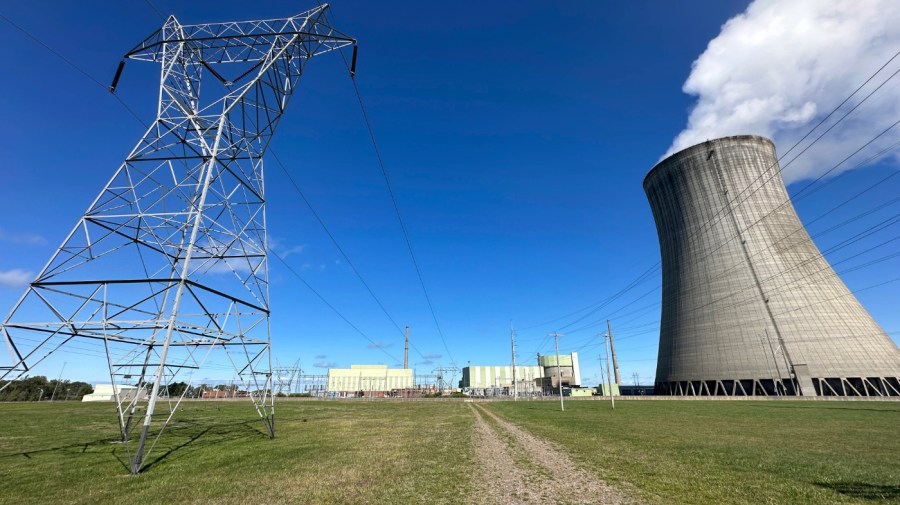
A promising solution is on the horizon. The deployment of advanced nuclear power to our nation’s critical defense and civilian infrastructure will provide resiliency against cyberattacks on our grid. It could also help the Pentagon reduce its logistical burden.
Many companies, including ours, are on the path to delivering nuclear fission micro-reactors capable of supplying compact, flexible power to our nation’s military bases, operational assets, and other networks critical to public health and our economic well-being.
Modern nuclear systems use advanced fuel – tiny particles that serve as mini containment vessels, preventing the release of fission products even under extreme conditions.
These reactors are also passively safe. If the reactor temperature begins to rise unexpectedly, the physics of the system slows nuclear reactions and maintains safety without the need for any human or mechanical intervention. If the power goes out, the automatic control drum and shutdown rod immediately stop the nuclear reactions.
Even with total cooling losses, the temperatures of these advanced reactors remain within safety limits, protecting people and the environment.
Recognizing their potential, President Trump issued new executive Order in May, and now federal agencies – including the Departments of Defense and Energy and the Nuclear Regulatory Commission – are working together to accelerate the widespread use of these cutting-edge, safe reactor designs by military and commercial actors alike.
The Secretary of the Army and the Secretary of Energy made the announcement on the sidelines of the Association of the United States Army conference last month. project janusA program designed to provide flexible, secure, and assured energy to support national defense installations and critical missions through 2028.
To succeed, the US will have to reestablish its uranium enrichment supply chain and build more infrastructure for reactor testing. We must also increase the training pipeline for nuclear experts and engineers.
But with continued partnerships across the private and public sectors, these obstacles can be overcome, and we can strengthen our nation by quadrupling America’s nuclear capacity by 2050.
Dense, clean nuclear energy can provide power for many military use cases, including early warning radar, missile defense systems, high-powered optics, directed energy and advanced manufacturing, including assets in remote and difficult locations.
Power for our military installations today typically involves large quantities of fossil fuel, usually diesel, stored in tanks on or near the base.
The deployment of nuclear power means our joint force will no longer need to deliver diesel fuel to installations in the continental United States or bases in Alaska and the Pacific.
Advanced nuclear reactors could help solve what U.S. military planners call “competitive logistics” – the challenges and disruptions posed by a rival to military supply chains.
Our adversaries may again test our resilience with cyber attacks on our critical infrastructure. China and Russia are investing in advanced energy technologies as part of their military modernization strategies. Our Army needs to maintain its edge in remote, distributed locations throughout the Pacific Islands and on the North Slope of Alaska.
If conflict erupts, the forces with assured access to power in all disputed areas will prevail. Without power, military units sit silent, blind and defenseless.
But if the enemy can no longer disrupt or interfere with our nation’s ability to power the facilities that underpin our military readiness and economic vitality—and if we can activate our assets in remote, austere locations—then we can deter attacks and make ourselves safer.
The deployment of reliable nuclear power is a good, strategic move. If we act decisively, advanced nuclear power will secure America’s energy future, strengthen our military, and ensure that no adversary can ever again hold our power supply hostage.
Jordan Bramble is the CEO and co-founder and Tom Mancinelli is the head of strategy and policy at Antares Nuclear.