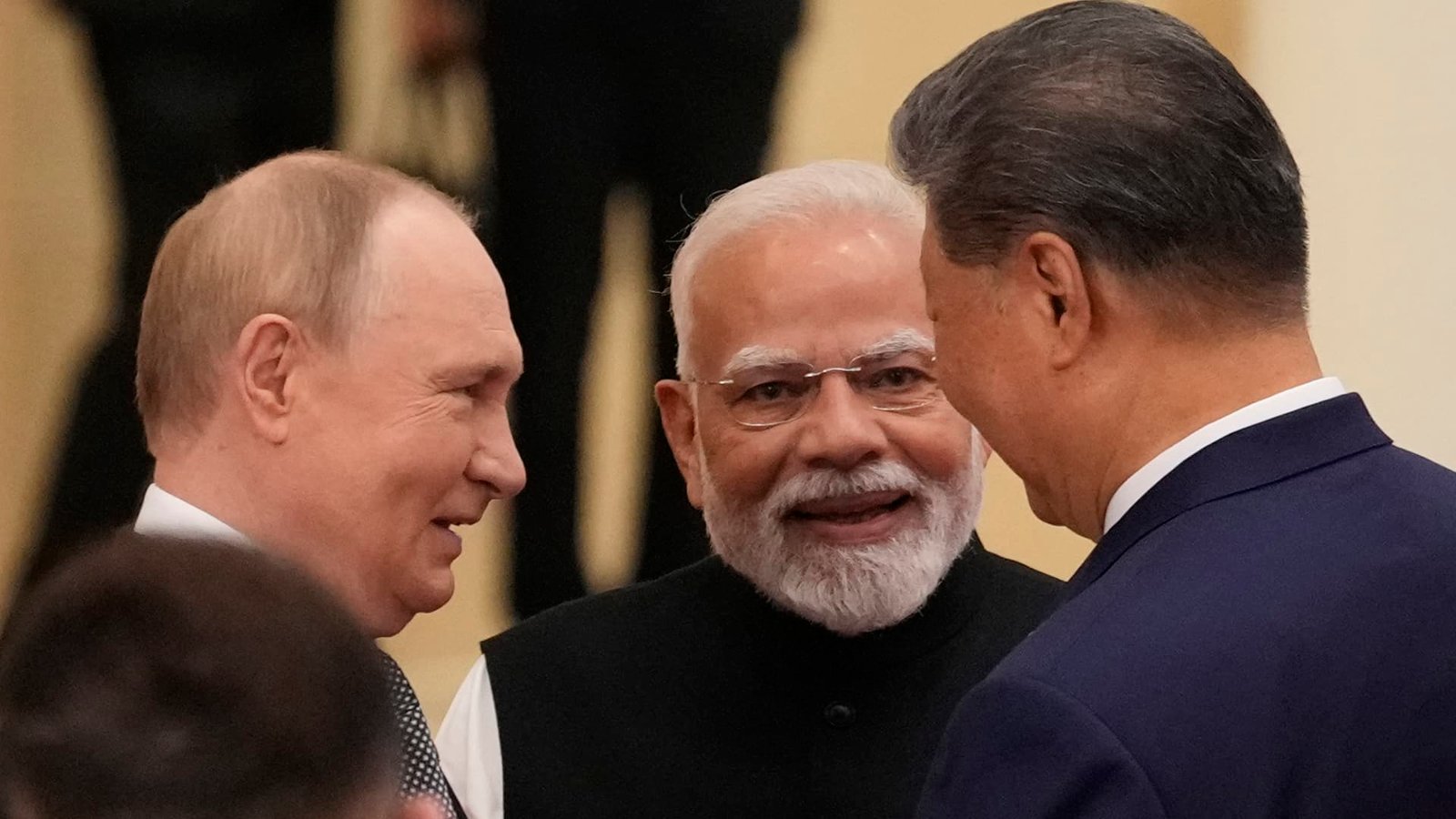


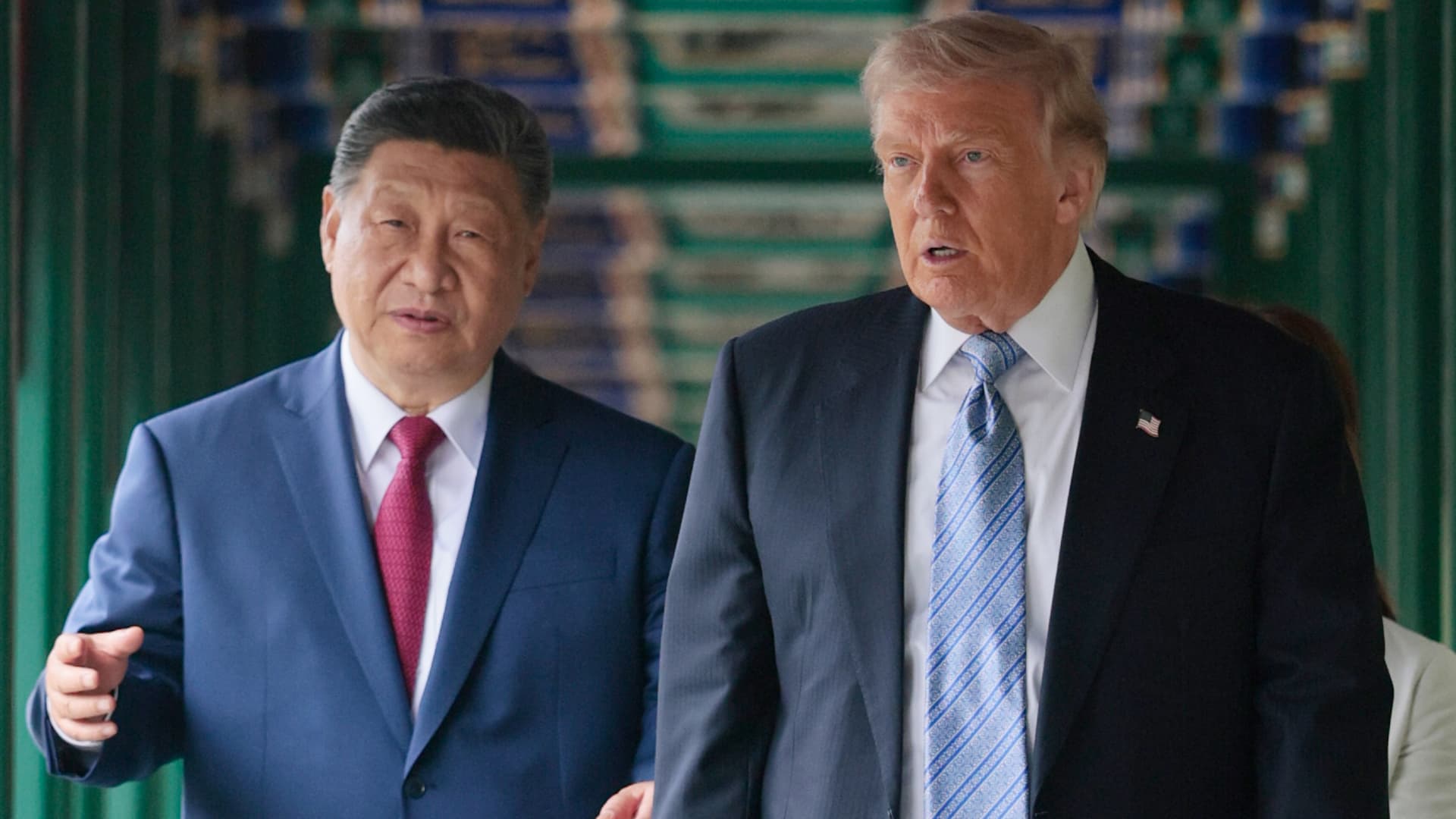
President Donald Trump on Friday said that he refused to directly answer Chinese President Xi Jinping when asked if the United States would defend Taiwan if China attacked it.
“That question was asked to me today,” Trump told reporters on Air Force One as they flew back to the United States from a two-day summit in Beijing.
“That question was asked to me today by President Xi. I said I don’t talk about that,” the president said.
Trump’s decision not to answer is in line with the U.S.’s longstanding “One China” policy, which leaves the status of Taiwan, an island that Beijing claims as its own, undefined.
The approach of “strategic ambiguity” leaves open whether Washington would come to Taipei’s aid in the event of a Chinese attack.
But since the U.S. began its war against Iran in late February, analysts have raised concerns that China is in a stronger position to attack Taiwan because of the movement of U.S. Navy carriers from the Indo-Pacific region to the Middle East and the depletion of American munitions as a result of their use against Iran.
“The Iran war has once again highlighted deficiencies in the U.S. defense industrial base. If the United States does not move quickly this time, it may have to learn this lesson — the hard way — against China in the Indo-Pacific,” Seth G. Jones, president of the Defense and Security Department at the Center for Strategic and International Studies in Washington, wrote in an analysis published earlier this week.
Trump’s comments on Friday came in response to a reporter who had asked if the U.S. would defend Taiwan in the event of a Chinese attack.
“I don’t want to say that,” Trump replied.
“There’s only one person that knows that. You know who it is? Me. I’m the only person,” he said, before noting that Xi had asked the same question of him earlier.
At the same time, his response on whether a pending arms sales package earmarked for Taiwan came up raised questions.
“We discussed the whole thing with the arms sales in great detail actually, and I’ll be making a decision,” he said. “But, you know, I think the last thing we need right now is a war that’s 9,500 miles away.”
Chinese state media, which has been glowing about Trump’s praise for the Chinese leader, has made no mention of Trump and his administration’s conversations about Taiwan, which analysts say likely means the Chinese side did not like what was said.
Secretary of State Marco Rubio told NBC News in an interview that the issue was raised, but that “U.S. policy on the issue of Taiwan is unchanged as of today.”
The issue of Taiwan took center stage on the first day of the 2-day summit after President Xi delivered a surprisingly stern message on Taiwan despite positive preliminaries about building stable ties and avoiding conflict.
When the summit began, Xi pointedly warned Trump that the U.S. and China “will have clashes and even conflicts” if the long-standing issue of Taiwan’s independence is mishandled.
Xi told his American counterpart it could put “the entire relationship” between their two nations “in great jeopardy” if that issue is not “properly” handled, the Chinese state news outlet Xinhua reported on Thursday.
Xi told Trump that “the Taiwan question” is “the most important issue in China-U.S. relations,” Xinhua reported.
In the run-up to the summit, there has been an expectation that Beijing will press Trump to change the U.S. language in the U.S. approach to shift from “does not support” Taiwan independence to “opposes” Taiwan independence.
The tweaked words would be more of a statement of the status of Taiwan, moving it more in line with Beijing’s view and sending a message about U.S. security commitments in the region.
Taiwan expert Bonnie Glaser, who this month co-authored an article in the journal Foreign Affairs, titled “Why China Waits: Beijing Is Playing a Long Game on Taiwan,” told CNBC that there are strong reasons for Xi to hold off on an attack against Taiwan.
“The question is what would be the likely costs to China, even if they might be able to succeed in a military takeover,” Glaser said.
“The costs would be prohibitive. There is no certainty of success. And the costs of failure are very high — including threatening the CCP’s [Chinese Communist Party] legitimacy,” Glaser said. “The massive purges in the PLA [People’s Liberation Army] suggests that Xi is not prepared to use force in the near future.”
“The PLA’s readiness has likely been significantly affected by the purges,” she said.