


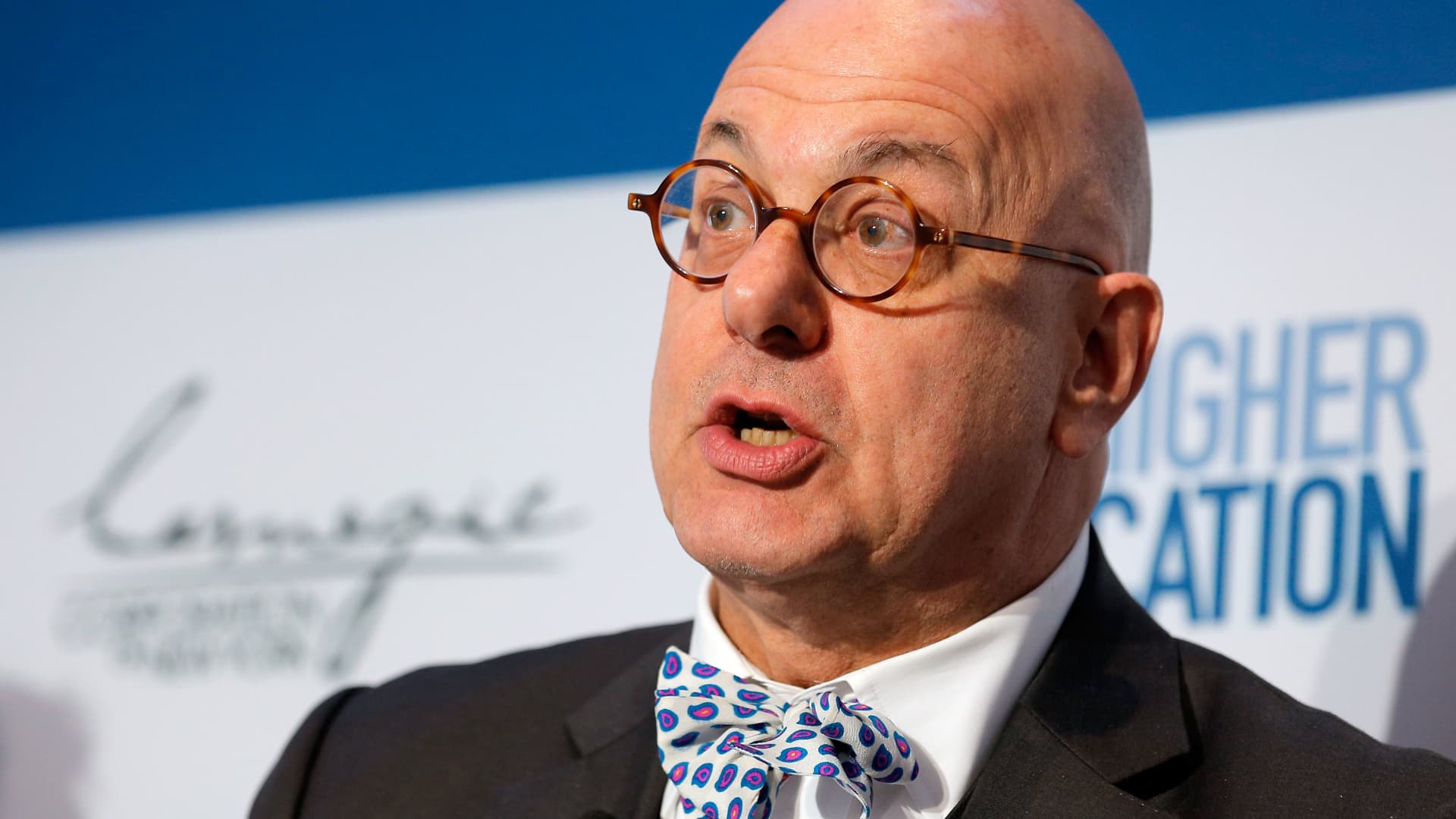
FILE PHOTO: President of Bard College Leon Botstein speaks during the “Changing Landscapes: From the Digital Classroom to the Global Campus” panal during the TIME Summit On Higher Education on Oct. 18, 2012 in New York City.
Jemal Countess | Getty Images
Bard College President Leon Botstein announced Friday that he will retire at the end of June after 51 years leading the prestigious New York liberal arts school, a day after a law firm retained by its Board of Trustees delivered a critical report about his relationship with the late notorious sex offender Jeffrey Epstein.
“Nothing that President Botstein did in connection with his relationship with Jeffrey Epstein was illegal,” WilmerHale attorney Jamie Gorelick wrote in a summary to those trustees, which CNBC obtained.
“But President Botstein made decisions in the course of that relationship that reflect on his leadership of Bard,” wrote Gorelick, who served as a deputy attorney general in the Clinton administration.
Bard retained WilmerHale in February to review its 79-year-old president’s relationship with Epstein after details about their communications were made public with the release by the Department of Justice of documents, which made clear they were more extensive than previously known.
Botstein, who is a renowned orchestral conductor, had said he cultivated Epstein as a donor for Bard, which is located in Annandale-on-Hudson. His pursuit of Epstein came several years after the shady money manager pleaded guilty in Florida state court to soliciting a minor for prostitution and served a 13-month jail term.
“President Botstein forcefully argues that Bard’s need for funds was paramount,” Gorelick wrote in her summary of her report for Bard’s trustees.
“His view was, ‘I would take money from Satan if it permitted me to do God’s work,’ ” Gorelick noted.
“President Botstein said that he did not see a risk to Bard’s reputation in pursuing Epstein or the
potential risk to Bard students of exposure to Epstein, nor did he consider that his actions could validate and legitimize Epstein to potential victims or their parents,” the attorney wrote.
“In his public statements and his statements to the Bard community, President Botstein minimized and was not fully accurate in describing his relationship with Epstein.”
Epstein, in addition to Botstein, had friendships with many high-profile people, including President Donald Trump, former Harvard President Larry Summers, and Andrew Mountbatten-Windsor, the brother of King Charles III of Britain. Epstein died in 2019 from suicide in a Manhattan jail, several weeks after being arrested on child sex trafficking charges.
A woman who answered the phone at Botstein’s home on Friday referred questions to the college’s media affairs department, which did not immediately respond to requests for comment by CNBC.
Botstein’s retirement statement
Botstein, 79, did not mention the WilmerHale report or Epstein in his retirement announcement, which touted his role in Bard’s $1 billion endowment campaign, which was completed in January.
He said in an email to Bard students and faculty that he had previously informed the Board of Trustees of his intention to retire, “and focus my energy as faculty member, teacher, and musician.”
“I will continue with the Bard Music Festival, SummerScape, and the Bard Conservatory and will live at Finberg House,” he wrote.
The executive committee of Bard’s Board of Trustees, in a statement obtained by CNBC, said the board “is grateful to President Botstein for his five decades of service to Bard College, his countless accomplishments and the lasting impact of his leadership.”
But the committee also noted that he submitted his retirement on Thursday, after WilmerHale’s review of communications between him and Epstein was sent to the board.
WilmerHale’s findings about Bard’s president
Gorelick, in her summary, wrote that Botstein, in deciding to pursue possible donations from Epstein in 2012, did not try to understand the details of Epstein’s 2008 conviction for soliciting a minor girl for prostitution, and that he “disagreed with the view expressed by a senior faculty member, whom he had asked to help with a proposal to Epstein, that Bard should not engage with Epstein.”
“President Botstein relied on his view that a person convicted of crimes involving sex with a
minor — ‘an ordinary sex offender’, in his words — could be presumed to be rehabilitated in the same way that any other convicted person should, in his view, be given that presumption,” Gorelick wrote.
She said Botstein did not discuss with the board whether to accept donations from Epstein or whether he could “appropriately accept payments from Epstein.
“President Botstein did not disclose to or flag for the Board, when it approved the contributions made by an entity called Enhanced Education in 2011 and 2012, that these funds were from Epstein.” Gorelick wrote.
And when the billionaire Leon Black made a donation to Bard in 2014, “which President Botstein understood had been made at Epstein’s behest, were disclosed only as funds from Black,” Gorelick wrote.
“In 2016, President Botstein accepted fees under a consulting agreement with an Epstein entity,” Gorelick wrote. “He did not disclose the agreement to the Board on the ground that he intended to donate those funds to Bard.”
The lawyer said that Botstein explained that the funds “were donated to Bard by rolling them into his and/or his wife’s contributions over the years and were not separately identified as coming from Epstein.”
“For this reason, the documents cannot confirm for the Board the contribution of those fees to Bard.” Gorelick wrote.
Owen Denker, a Bard student who is the spokesman for the group “Take Back Bard,” which had sought to oust Botstein after revelations about his ties to Epstein, in a statement to CNBC, said, “While we are pleased with Leon Botstein’s decision, to step back, it does not go nearly far enough.”
“He needs to cease teaching and conducting immediately,” Denker said.
“Furthermore, we need to see the systemic culture of sexual abuse addressed, and shared governance including faculty, staff, and students to ensure similar negligence does not occur again,” Denker said.