



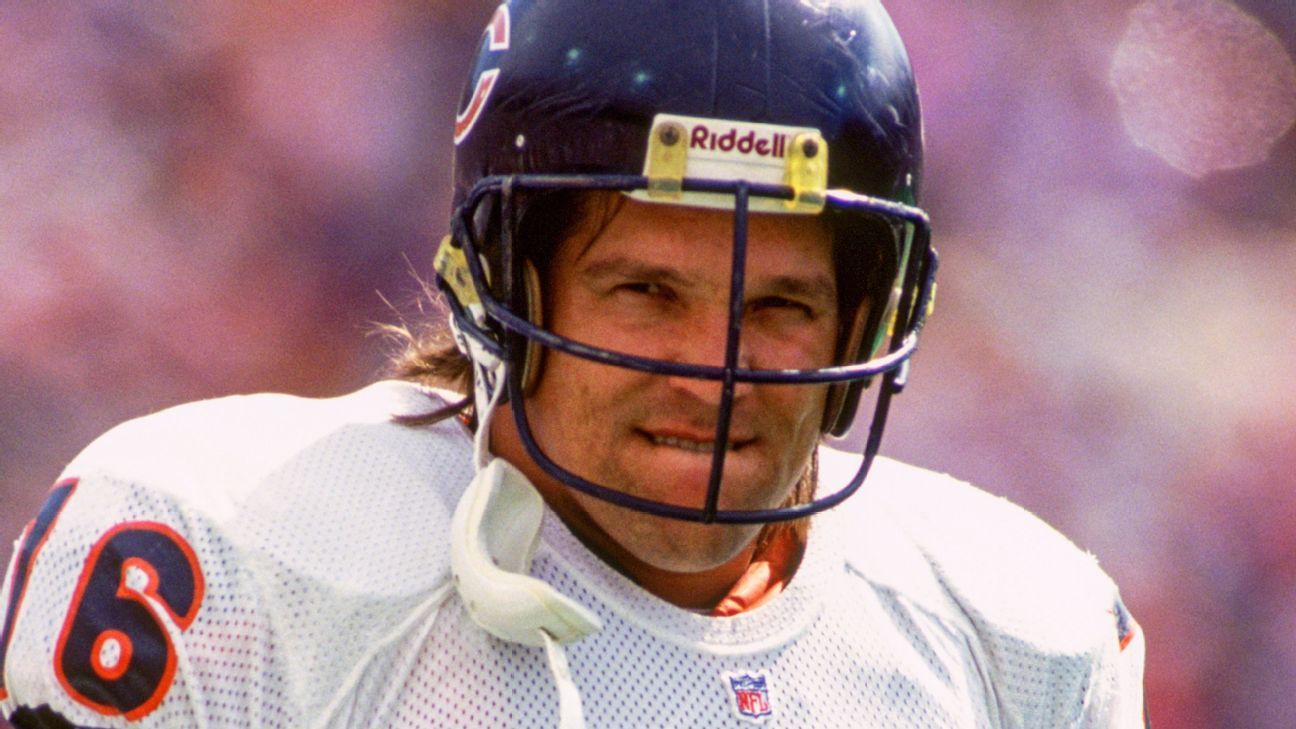
BOSTON — Hall of Famer Steve McMichael, a key member of the dominant defense that helped the 1985 Chicago Bears Win the Super Bowl, has been diagnosed with chronic traumatic encephalopathy, the Concussion & CTE Foundation said.
mcmichael died last year at the age of 67 after a five-year battle with ALS, commonly known as Lou Gehrig’s disease.
“Too many NFL players are developing ALS during life and are diagnosed with CTE after death,” said his wife, Misty McMichael, in a statement released by the foundation. “I donated Steve’s brain to inspire new research on the relationship between them.”
CTE is a degenerative brain disease that has been found in athletes in contact sports, war veterans, and others exposed to repeated head trauma. It is known to cause violent mood changes, impulsive behavior, and depression.
It can be diagnosed only after death.
According to a 2021 study from Harvard Medical School and the Boston University CTE Center, NFL players are four times more likely to develop ALS than other men. Dr. Ann McKee, director of the Boston University CTE Center, said that about 6% of individuals with CTE in the brain bank also have ALS.
“There is strong evidence linking repetitive brain trauma and ALS,” McKee said.
A two-time All-Pro and 2024 Pro Football Hall of Fame inductee, McMichael was known as “Mongo” and “Ming the Merciless” while playing a franchise-record 191 consecutive games from 1981–93. He is second on the Bears’ career sacks list behind Richard Dent with 92.5.
McMichael played his final NFL season with Green Bay in 1994 and then pursued a career in pro wrestling.
In 2021, McMichael revealed he was battling ALS, which affects nerve cells in the brain and spinal cord, causing a loss of muscle control. According to Chris Nowinski, co-founder and CEO of the Concussion & CTE Foundation, he followed research finding a connection between ALS and CTE and pledged to study his brain.
Nowinski said, “Steve McMichael was known for his strength, toughness and larger-than-life presence, but his final act was to give a part of himself back to the sports community so we could have a chance to save ourselves.” “I applaud all of the former athletes, including many of Steve’s ’85 Bears teammates, who are raising funds and volunteering to participate in CTE research so we can create a brighter future for athletes everywhere.”


