


The war in the Middle East could pose a threat to the semiconductor industry and other sectors dependent on a resource produced in the Gulf — helium.
Helium is a little-known but key input in many industries, most notably technology. In semiconductor manufacturing, its cooling properties are used to transfer heat. Helium is also indispensable in photolithography, a technique used to print each chip’s intricate circuitry.
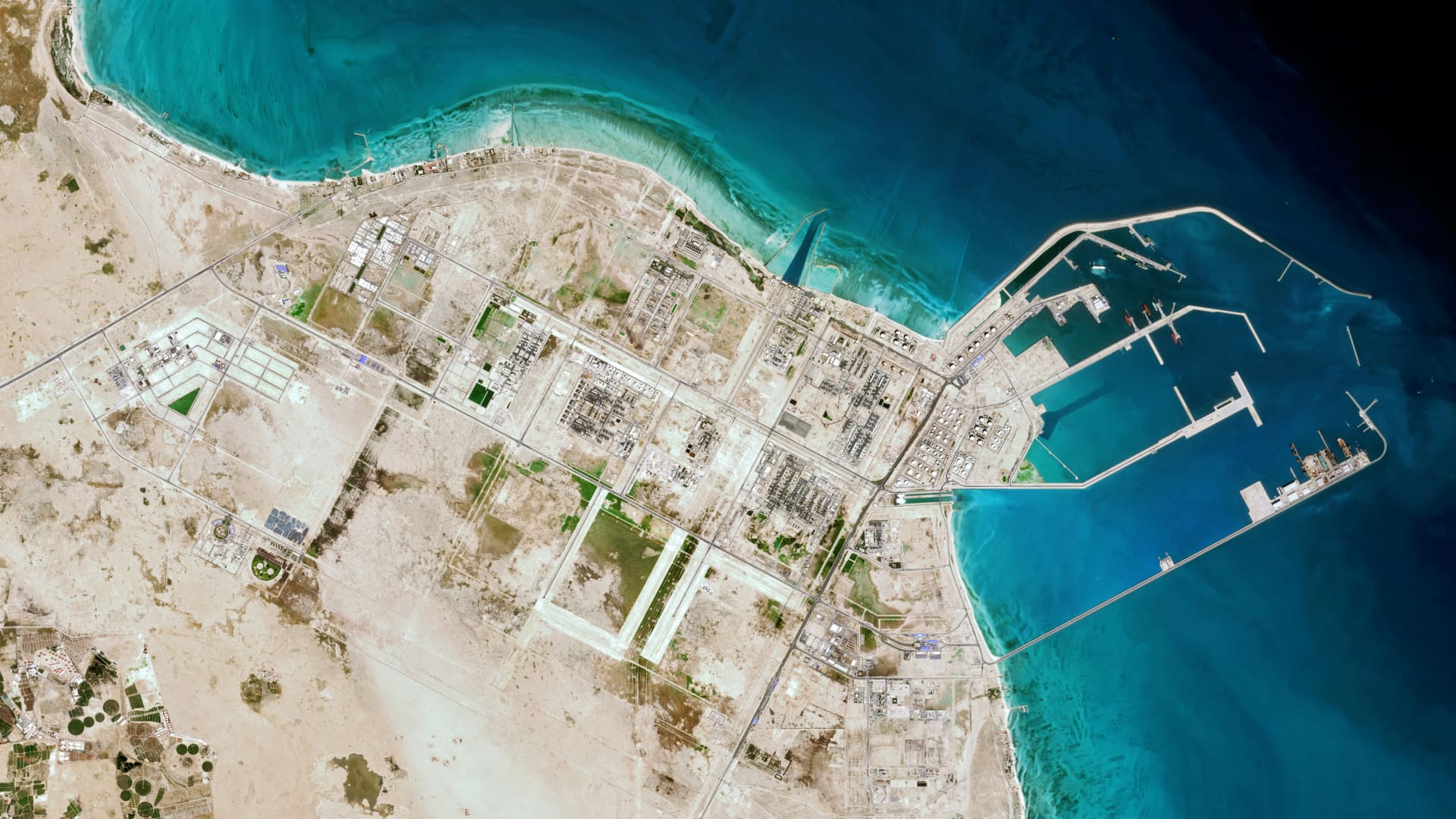
The U.S. Geological Survey estimates that before the war Qatar produced more than one-third of the world’s helium supply. Lately, however, operations at QatarEnergy’s Ras Laffan Industrial City — the world’s largest liquified natural gas export facility, which produces helium as a byproduct — were halted after it was struck by an Iranian drone early in the war. On Wednesday, Iranian missiles crippled the plant.
A global helium shortage would ripple across a range of industries.
“Qatar makes some 30% of the world’s helium — a key input for semiconductors, industrial manufacturing, and medical imaging — while several key ingredients for fertilizer production also move through the Strait,” according to a report early this week by the chief investment office of UBS Global Wealth Management. “Any lengthy disruption will not only impact energy prices, but also food prices and industrial production.”
Known chokepoint
Helium supply has always been a risk. In 2023 the Semiconductor Industry Association cautioned that “there would likely be shocks to the global semiconductor manufacturing industry” should the supply of helium be disrupted.
Today, a lengthy “prolonged regional conflict could potentially disrupt chipmakers’ manufacturing operations regarding sourcing materials like helium and bromine,” Ray Wang, computer memory analyst at SemiAnalysis, told CNBC. “For now, the impact appears to be limited. However, a prolonged conflict could eventually lead to disruptions or require adjustments in the sourcing of key materials.”
South Korea and Taiwan, the world’s two largest semiconductor makers, are particularly vulnerable to Middle East helium supply.
In 2025, South Korean manufacturers bought 55% of their helium from countries in the Gulf Cooperation Council, a union of six Arab nations. Taiwan bought 69% of its helium from the GCC in 2024, according to a report out Wednesday from analysts at Barclays.
The Strait of Hormuz’s effective closure has spiked helium prices by limiting supply. Bank of America estimated in a note last week that spot helium prices have surged as much as 40%, depending on the market. On Monday, Phil Kornbluth, president of Kornbluth Helium Consulting, told CNBC that prices were up by 70% to 100%, in some cases within a little more than a week.
Oil tankers and cargo ships line up in the Strait of Hormuz as seen from Khor Fakkan, United Arab Emirates, Wednesday, March 11, 2026.
Altaf Qadri | AP
Semiconductors are at the ‘top of the pecking order’
If helium supplies grow short, allocations will be determined by how critical the gas is needed.
“Helium demand is concentrated in high-value, mission-critical applications, including semiconductors, aerospace, electronics manufacturing and medical imaging,” the Bank of America analysts said. “In these end markets, supply security is typically prioritized over price, particularly during periods of tightness. This dynamic historically allows suppliers to push pricing higher as customers move to lock in long-term supply during disruptions.”
Semiconductors, considered a critical industry, is at the “top of the pecking order,” Kornbluth said. Less vital industries — think party balloons — could get low to no allocation.
Still, Kornbluth said even the semiconductor industry would be hard-pressed to completely escape the effects of a helium shortage.
“Everybody’s going to feel it to some degree during that transition period,” he said, adding that even those buyers at the front of the line will see price hikes. “The industrial gas industry — they won’t play favorites to a large degree there. I mean, they’ll do their best to keep everybody supplied, or as well supplied as possible, but there’s a price for that.”
Length of war
Closing the Strait could take about 27% of the world’s helium offline, and any shortage will have lagged effects, Kornbluth said.
“Spot prices comprise a very small slice of helium sales because it’s mostly a long-term contract business. So even though it makes for good headlines, it doesn’t have that much impact on the marketplace,” said the consultant, who’s been in the business for more than 40 years. “Contract prices have not really moved yet.”
That may change soon, however, should a prolonged shortage pressure suppliers to declare force majeure on their contract customers.
Perhaps the only saving grace is that the helium market had been “in oversupply for the last two years going into this shortage,” Kornbluth said. Still, it would probably take at least five weeks to restart production after any ceasefire.
Past oversupply acts as insurance to cushion against the current shortage. As a result, the likely deficit in supply today is probably closer to 15%, than 30%, Kornbluth said.
If hostilities end “pretty quickly — there’s a truce within a couple of weeks, and [this] turns out to be a four month kind of disruption — then I would refer to it as a significant hiccup within a period of plentiful oversupply,” Kornbluth said. “In the past when we’ve had shortages, folks have generally made good money during those periods because the price increase impact across their entire customer base offsets the loss of volume due to losing supply from Qatar. So it’s usually a positive event for the industry.”
Producers insulated
In their note, Bank of America analysts struck a similar tone, writing that while the Qatar disruption may tighten the helium market, the length of the conflict and any subsequent recovery are key. Diversified sourcing and stockpiles on hand mean that major industrial gas producers are relatively well insulated from direct supply disruption, the bank said.
“Helium typically represents a low to mid-single digit percent of gas company revenues, and so we suspect the outage in Qatar is only a neutral to modest net positive event for earnings assuming it continues for a few weeks. Longer outages drive more earnings upside,” Bank of America wrote. “It would take time for an eventual recommissioned Qatar LNG complex to normalize operations, but we suspect helium inflation would ease quickly.”
Other Wall Street banks, including Deutsche Bank, Wells Fargo and JPMorgan, all recently pointed to a tightening helium market as a positive catalyst for industrial gas supplier Linde. Last week, JPMorgan analyst Jeffrey Zekauskas upgraded Linde, ahead 15% in 2026 through Wednesday, versus a 3% decline in the S&P 500.
Air Products and Chemicals, another big gas producer, is 14% higher this year. Wells Fargo analyst Michael Sison upgraded the stock to overweight last week, saying the Allentown, Pennsylvania-based manufacturer stands to benefit from increased helium pricing.
— CNBC’s Arjun Kharpal and Dylan Butts contributed to this report.