



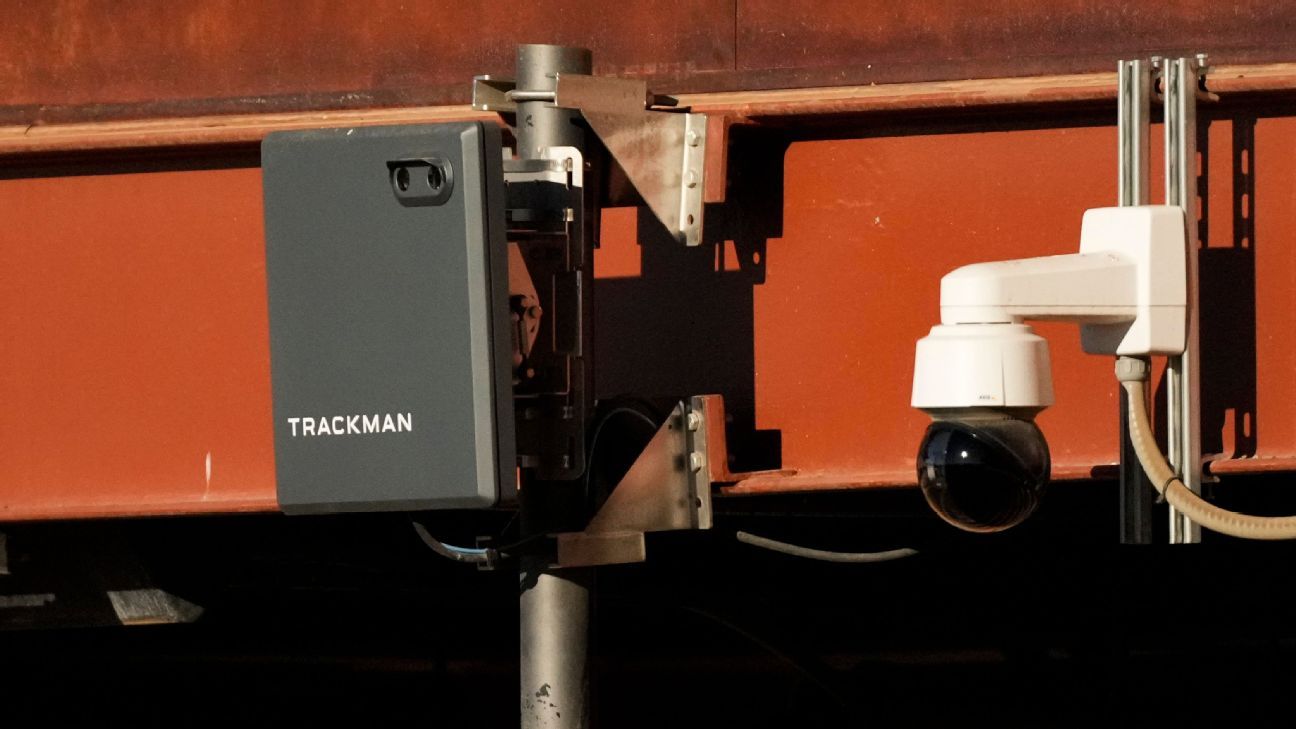
MIAMI – Major League Baseball’s use of a robot umpire technology system that allows checked swing calls to be challenged is moving from Class A to Triple-A.
According to a memo sent to teams last week, MLB will also test moving second base slightly to position it completely within the infield, reducing the distance between first and second and between second and third by 9 inches.
It will attempt to reduce the allowable disengagement by pitchers from two to one per plate appearance and introduce stricter limits on batter timeouts and reset the pitch clock for issues with PitchComm, the electronic signaling device used through 2023.
There will also be a trial allowing starting pitchers to re-enter games in the lowest level of the minor leagues. It is not expected that this testing will lead to MLB implementation, but the consideration is being given to improving development and player health in the minors by allowing more flexible workload management.
MLB’s automated ball-strike challenge system, the so-called robot umpire, launches when the season begins on March 25 after tests began in the Minors in 2019. A batter, catcher or pitcher may appeal a ball/strike call by a human umpire under a system in which each team has two challenges and retains its challenge if successful. Additional challenges become available to teams in additional innings.
An experiment began last May 20 in the Class A Florida State League, allowing challenges for checked swing calls, and the test was extended to the Arizona Fall League.
The Checkered Swing Test, which begins May 5, will extend to the Triple-A Pacific Coast League in addition to the FSL.
“The batter, pitcher or catcher may also appeal the umpire’s decision whether the batter is swinging at a pitch,” according to a memo sent to general managers and other club officials by MLB vice president of on-field strategy Joe Martinez. “A swing is considered to have taken place if the maximum angle between the bat head and the bat handle exceeds 45 degrees.”
Martinez said the strikeout rate was cut by 3% during last year’s testing.
Additionally, umpires in Triple-A International League games will be instructed to enforce a 45-degree limit to determine swing. The official baseball rules do not specify any standards for a checked swing, stating only: “A strike is a legal pitch hit by the batter and missed when so called by the umpire.”
Since the 1970s, catchers have been allowed to ask the plate umpire to appeal a non-strike call on a checked swing to the first and third-base umpires, but no appeals are allowed if a strike is called on a checked swing.
Starting pitchers will be allowed to re-enter games after being removed in the Arizona Complex League, Florida Complex League and Dominican Summer League. A removed starting pitcher is eligible to return if he has thrown at least 25 pitches during the removed inning, he may only return to the start of one inning and may enter again only once.
MLB expanded bases from 15 to 18-inch square in 2023, a change that led to more stolen bases due to a shorter distance of 4 1/2 inches between first and second, and second and third.
Second base is centered on the exact location of second, but usage in the International League will place it “entirely within the perimeter of the infield diamond during the second half of the season”.
Citing plans to increase the average time of a nine-inning game in 2024 from 2 hours, 36 minutes to 2:38 last year, and to reduce the success rate of stolen base attempts from 80.2% in 2023 to 77.8% last year, MLB will experiment with changes to the pitch clock rules.
If a game is stopped due to a pitchcom issue, Triple-A teams will be assessed a mound visit, and an automatic ball will be charged if a team is out of a visit.
At all levels, the clock will not stop when a catcher leaves the catcher’s box to give a defensive signal, and players other than the pitcher and coach must leave the mound before the clock expires on mound visits. Violations will result in an automatic ball.
In High A, batters will not be allowed to request time out if the bases are empty and no timeouts will be allowed in Class A. Exceptions will be allowed for brush backs, potential injuries or equipment problems.
The number of dismissals allowed by a pitcher off the rubber will be reduced from two to one in Double-A.


