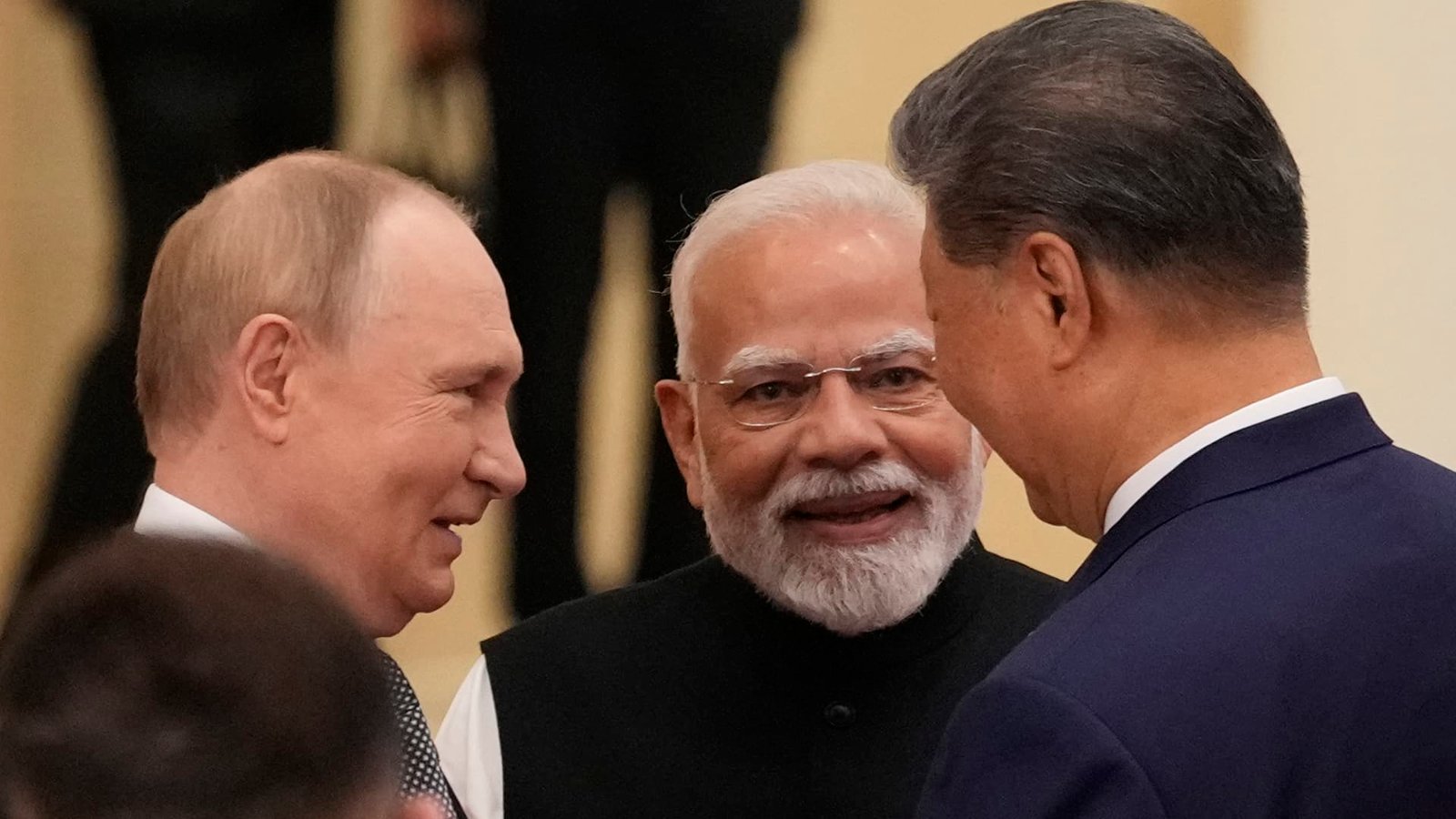


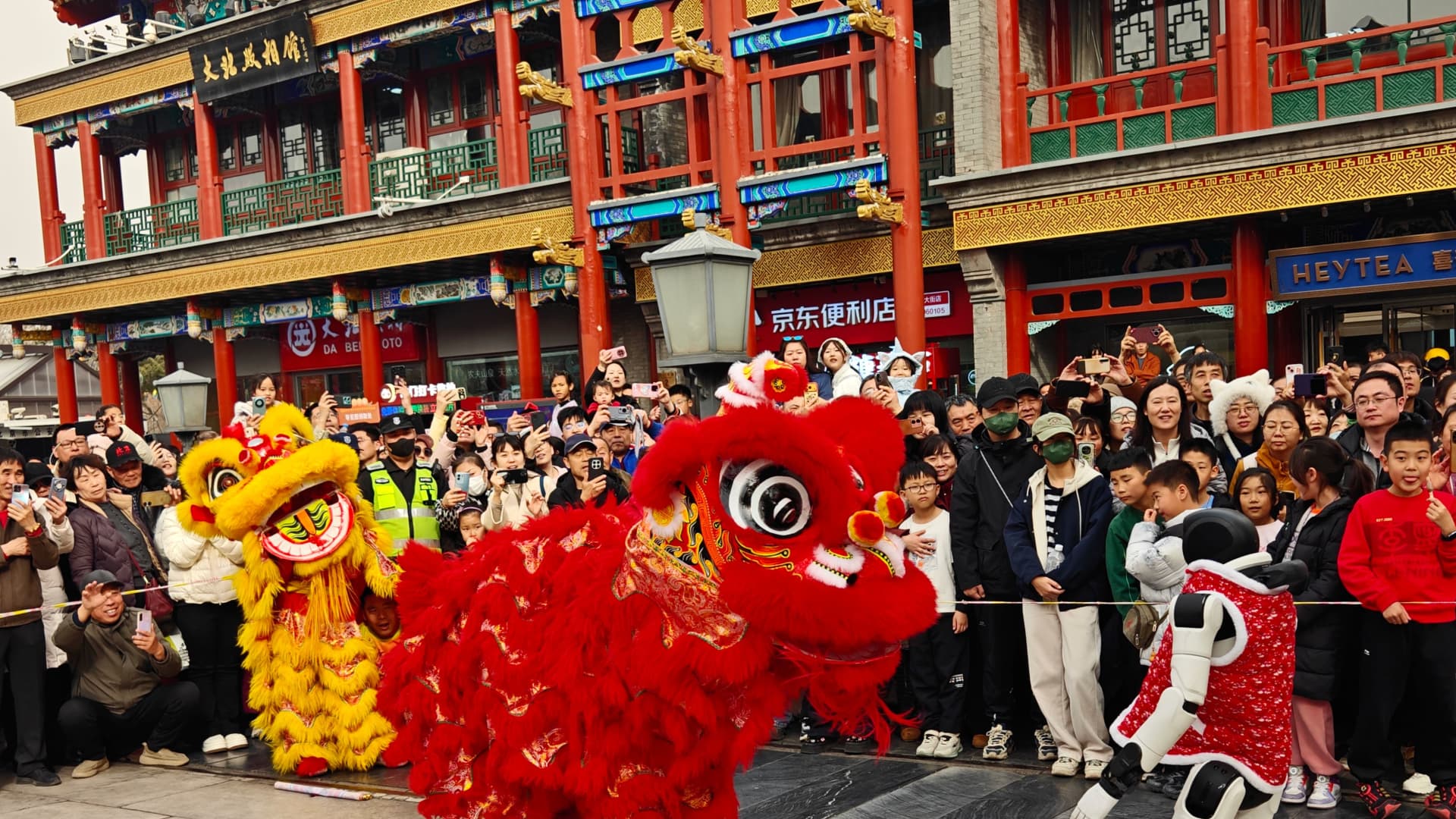
People watch performances to welcome the ‘God of Wealth’ during Lunar New Year festivities at Qianmen Street in Beijing, China, on February 21, 2026.
Nurphoto | Nurphoto | Getty Images
BEIJING — China’s consumer market is recovering — just enough that policymakers likely won’t need to roll out the large-scale stimulus that investors have long hoped for.
The nine-day Lunar New Year, which ended Monday, saw a steady rise in spending across the country, from hotel bookings to duty-free shopping. Rail travel hit a record of over 18.7 million passengers in a single day.
The better-than-expected data suggest that Beijing’s recent support measures are effective, while underscoring a broader consumer trend: spending on experiences such as travel and entertainment is still picking up faster than traditional goods, CCB International Securities said in a report Tuesday.
China’s retail sales have remained sluggish since the pandemic. Unlike the U.S., which handed out cash to consumers, Beijing has instead offered trade-in programs and vouchers. Chinese authorities have increasingly emphasized the need to boost consumers’ incomes, but have yet to release details.
That’s not likely to change soon.

“Policymakers are likely to build on the positive [holiday] momentum and introduce targeted, incremental easing around the March Two Sessions to stabilize expectations and sustain the recovery,” the CCB analysts said, referring to the annual parliamentary meetings that kicks off next week.
Chinese Premier Li Qiang is set to announce the year’s economic targets and policy priorities on March 5.
Still price-conscious
Despite the travel rebound, consumers remained price sensitive. Nationwide, tourism trips per day grew by 5.7% on average from a year ago, in line with 2025, according to official holiday figures released late Tuesday. Even though spending climbed by 5.5%, it slowed from 7% in 2025.
“Such trends reflect better sentiment from a longer holiday, but consumers remained budget cautious in general,” Morgan Stanley Equity Analyst Lillian Lou said in a report Wednesday.
In a sign of persistent deflationary pressure, the holiday recorded a 0.2% drop in average spend per tourist trip compared with a year ago, according to CNBC’s analysis of official data.
To boost consumer spending, China extended the official holiday period by one day compared with last year. Many people also took personal leave around the holiday, suggesting the official figures may not capture the entire spending picture.
“The extended holiday encouraged families to travel together,” Jihong He, chief strategy officer at H World Group, one of China’s largest hotel operators, said in a statement.
“That shift is driving demand for larger rooms and family-friendly configurations designed for shared experiences,” He said.

Subscribe now
H World operates more than 12,000 hotels across over 30 brands in mainland China. For the Lunar New Year, the company said the top 10 destinations, with hotel occupancy rates of 90% or higher, were all located in southern or coastal cities, including Sanya in the tropical island province of Hainan.
China in December expanded a zero-tariff policy for the island to encourage duty-free luxury goods purchases within the mainland. Official figures showed Hainan’s holiday-period duty-free sales rose 30.8% from a year ago to 2.72 billion yuan ($400 million).
Alibaba-owned travel booking platform Fliggy said bookings for hotel and theme park packages during the holiday season more than doubled from last year. More remote, scenic destinations such as Altay in Xinjiang and Pu’er in Yunnan also saw bookings more than double, the company said.
Government support
China has sought to promote its growing services sector. This month, the National Bureau of Statistics disclosed that it was giving more weight to services in its consumer price index than in the previous base period in 2020.
Even consumer goods in China are increasingly oriented towards dining and social activities, Bruce Pang, adjunct associate professor at CUHK Business School, said in Chinese remarks translated by CNBC.
The key to consumption recovery is confidence in income and employment prospects, he said, rather than shopping promotions. Policymakers should place greater emphasis on those long-term issues, Pang added.
In the fall, China’s top leaders pledged to boost consumption over the next five years, and have subsequently said the country will prioritize domestic demand.
Local governments in China issued more than 2.05 billion yuan in consumption vouchers and subsidies ahead of the holiday, CCB analysts said, “effectively putting a floor under demand.”
However, prioritizing consumption does not necessarily signal sweeping stimulus, said Liqian Ren, director of Modern Alpha at U.S.-based fund manager WisdomTree.
Instead, Beijing appears focused on preventing consumption growth from slipping below a certain level, Ren noted, indicating sector growth of roughly 2% to 3%.