


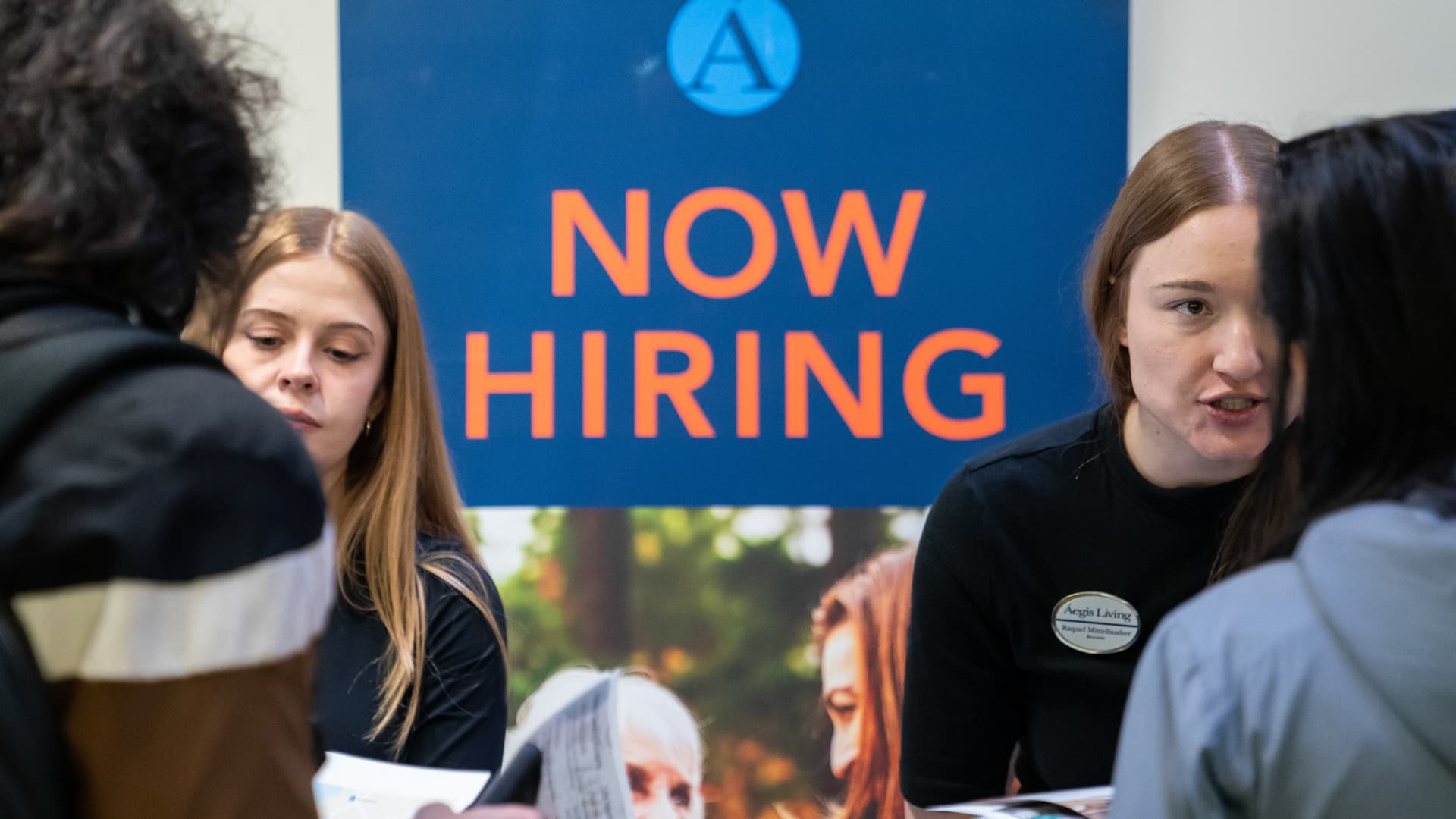

Job growth was stronger than expected to start 2026, providing some relief to concerns about the state of the U.S. labor market.
Nonfarm payrolls increased by 130,000 for January, above the Dow Jones consensus estimate for 55,000, according to seasonally adjusted figures the Bureau of Labor Statistics released Wednesday. The total also was an improvement over December, which saw a gain of 48,000 after a slight downward revision.
The unemployment rate edged lower to 4.3%, below the forecast to stay unchanged at 4.4% from the prior month. A more encompassing measure that includes discouraged workers and those holding part-time positions for economic reasons slipped to 8%, down 0.4 percentage point from December.
Markets rose following the news, with stock market futures ticking higher. Treasury yields also posted strong gains.
The report, delayed nearly a week by the partial government shutdown that ended Feb. 3, held consistent with a labor market in a low-growth mode, though with only scattered signs of increasing layoffs.
In addition to the monthly numbers, the BLS released final benchmark revisions for the year prior to March 2025. Those numbers saw the initial counts revised lower by a total 898,000 on a seasonally adjusted basis. That was a bit lower than the 911,000 figure for the initial estimate last September but around Wall Street expectations.
As has often been the case for the U.S. labor market, health care led job gains in December, adding 82,000 positions. Social assistance also rose, up 42,000 as the two categories were responsible for almost all the net job creation. Construction saw a gain of 33,000 following a year in which the sector saw little increase.
Several categories posted losses.
Federal government jobs fell by 34,000 as some of those laid off last year through Department of Government Efficiency cuts but accepted deferred resignations fell off the payroll count, the BLS said. Financial activities saw a decline of 22,000.
“It was a January job surge,” said Heather Long, chief economist at Navy Federal Credit Union. “The surprisingly strong job gains in January were driven mainly by health care and social assistance. But it is enough to stabilize the job market and send the unemployment rate slightly lower. This is still a largely frozen job market, but it is stabilizing. That’s an encouraging sign to start the year, especially after the hiring recession in 2025.”
On wages, average hourly earnings increased 0.4% for the month, 0.1 percentage point higher than expected, and 3.7% annually, in line with the forecast.
Wall Street expectations were muted for the report, following a series of other releases showing slow private sector gains, elevated layoff plans and shrinking job openings. Even White House officials, such as National Economic Council Director Kevin Hassett, had been tamping down expectations.
The prior year featured consistently modest gains and several months of negative growth for payrolls. Every month in 2025 saw negative revisions, even after President Donald Trump sacked former BLS Commissioner Erika McEntarfer in early August after he criticized large downward adjustments to the job totals. November also saw a downward revision that took the final number down to 41,000, a cut of 15,000 from the prior estimate.
Amid the labor market slowness, a White House crackdown on illegal immigration helped dampen labor demand, while a general climate of uncertainty over tariffs and inflation also pushed businesses into tabling plans for workforce growth.
However, the December numbers provide some reason for optimism.
While the establishment survey showed more jobs than expected, the household survey was even stronger. Used to calculate the unemployment rate, the survey showed a gain of 528,000 workers for the month as the labor force participation rate edged higher to 62.5%.
The data likely solidifies the Federal Reserve staying on hold with interest rates.
Futures traders raised bets that the Fed would hold the line at its March meeting, though the expectation is still titled toward a cut in June, according to the CME Group’s FedWatch gauge.