


CORTINA D’AMPEZZO, Italy – Ukraine’s skeleton athlete Vladislav Hraskevich will be allowed to wear black armbands in competition at the Milan Cortina Games, the International Olympic Committee said Tuesday, but no helmet He wants to wear one that commemorates his country’s athletes who died in the war with Russia.
The IOC called the move a compromise.
“I think what we’ve tried to do is address her wishes with compassion and understanding,” IOC spokesman Mark Adams said Tuesday. “He has expressed himself on social media and in training and, as you know, we will not stop him from expressing himself in press conferences as he leaves competition in the mixed arena and elsewhere. We think it is a good compromise in the situation.”
Shortly after, Heraskevich wore the tribute helmet for his first two training runs on Tuesday, indicating that Ukraine has filed an appeal. He was not seen wearing a black band on his arm.
In a letter to the Ukrainian Olympic Committee, the IOC said Hrayskevich would not be able to “compete” in an individual helmet. What is allowed for training runs was not specified.
Hraskevich said the IOC told him Monday night he could not wear the helmet that features the faces of several Ukrainian athletes killed from 2022 onwards, because Olympic officials decided it broke a rule banning political statements.
Rule 50 of the Olympic Charter states in part that “No demonstration or political, religious or racial propaganda of any kind is permitted in any Olympic sites, venues or other areas.”
Heraskevich — who finished fourth at last year’s world championships and is generally considered a medal contender at these Games — has more training scheduled for Wednesday, and is expected to compete in the Olympic men’s skeleton race on Thursday.
The IOC noted that it has banned armbands in the past, but was willing to make an exception in Heraskevich’s case. The IOC’s move doesn’t mean all athletes can wear the armband, Adams said, and if Heraskevich wants to do so, it can’t include any text.
“We don’t want everyone to wear a black armband at every competition,” Adams said. “But where there is good argument, it will be properly considered.”
Heraskevich said he is still pushing for a fair result, saying he has seen Russian flags in the stands at some events – which were supposed to be banned at these Games, and wonders why they are allowed by the IOC.
“We have not violated any rules, and I should be allowed to compete with this helmet,” Heraskevich told The Associated Press on Monday, before Ukrainian sliding officials met with a representative of the IOC and learned that the helmet would not be allowed. “I can’t understand how this helmet could hurt anyone. This is to pay tribute to the athletes and some of them were medal winners at the Youth Olympic Games. That means they are the Olympic family. They were part of this Olympic family, so I can’t understand why they would find any reason why not.”
Figure skater Dmytro Sharper, Hrayskevich’s one-time Youth Olympic Games teammate, is on the helmet, as well as boxer Pavlo Ishchenko, hockey player Oleksiy Loginov and others. Some people died on the front lines, Heraskevich said; At least one died while attempting to distribute aid to fellow Ukrainians.
Ukrainian President Volodymyr Zelensky highlighted Hrayskevich’s discovery with a post on his Instagram page, saying he wanted to thank Slider for “reminding the world of the price of our struggle”.
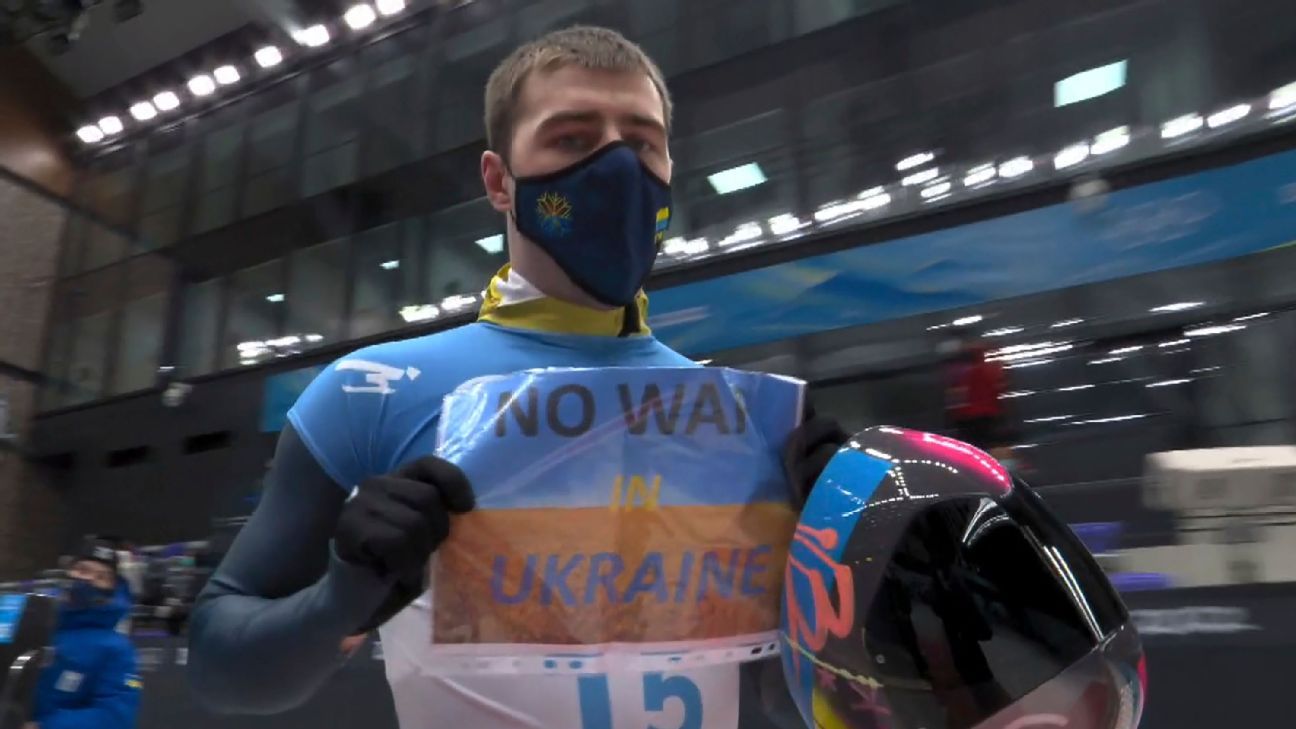
Herashkevich, Ukraine’s flag bearer at last week’s opening ceremony, displayed a sign after his fourth and final round of the 2022 Beijing Olympics that read, “No war in Ukraine.” A few days after those games ended, Russia invaded their country and the war has continued ever since.


