




Lawrence Edmondson

A Formula 1 test in January, in the middle of winter, behind closed doors and without any media or fans? Even by F1’s sometimes eccentric standards, it feels a bit odd.
But as the cars drive quietly into Barcelona this week, the sport is taking its first meaningful steps towards a fundamentally different future.
The first testing at the Circuit de Barcelona-Catalunya – officially dubbed a “shakedown” by F1 – will take place from Monday, January 26 to Friday, January 30.
Ahead of the track action, ESPN brings you everything you need to know.
F1 testing in January? What did you give?
In short, it’s due for a complete overhaul of the power unit, chassis and aerodynamic regulations for 2026. Such a big change, especially in terms of engines, means teams need to do some extra testing to learn how to operate the new cars before the first race.
The last time something similar happened was in 2014 when we had a major power unit shake-up. Those with long enough memories will recall that Red Bull, the team that ultimately finished second in the Constructors’ Championship that year, completed only 21 laps of Jerez in the first four-day test!
Although we are not expecting things to be so bad for the top teams, we have two brand new engine suppliers in Audi and Red Bull Powertrains and a brand new team in Cadillac, who will welcome the additional track time before the first race.
1:24
Ferrari reveals its new 2026 livery
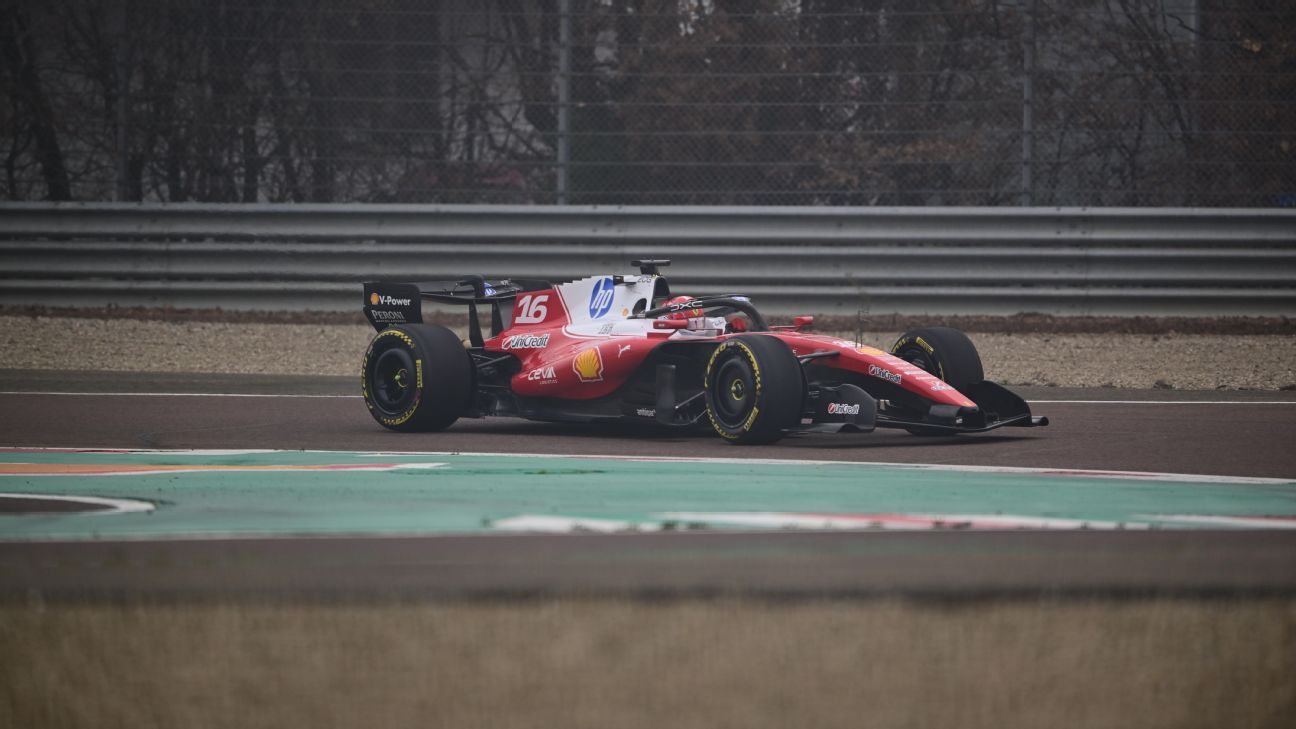
Scuderia Ferrari HP revealed its new livery for the 2026 Formula One season.
Why is it behind closed doors?
F1 is calling the first test a “shakedown”, which is motorsport jargon for a short private test in which a team does a basic check of its car before its first proper test.
However, internally, most teams are referring to the upcoming week in Barcelona as “Test 01” and all 11 have had the opportunity to test for three days over a five-day period (January 26-30), making it the de facto first test of the season.
Keeping it behind closed doors would really help hide the embarrassment of any team struggling, but F1 being F1, it wouldn’t take much for information about a low lap count or frequent trackside stoppages to leak out.
Sources have indicated to ESPN that the real reason for calling it a shakedown and reducing the level of fanfare is that F1 has a contractual obligation with Bahrain to host the first official test in February. The more hype there is around Spain, the more it steals the thunder from Bahrain when the first of two tests begins on the island kingdom in two weeks.
An obvious advantage of holding the first test in Spain rather than Bahrain or somewhere further away is that it is closer to the teams’ factories, allowing them to leave production deadlines down to the last minute and making it easier to make quick fixes on track if necessary.
– 2026 Mercedes F1 car debuts on track
– Brundle on Hamilton engineer: It had to change
– Hamilton completes first F1 2026 laps as Ferrari ruled out breakdown
What exactly are the rule changes and what prompted them?
At the heart of the regulation changes is the desire to have a hybrid power unit that produces 50% of its electricity output from batteries and 50% from the internal combustion engine powered by advanced sustainable fuels.
That 50/50 goal helped lure Audi into F1 for the first time and also helped bring Honda back from the brink of leaving the sport in 2021.
But such an ambitious goal also comes with many complexities. To achieve such a lofty goal, there will be an even greater emphasis on efficiency than ever before, to such an extent that the FIA has had to rethink the aerodynamic rules as well as the power unit rules.
Cars will now have active aerodynamics on the front and rear wings (think last year’s DRS on both ends of the car) to reduce energy-consumption on straights when the wings are open and maintain downforce in corners when the wings are closed.
The cars are also shorter (10 cm narrower and wheelbase 20 cm shorter) and lighter (30 kg) to make them more efficient and agile in wheel-to-wheel combat. Great in theory, but the hybrid system’s larger battery pack and larger MGU-K means total power unit weight has increased by 34 kg, creating quite a packaging challenge to reach the new minimum weight, while also making it possible to meet more rigorous crash tests.
The above only scratches the surface of the sweeping changes to cars for 2026, but basically we’re looking at smaller cars with three times more electric power. The implication is a brand new formula that is expected to offer a new way of racing.
0:46
First sound of McLaren’s 2026 Challenger
Hear the sound of McLaren firing up its 2026 car for the first time.
Have all the teams revealed their new cars?
not yet. Some teams have shown us the real deal (Ferrari at its Fiorano launch, Mercedes from its Silverstone shakedown), some have shown us renderings of their cars (e.g. Haas), and some have shown us showrunners with their new liveries over the top (e.g. Red Bull and Audi).
We got very limited glimpses of the real Audi and Cadillac when those two teams completed private filming a few weeks ago, and when the new Racing Bulls completed two days of track running at Imola this week, some photos and video were revealed to the public.
To diversify the teams’ approach this pre-season, those that have not yet launched their cars are planning to participate in Barcelona testing with interim liveries, while those that have used their full race liveries are expected to launch their cars at the same time.
What can teams actually learn from testing?
The main goal for each team will be reliable on-track running while obtaining as much data as possible about the car and its new power unit. Much of the discussion about these new rules is going to be around energy management as teams look for the best way to deploy the increased electric power across the lap and, more importantly, how to recover that energy during braking and in corners.
The expectation is that the new cars will require a different driving style, so it will be important to give drivers time to adapt. If all goes well, teams may have time to figure out the performance and set-up of their cars, but much of that work will be played out in the next two tests in Bahrain.
Which teams and drivers are participating? Will we hear from them?
All 11 teams had the opportunity to participate, but we now know that Williams will not attend testing due to delays with his new car. Another 10 teams are expected to be present at testing, and all drivers will be keen to get as much track time as possible before the first race.
There are likely to be some different approaches to which teams take to the track over the five days, especially if some are facing tight deadlines or have suffered setbacks in the construction process. For example, McLaren would skip the first day of testing and possibly the second day in order to leave their production as late as possible in the winter.
For what it’s worth, the current weather forecast suggests that Tuesday (day two) will be wet, so teams will probably aim to hit the track when it’s dry for the most useful racing. F1 cameras will be on the ground to capture some of the action and record short interviews, with UK broadcaster Sky Sports planning to produce highlights packages at the end of each day.
What won’t we know since the trial is private?
In a typical test, journalists have full access to the timing screen and relative freedom to wander around the paddock to talk to drivers and team members. The competitive picture is slowly pieced together from lap times and driver comments, and there’s nowhere to hide if things go wrong for anyone.
That kind of reach and depth of data won’t be available next week, meaning a blurry picture is likely to emerge in five days. But the presence of teams spying on each other, marshals working trackside and fans with camera phones over the fences means there is a lot of potential for material to be leaked.
However, testing runs the risk of exposing fake news, making it more important than ever to check reliable outlets.
1:45
Verstappen: I’ve been asking for a dress like this for a long time
Max Verstappen, Isak Hadjar and Laurent Mekies react to the launch of the new 2026 Oracle Red Bull Racing livery.
Who is expected to make the fastest start? And should we read into it?
This is a million dollar question. Mercedes has been voted best power unit maker this season – a story that has grown in recent weeks amid reports that extra horsepower has been unlocked with a different interpretation of the engine’s compression ratio rules.
But the truth is that no one knows for sure, and even if Mercedes is leading, the real difference may not be clear from the scrap of information coming from Barcelona next week.
It’s always very easy to pick out teams struggling in testing, and any fundamental issues specific to a particular outfit or engine manufacturer are likely to come to light.
There will also be different approaches to testing, with McLaren already saying its car will remain largely unchanged between Barcelona testing and the first race, while Ferrari plans to start with a more basic specification for reliability before bringing in significant upgrades before the first race.
After this test, what’s next?
Teams will return to their factories to check their data from the first test and prepare for the two- and three-day tests in Bahrain in February.
Launch events are also planned for Mercedes, Williams, Aston Martin and McLaren, as they unveil their race liveries for the upcoming season. The first race of 2026 starts on March 8 in Australia.


